What Quality Checks Should You Expect from a Wholesale Watch and Jewelry Manufacturer?
9/29/2026
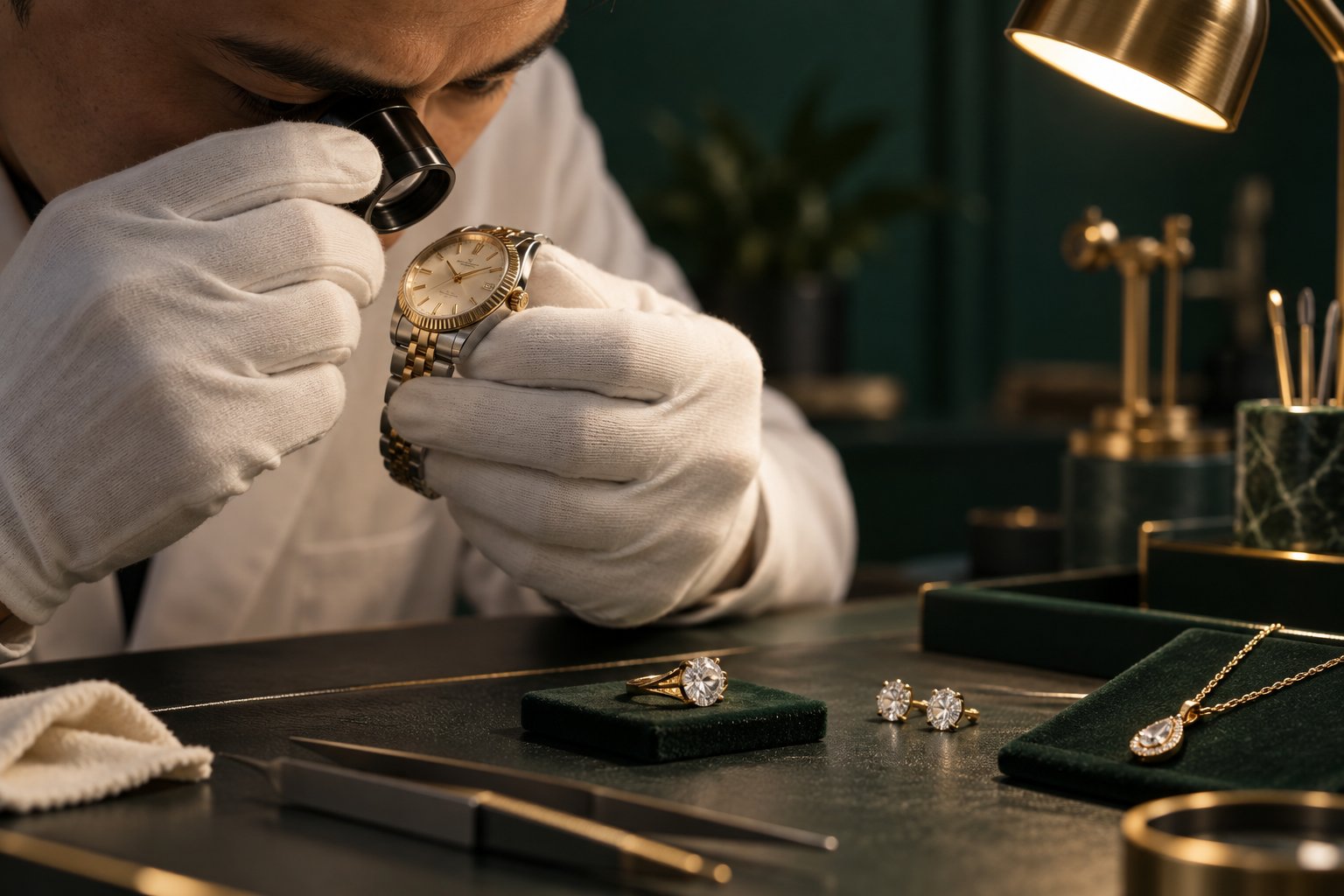
A batch of watches or jewelry that arrives with scratched cases, dead batteries, loose stones, or plating that flakes off after two weeks does not just cost you the purchase price. It costs you returns, refunds, customer reviews, and the trust your retail brand has spent years building. This is why the quality system behind a wholesale order matters as much as the design itself. Yet most sourcing conversations stop at the quotation and the minimum order quantity, and never ask what actually happens inside the factory before the carton is sealed.
This guide answers the question in the title from a buyer's perspective: which quality checks should you expect from a wholesale watch and jewelry manufacturer, at which stage each check should happen, what evidence you should be able to request, and how to verify a supplier's claims before you wire a deposit. Throughout, we use concrete examples from Aurevo's own product range — including 316L stainless steel quartz watches, gold-tone hoop earrings with nickel-free posts, and gold-tone zircon rings — so every recommendation is tied to a real product category rather than generic theory.
Why Quality Checks Define Wholesale Profitability, Not Just Product Appearance
In B2B watch and jewelry sourcing, the cost of poor quality is rarely the defective unit itself. A 40mm stainless steel quartz watch that fails on the shelf might wholesale for a few dollars, but the real loss includes the customer service hours, the return shipping, the refunded retail price, and the review that stays online permanently. For a boutique that sells 300 pieces a season, a defect rate that doubles from two percent to four percent can erase the entire margin advantage of choosing the cheaper supplier.
Quality failures in this product category cluster into a few recurring groups, and each one points to a specific checkpoint a manufacturer should run:
- Timekeeping and function failures — a quartz movement that stops, a hands-alignment problem, or a crown that does not set the time. These trace back to movement sourcing and assembly checks.
- Finish and plating failures — color inconsistency between units, peeling plating on a gold-tone ring or hoop, or visible polishing marks on a supposed polished case. These trace to plating-line control and surface inspection.
- Material and skin-safety failures — a nickel-free post on stud earrings that turns out not to be nickel-free, or a case material different from what was quoted. These trace to material verification.
- Assembly and durability failures — stones that fall out of a zircon ring setting, a bracelet link that separates, a strap that cracks at the lug. These trace to assembly torque, setting technique, and pull tests.
- Packaging and transit damage — pieces that arrive scratched because individual boxes were flimsy or cartons were under-protected. These trace to packing-spec checks and drop testing.
Notice the pattern: none of these are discovered by looking at a product photo. They are discovered by a structured inspection process. So the real question to ask a supplier is not "is your quality good?" — every supplier says yes — but "what do you check, when, and how do I verify it?"
The Four Stages of Quality Control You Should Expect
A credible wholesale watch and jewelry manufacturer runs quality control as a pipeline with four distinct stages, not a single final glance at the finished goods. Understanding the stages helps you know which questions to ask at which point, and helps you spot a supplier who is improvising.
Stage 1: Incoming Material and Component Inspection (IQC)
Before assembly begins, every input — watch movements, case blanks, dials, hands, straps, chains, stones, findings, packaging materials — should pass incoming inspection. For quartz watches like Aurevo's 40mm stainless steel quartz watch, the movement is the single most failure-prone component: a batch of movements with poor soldered contacts or used cells can create a field-failure rate that no final inspection will catch, because the defect appears weeks later.
At IQC, a buyer should expect the manufacturer to check:
- Movement function — sampling movements from each delivery batch and running them to confirm start-up, step accuracy, and battery drain behavior before assembly.
- Material identity — confirming that the stainless steel actually supplied matches the specified grade. When a product page specifies a 316L steel case, the incoming steel should be documented against that grade, not substituted with a cheaper unspecified alloy.
- Dimensional conformance — case diameters, dial openings, lug widths, chain link dimensions, and stone sizes measured against the approved drawing. A 40mm case that measures 39.2mm will not fit a buyer's pre-ordered display trays or sizing gauges.
- Stone and setting inputs — for faceted clear zircon and gemstone products, checking cut consistency and calibrated sizes so that the setting stage does not force loose or over-tight stones.
- Strap and leather inputs — for genuine leather straps, checking thickness, edge finish, and stitching density on the incoming material, because post-assembly repair of a bad strap is more expensive than rejecting it on arrival.
The practical buyer question at this stage: "Do you keep incoming inspection records per batch, and can I see the record for my order's material lots?" A factory that logs IQC results can answer in one sentence. One that does not will change the subject.
Stage 2: In-Process Control (IPQC) During Assembly
Once production runs, defects multiply silently if nobody inspects until the end. In-process control means checkpoints inside the assembly flow, not just at its exit. For watch assembly, that typically includes movement fitting, hand-setting, case closure, and water-resistance-related sealing steps. For jewelry, it includes stone setting, soldering or linking chains, and plating preparation.
What in-process control looks like in practice:
- First-article check — the first units off each production run are inspected against the approved sample before the line continues, so a mis-set jig or wrong dial does not produce 1,000 defective units before anyone notices.
- Patrol inspection — floor inspectors sample units at fixed intervals, checking hands alignment on watches, stone seat tightness on rings, and solder joint cleanliness on chains.
- Plating-batch control — gold-tone color is one of the most common wholesale complaint sources. Control means plating a run in one batch, referencing against the approved color standard, and rejecting racks with visible shade drift before assembly rather than sorting after.
- Torque and fitting checks — case-back closure pressure, bracelet screw or pin security, and buckle function sampled throughout the shift.
The buyer-visible evidence here is simple: an in-process inspection sheet with timestamps and defect tallies. Suppliers who run IPQC can usually produce one for any recent order; suppliers who only do end-of-line checks usually cannot.
Stage 3: Pre-Shipment Inspection (FQC / Final QC)
Final inspection is the checkpoint most buyers know about, and it deserves more structure than "we checked everything." A professional final QC on a mixed watch-and-jewelry order covers function, appearance, dimensions, and accessories, using a sampling plan rather than eyeballing the pile.
A sound final inspection for this category includes:
- Function testing — every sampled watch is checked for accurate hand-setting, start-up, and a functioning crown and clasp; sampled jewelry is checked for clasp closure and stone security.
- Appearance inspection — under adequate light and magnification, inspectors look for scratches, dents, plating blisters, color mismatch between case and bracelet, dial dust, and misaligned hands.
- Dimensional spot checks — case diameter, bracelet length, ring size distribution, and chain length verified against the order specification.
- Accessory and marking verification — correct logo application for private-label programs, correct tag and barcoding, correct battery insulation strip placement for transit.
- Sampling statistics — the inspection records how many units were sampled and how many defects were found, classified by severity, against the agreed acceptance limit. That record is what turns "we checked" into verifiable evidence.
If your order volume justifies it, you can also commission an independent third-party inspection on the packed goods. A manufacturer confident in its own final QC has nothing to fear from that request, and the cost of one inspection day is trivial compared to a rejected container.
Stage 4: Packing and Outbound Verification
The last defects are introduced at packing. A watch that passes final QC can still arrive scratched if it is packed loose in a shared tray, or dead on arrival if its crown was pressed during stacking. Outbound verification covers:
- Individual packaging integrity — each unit in its own box or pouch, watches with the crown left out or battery insulator in place during transit as applicable, jewelry in padded compartments that prevent stone-to-metal contact.
- Carton build — correct carton specification, internal dividers, desiccant where relevant, and gross-weight limits that keep bottom cartons from being crushed.
- Labeling accuracy — SKU, quantity, and carton numbers matching the packing list, so your receiving team and any customs broker are not reconciling surprises.
Ask your supplier what their standard carton specification is for watches versus jewelry, and whether they photograph the packed cartons before sealing. Both requests are normal, and both are cheap for a factory that already does them.
Category-Specific Checks: What "Good" Looks Like for Watches
Watches concentrate their risk in function and assembly, so a buyer's checklist should be movement-first. Here is what to expect from a manufacturer producing quartz watches at wholesale scale, using Aurevo's range as the concrete reference.
Movement and timekeeping
Quartz movements are inexpensive, but they are not interchangeable in reliability. The manufacturer should be able to state which movement is used in each model — for example, the quartz movement specified in Aurevo's stainless steel quartz watch — and should test movements before assembly rather than discover dead units at final inspection. Battery quality matters too: a new, name-brand cell with an insulating strip installed for transit is the difference between a watch that runs for a year and a batch that arrives with flat cells.
Checks to expect:
- Movement start-up and running test on 100% of assembled units (automated or by operator station).
- Hands-at-12 verification before case closure so no watch ships with hands frozen at a random time.
- Battery voltage sampling per batch and transit insulator confirmation.
Case, crystal, and finishing
For the buyer holding the watch, the case finish is the product. A polished 316L stainless steel case should show no visible polishing lines at arm's length, and the crystal should sit flush without dust underneath. Where a product specifies a mineral or hardened glass, the manufacturer should be able to name the glass type; where a model uses a particular crystal, that specification belongs on the product page, not just in the factory's head. Aurevo's men's classic leather watch, for instance, lists a polished stainless-steel case, white dial, and brown genuine leather strap — three finish elements that each need their own inspection criterion.
Water-resistance claims
Water-resistance is the single most misunderstood watch specification in wholesale. A rating such as 3ATM describes laboratory pressure tolerance, not an invitation to swim. Whatever rating a model claims, the manufacturer should test to that rating — typically air-pressure testing on sampled units — and should be willing to state plainly what the rating does and does not cover. A supplier who writes "water resistant" with no rating and no test is asking you to explain returns to your customers later.
Straps and bracelets
Genuine leather straps should be checked for stitching density, edge paint consistency, and buckle function; metal bracelets for link security and clasp cycle life. A quick manual test at final QC — flexing each sampled bracelet and cycling each sampled clasp ten times — catches the majority of field failures in these components.
Category-Specific Checks: What "Good" Looks Like for Jewelry
Jewelry fails differently from watches: the dominant risks are plating, stones, and skin contact. Each maps to a distinct check.
Plating and color consistency
Gold-tone finishes dominate the fashion jewelry wholesale market because they deliver the look of gold at accessible cost. The quality risk is two-fold: shade drift between production batches, and plating wear that exposes base metal. A manufacturer controlling this will:
- Plate each order's components in a single batch where possible, referencing an approved physical color standard.
- Inspect plated parts under standardized lighting before assembly, rejecting shade-out-of-range pieces.
- State the plating construction honestly — base alloy, plating layers, and any protective top-coat — so the buyer knows what wear behavior to expect and can describe it accurately to retail customers.
Compare units from the same order side by side at receiving. Shade differences visible to the naked eye under store lighting indicate the plating line was not batch-controlled.
Skin safety: the nickel question
Earring posts are in direct, prolonged contact with skin, so nickel content is a compliance and trust issue, not a marketing flourish. When a product such as Aurevo's gold-tone hoop earrings specifies nickel-free posts, the buyer should be able to ask: which posts are used, what is the basis for the nickel-free claim, and can documentation be provided for the target market's requirements? Different destination markets apply different regulatory thresholds for nickel release in jewelry, and a manufacturer shipping to those markets should know which rules apply rather than leaving the research to the importer.
Stone setting
Faceted clear zircon and colored gemstones are set by hand, which makes setting quality the key crafts variable. Checks that separate careful manufacturers from careless ones:
- Seat inspection — stones seated level in their seats, prongs evenly formed and tightened, bezels smoothly closed around the girdle.
- Pull and probe testing — sampled stones probed with a pointed tool to confirm they do not shift or lift; prong tips checked for cracks.
- Post-assembly inspection under magnification — looking for chipped stones, glue residue on faceted surfaces, or stones set with visible tilt.
Aurevo's fashion zircon ring and gemstone ring are exactly this product type: gold-tone bands with faceted clear stones, where a single loose stone in a retail display case is immediately visible to shoppers.
Chains, clasps, and findings
Necklaces fail at joints: solder points, jump rings, and clasps. Expect the manufacturer to check solder completeness (no open rings), jump-ring closure, and clasp spring function on sampled units. For delicate fine-chain pieces like the gold pendant necklace and sterling silver necklace, a gentle tug test on the sampled pendant attachment catches the weak joints that would otherwise part in the customer's hands.
Samples, Golden Samples, and Why Approval Discipline Prevents 90% of Disputes
Most wholesale quality disputes trace back to one root cause: nobody agreed on what "correct" looks like before production started. The fix is a disciplined sample chain, and every professional manufacturer supports it.
The sample chain for a private-label watch order
- Catalog / counter sample — an existing product (for example, a stock model from Aurevo's range) used to agree on general look, weight, and price level.
- Pre-production sample (PPS) — produced with the actual materials, plating, and components destined for the bulk order, carrying the buyer's logo and packaging where applicable. This is the contract-defining sample.
- Golden sample — the approved PPS, split and sealed: one part retained by the factory, one by the buyer. All bulk inspection references the golden sample.
- Shipping sample — units drawn from the completed bulk order, confirming the bulk matches the golden sample.
For a custom-logo men's watch like Aurevo's custom logo men's watch — deep green dial, gold-tone case, brown leather strap, buyer's logo on the dial — the PPS step is non-negotiable, because logo application quality, dial color, and strap color are all judgment calls that must be locked in a physical sample, not in an email description.
What to check on a pre-production sample
- Logo application: position, size, print or engraving depth, and durability (does it scratch off with a fingernail?).
- Color fidelity: dial color, case tone, strap color, plating shade — against your brand references, in daylight and store light.
- Weight and feel: often the first thing end customers notice; confirm it matches the agreed specification.
- Function: set the time, cycle the clasp, try the buckle — the PPS is your last cheap chance to catch problems.
- Packaging proof: box color, foam cut, logo placement on the box, and tag content.
One warning from hard experience: approve changes in writing and update the golden sample whenever a change is accepted. A verbal "make the dial slightly greener" that is never re-sampled is how batches ship in a color nobody approved.
How Sampling Plans and Defect Classifications Work
Buyers often ask for "100% inspection," and some factories oblige for function-critical steps. But for appearance attributes across thousands of units, the industry-standard approach is statistical sampling with defect classification. Understanding it lets you read an inspection report like a professional.
Defect severity classes
| Class | Definition in this category | Examples |
|---|---|---|
| Critical | Safety, regulatory, or total-functional failure | Sharp burr that can cut skin; movement dead on arrival; wrong material supplied |
| Major | Visible on normal inspection; would likely trigger a customer return | Deep scratch on case front; stone missing; plating blister; hands misaligned |
| Minor | Noticeable only on close inspection; unlikely to drive a return | Faint handling mark on case back; slight strap color shade variation; minor packaging print flaw |
Classifying defects matters because acceptance is judged per class. A batch can pass on minors and fail on a single critical. When you receive an inspection report, the numbers you want are: sample size, defects found per class, and pass/fail per class against the agreed acceptance limits.
What to agree before production
- Which standard governs sampling (an internationally recognized sampling plan referenced by sample size and acceptance limits, agreed in the order terms).
- The defect classification list for your specific products — the factory's standard list is a good starting point; add anything brand-critical, such as logo placement tolerance.
- What happens on failure: rework and re-inspection, sort-and-ship the conforming portion, or reject the lot. Agreeing this while negotiating is easy; agreeing it after a failed inspection is not.
Compliance and Documentation: What a Buyer Should Be Able to Request
"Quality" in B2B sourcing includes paperwork. Depending on your destination market and product type, reasonable document requests include:
- Material declarations — written confirmation of case alloy grade, chain and finding base metals, and post composition for earrings.
- Plating specifications — layer construction and any protective top-coat, in writing, so retail claims match reality.
- Movement documentation — the movement type and origin stated per model.
- Inspection records — the final QC report for your order, with sample sizes and defect classifications.
- Test reports for regulated attributes — where your market regulates nickel release or restricted substances in jewelry, confirm which reports exist for which products, and who paid for them. Do not assume a factory certificate covers every SKU; certifications apply to the samples and scope they were issued for.
A manufacturer that supplies the EU, UK, or US markets routinely should already know which document types its customers' customs and retail partners ask for. If a supplier answers every compliance question with silence, that silence is information.
Warranty and After-Sales Support: The Part Buyers Forget to Negotiate
Quality does not end at the carton seal — it extends to what happens when a retail customer brings a defective piece back to the store that bought it. Before placing a first order, confirm the manufacturer's warranty terms in writing.
Aurevo's position is straightforward: every watch and jewelry product in the range carries a 12-month warranty. That is the single, uniform policy across the catalog — the same 12 months for a stainless steel quartz watch as for a pair of gold-tone stud earrings — and it is stated on each product page. For a retailer, a defined 12-month warranty matters because it tells you exactly what recourse you have if a unit fails in the customer's hands, and it lets you write your own store return policy on top of a known supplier commitment.
When comparing suppliers, put warranty terms side by side with price. A supplier whose warranty is "as per order confirmation" — meaning whatever you manage to negotiate after a problem occurs — is transferring all the risk to you. A stated 12-month policy, applied uniformly, is itself a quality signal: the manufacturer is willing to stand behind its process for a full year, which it can only afford if its defect rates are genuinely low.
Red Flags: When a Manufacturer's Quality Story Does Not Add Up
Most sourcing failures announce themselves early, in small inconsistencies. Watch for these:
- Vague material answers. "Stainless steel" without a grade, "gold plated" without construction details, "stones" without type. Professional factories speak in specifics because their purchasing is specific.
- No golden sample discipline. If the factory cannot describe how it retains and references the approved sample, bulk production has no anchor and every "quality" claim floats.
- Resistance to inspection reports. A factory may not have a glossy report template, but it should be able to show how it records final inspection. Refusal, not format, is the red flag.
- Prices far below the category floor with identical specs. If everyone quotes a 316L-cased quartz watch in one range and one supplier is dramatically cheaper at the same claimed specification, something in the specification is not real. The difference hides in the movement grade, the plating thickness, or the material itself.
- Uniform warranty avoidance. Hesitation to state a concrete warranty period in writing predicts exactly how after-sales claims will go.
- Communication that degrades after the deposit. Pre-order responsiveness is the best available proxy for how production issues will be handled.
The True Cost of Quality: Why the Cheapest Quote Is Rarely the Cheapest Order
It is worth pausing on the economics, because quality decisions in wholesale are ultimately margin decisions. When you compare two quotations for what looks like the same product, the gap between them is not generosity versus greed — it is a proxy for what each factory is actually putting into the product and the process. The cheaper quote is usually cheaper for a reason that will surface later: a lower-grade movement, a thinner plating layer, a skipped incoming inspection, or an inspection step reduced to a quick visual glance at the packed carton.
Consider how the math works out across a season. Suppose a retailer imports 1,000 units of a gold-tone hoop earring at a unit cost difference of twenty cents between two suppliers. The "expensive" supplier costs 200 dollars more on paper. Now assume the cheaper supplier's batch arrives with a plating shade that varies visibly between cartons and a clasp failure rate near three percent. The retailer now spends staff hours sorting sellable from unsellable stock, writes off the worst units, fields customer complaints for the next six months, and absorbs the returns. The twenty-cents-per-unit saving evaporates many times over, and the store still carries the reputational cost. In this category — where a single purchase decision multiplies across hundreds of identical units displayed side by side — consistency is the product as much as the design is.
This is also why the quality checks described in this article should be read as cost controls, not bureaucracy. Each checkpoint has a price: incoming inspection takes labor hours; batch-controlled plating constrains scheduling; pre-production samples add a week or two of lead time. Suppliers who skip them can quote lower precisely because they have removed those costs — and transferred them to you in the form of defect risk. When you evaluate a quotation, ask which of these process steps the price includes. A factory that answers specifically — "our quote includes IQC on movements, batch plating against a sealed color standard, and a full FQC with defect classification" — is telling you where its margin and its discipline live. A factory that answers vaguely is telling you something too.
Finally, weigh the cost of quality infrastructure against the cost of one failed season. The tools described in this guide — golden samples, sampling plans, defect classifications, documented warranty terms — cost a factory very little per order once they exist. If a supplier has not built them, the absence shows up not just in defect rates but in how disputes get resolved when something does go wrong: without records, there is nothing to compare against, and every claim becomes an argument instead of a measurement.
Turning Quality from a One-Off Check into a Long-Term System
The first order with a new manufacturer is a test; the second and third orders are where the real sourcing value is created. Buyers who treat quality as a one-time gate — inspect, accept, move on — leave most of the benefit on the table. The alternative is to build quality into the relationship, using each order cycle to tighten what the factory controls.
Three practices make the difference. First, close the loop on field data. When your retail customers return a unit, record why: dead battery, clasp failure, stone loss, plating wear, strap crack. Share a quarterly summary with your manufacturer. Factories can only fix the failures they hear about, and a buyer who returns defect data in an organized form gets prioritized attention, because that buyer is easier to serve than one who only sends angry emails. Second, keep the golden sample current. Every time a specification changes — a new dial color, a new post material, a revised packaging insert — a new golden sample should be approved and sealed. An out-of-date golden sample quietly invalidates every inspection done against it. Third, review the inspection record together. If final QC reports show the same minor defect recurring across three consecutive orders, that is a process signal worth a conversation, not just a line item to skim. The best supplier relationships in this industry look less like purchasing transactions and more like ongoing engineering conversations, with both sides referencing the same samples, the same defect vocabulary, and the same acceptance limits.
None of this requires a large procurement department. It requires the discipline to keep records, the willingness to share them, and a manufacturer that treats inspection data as information rather than accusation. When you evaluate a potential long-term supplier, ask how they handle repeat-order quality: whether they reference the original golden sample on reorders, whether they re-run the full inspection scope, and whether they proactively flag any process changes since your last order. The answers tell you whether your second order will be as controlled as your first — or whether the quality conversation restarts from zero every time you wire a deposit.
A Practical Pre-Order Quality Checklist
Before you confirm any wholesale watch or jewelry order, walk this list. It takes one email exchange and prevents the most expensive misunderstandings:
- Materials: case alloy grade, chain and finding metals, earring post composition — stated in writing.
- Plating: layer construction and color standard reference for all gold-tone components.
- Movement: type and origin stated for each watch model; battery brand and transit insulator practice confirmed.
- Samples: pre-production sample for any custom/private-label element; golden sample split and retained by both sides.
- Inspection: final QC sampling plan, defect classification list, and report format agreed before production.
- Water resistance: rating (or absence of one) and test method for watch models, worded the way you will describe it to customers.
- Packing: individual packaging spec, carton build, and labeling format confirmed against your receiving process.
- Warranty: period, scope, and claim process stated in writing — confirm it is a uniform policy, not per-order.
- Compliance: which documents exist for your destination market's jewelry regulations, and for which products.
- Escalation: who at the factory owns quality issues, and the agreed response time when a defect claim arrives.
How This Maps to Sourcing from Aurevo
Every recommendation above is testable against a real supplier. Aurevo manufactures and wholesales a focused range of 20 watch and jewelry products — men's and ladies' quartz watches in stainless steel and leather-strap configurations, gold-tone and sterling silver necklaces, zircon and gemstone rings, and stud and hoop earrings — with private label, OEM and ODM programs available from a 100-piece minimum order. The product pages state the specifications that quality conversations start from: 316L stainless steel cases, quartz movements, genuine leather straps, nickel-free posts on hoops, faceted clear zircon and gemstones, and defined plating constructions on gold-tone pieces.
Two policies make the quality conversation concrete rather than theoretical. First, the 12-month warranty applies uniformly to every product — one policy, stated on each page, no per-order negotiation. Second, customization requests run through the pre-production sample process described above: a custom-logo watch is sampled, approved, and sealed as the golden sample before bulk production, so the units you receive are judged against the units you approved.
If you are building a retail assortment and want to see how these specifications read on real products, browse the range — for example the stainless steel quartz watch, the classic leather watch, the gold-tone hoop earrings, or the fashion zircon ring — and bring the checklist above to the conversation.
Frequently Asked Questions
How many units should I sample-test when a wholesale order arrives?
Check 100% of function on watches if volume allows (time-setting and start-up take seconds per unit), and inspect appearance on a statistically meaningful sample — enough to judge the batch, recorded the same way the factory's final QC records it. For jewelry, focus sampling on clasps, stone security, and plating shade comparison across units from different cartons.
Is a higher price always better quality in wholesale watches and jewelry?
No — but a price far below the category floor at identical claimed specifications is a warning. Quality cost lives in movement grade, plating construction, material authenticity, and inspection time. Compare suppliers on stated specifications and warranty terms, not on price alone.
What does a 12-month warranty actually cover on fashion watches and jewelry?
At Aurevo, the 12-month warranty applies to every watch and jewelry product uniformly. In practice it covers manufacturing defects — movement failure, clasp or stone failure under normal use — as distinct from damage from misuse. Ask any supplier to state the scope in writing alongside the period; a period without a scope invites disputes.
Should I hire a third-party inspector for my first order?
If the order value justifies it, yes — especially for a first order with a new supplier or a complex private-label program. A supplier confident in its own QC welcomes third-party verification; treat reluctance as a data point.
What is the most common quality failure in wholesale gold-tone jewelry?
Plating: shade inconsistency between units and premature wear exposing base metal. Batch-controlled plating against an approved color standard, plus honest plating-construction documentation, addresses both.
How do I verify a "nickel-free" claim on earrings?
Ask what the claim is based on — post material specification and any test documentation for the relevant market's nickel-release requirements — and confirm which regulations apply where you sell. A manufacturer shipping to your market routinely should answer without a research delay.
Can I get my own logo on wholesale watches with a small order?
Aurevo offers private label and OEM/ODM programs from a 100-piece minimum order, including custom logo models such as the custom logo men's watch. Customization runs through a pre-production sample so the logo application, dial color, and strap are approved in hand before bulk production.
What should a final inspection report contain?
Sample size, defects found classified as critical/major/minor, pass-fail against the agreed acceptance limits, and photos of representative defects. If a supplier's report lacks the classification breakdown, you cannot tell whether the batch passed on substance or on charity.
How does water-resistance wording affect my retail obligations?
Whatever rating the supplier states, describe it to customers the same way — a 3ATM watch tolerates splashes, not swimming. Confirm the supplier tests to the stated rating and document the wording you will both use; mismatched wording between product page and factory claim is a classic return-driver.
What is the single most important quality agreement to make before production?
The golden sample. Everything else — inspection plans, defect lists, warranty scopes — is enforced by comparing bulk goods to an approved, retained physical sample. No golden sample, no enforceable quality standard.
Planning a Wholesale Watch or Jewelry Order?
Browse Aurevo's watch and jewelry range, compare specifications against your quality checklist, and request a quotation or pre-production sample for your private-label program. Our team will confirm specifications, sampling, and the 12-month warranty in writing before you commit.
Request a Quotation
How Should You Price Wholesale Watches and Jewelry for Retail Profit? A B2B Buyer's Guide to Markups, Margins and Channel Pricing

How Do You Protect Your Watch and Jewelry Designs When Outsourcing Custom Manufacturing? A B2B Buyer's Guide to NDAs, IP Ownership and Tooling Agreements