How Much Does a Custom Watch Cost? A B2B Buyer's Guide to Custom Logo Watch Pricing
2026. 10. 2.
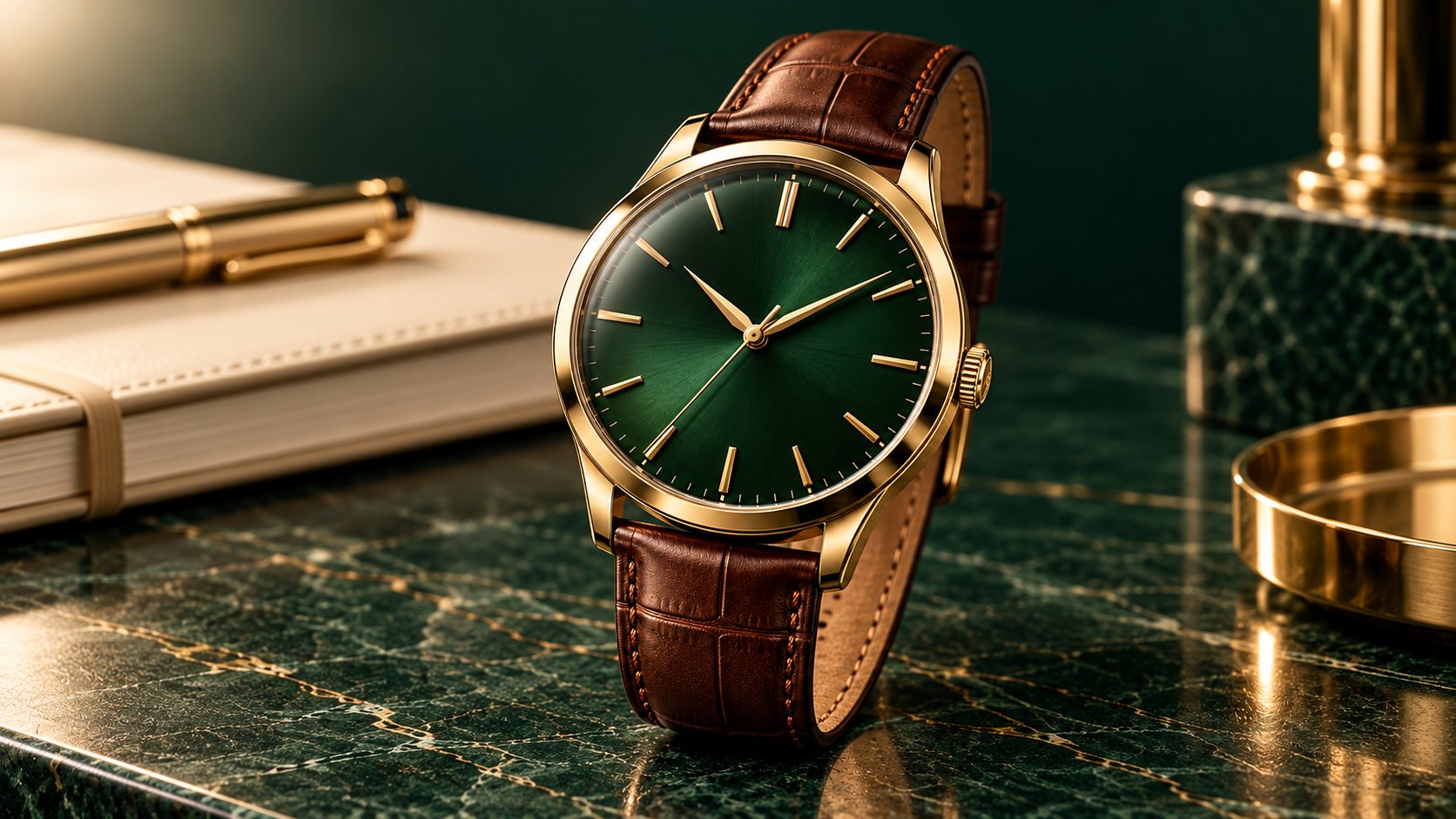
How much does a custom watch cost? It is usually the first question a buyer asks, and the honest answer is that no serious manufacturer can quote one number before understanding what you want to build. Custom logo watch pricing is not a fixed price list — it is the sum of movement, case, dial, strap, packaging, order quantity, tooling, and logistics decisions that you and your supplier make together. This guide walks you through every one of those cost drivers from a B2B buyer's perspective, using the real production parameters of a working OEM/ODM program, so you can read a quotation, challenge it, and negotiate it with confidence.
If you are building a private label watch line, expanding a corporate gifting program with custom made watches with logo, or comparing suppliers for your first custom watch with company logo order, the framework below will help you understand where the money actually goes — and where buyers most often lose it.
Why "How Much Does a Custom Watch Cost?" Has No Single Answer
Ask a supplier for the price of a custom logo watch and a careless salesperson will throw out a number. An experienced one will ask you a series of questions first, because the answer can vary enormously depending on what sits behind that simple request. A minimal customization program — taking an existing, already-engineered watch model and printing your logo on the dial — shares almost all of its cost base with the supplier's standard production. A fully custom project — a new case shape, a unique dial layout, a matched strap, branded packaging — pays for engineering, tooling, and sampling that a stock model never touches.
This distinction matters more than almost anything else in your budget. It is the difference between ordering an existing model such as the Aurevo Custom Logo Men's Watch with your logo applied to its deep green dial, and commissioning a watch built from scratch around your brand. Both are legitimate strategies. They simply belong to different price brackets, and confusing them is the most common reason buyers feel misled by a first quotation.
The second reason there is no single answer is volume. Watch production is a game of scale at the component level. A case factory sets up CNC programs and polishing lines per batch; a dial printer charges setup for each color; a movement supplier prices differently at 500 pieces than at 50,000. Unit cost falls as quantity rises, not because anyone is rounding numbers in your favor, but because fixed setup costs are spread across more units. Any quotation you receive is a snapshot of one quantity — change the quantity and you should expect the price to move.
The third reason is specification drift. Between "I want a stainless steel case" and "I want a 316L stainless steel case with gold-tone plating, 40 millimeter diameter, hardened mineral glass, and a brown leather strap," there is a wide cost canyon. Vague briefs attract optimistic quotes; precise briefs attract accurate ones. As you read the rest of this guide, you will build the precise brief that gets you a number you can actually rely on.
What Actually Drives the Price of a Custom Logo Watch
Think of a custom watch quotation as a stack of components, each priced separately before assembly, QC, and shipping are added. Here is what each layer contributes, and what you should ask about each one.
1. The Movement: The Quiet Majority of the Cost
The movement — the mechanical or quartz engine inside the case — is typically one of the largest single cost lines in any watch build. Quartz movements are inexpensive, reliable, and keep excellent time with minimal maintenance, which is why they dominate the custom logo watch and corporate gifting market. Automatic movements cost more, add mechanical romance that some brands deliberately pay for, and require more careful assembly and regulation.
The quartz movement in the Aurevo Custom Logo Men's Watch, for example, is chosen deliberately: it delivers dependable timekeeping for end customers who expect a watch to simply work, and it keeps the unit economics workable at wholesale quantities. When you compare quotations, always confirm exactly which movement is quoted — a supplier who leaves the movement vague is leaving the biggest variable in the quote vague too.
2. Case Material, Size, and Finishing
The case is where material choices start to differentiate quotes sharply. 316L stainless steel is the industry workhorse — corrosion-resistant, durable, and suitable for plating. Gold-tone plating over 316L, as used on the Aurevo men's model, adds a plating step and thickness specification. Beyond steel, you enter brass with heavy plating, titanium, ceramics, and precious metals, each with its own material cost, machining cost, and scrap rate.
Finishing multiplies the options: brushed, polished, sandblasted, IP-plated, two-tone. Each finish is a separate process with setup time and yield loss. Case diameter matters less to cost than to positioning — the 40 mm case on the Aurevo model is a confident, versatile dress size — but non-standard dimensions can require new tooling, which brings us to one of the most misunderstood cost lines in custom watch pricing.
3. Tooling and Mold Fees: The One-Time Costs Buyers Forget
If your design can be produced from existing tooling, you skip this cost entirely — one of the strongest arguments for customizing an existing platform. If your design requires new tooling — a unique case shape, a custom crown, a special caseback — you will typically pay a mold or tooling fee. These fees cover the steel molds and fixtures used to produce your parts, and they are usually quoted separately from unit prices precisely because they are one-time costs.
Here is where negotiation matters. A reputable OEM partner will often refund the tooling fee once your cumulative order volume reaches an agreed threshold — this is, in fact, how Aurevo structures it: mold fees are refundable for qualifying orders. When you compare suppliers, do not just compare unit prices; compare tooling terms. A supplier with a slightly higher unit price and refundable tooling can be dramatically cheaper over the life of your brand.
4. Dial Customization and Logo Application
The dial is the face of your brand, and logo application is more technical than most buyers expect. There are several established methods for how to put a logo on a watch dial, each with different cost and visual results:
- Pad printing — the most common method for logo application on dials. A silicone pad transfers ink from an engraved plate onto the dial. Economical, works for most single- and multi-color logos, and is the standard choice for custom logo watch programs at wholesale quantities.
- Applied badges — a small metal logo piece is manufactured separately and affixed to the dial. More premium look, more cost, and usually a higher MOQ because the badge itself is a custom-made component.
- Laser engraving — typically used on casebacks rather than dials. Perfect for serial numbers, brand marks, and "custom watch with company logo" requests on the back of the watch, where durability matters more than color.
- Custom dial colors and printing — beyond the logo itself, dial color is a branding decision with cost implications. The deep green dial with slim gold-tone markers on the Aurevo model is an existing, proven configuration; a bespoke dial color matched to your brand's Pantone requires new dial printing setup.
Each additional color in your logo adds setup cost at the dial printer. This is a subtle but real pricing factor: a one-color logo is cheaper to apply than a four-color one, at any quantity. If your brand guidelines allow, simplifying the dial version of your logo is one of the easiest unit-cost reductions available.
5. Strap and Materials
Straps look simple and are not. Genuine leather varies enormously in grade, texture, and durability; the brown leather strap on the Aurevo Custom Logo Men's Watch is selected to pair with both business and casual wear, which is exactly the versatility a private label collection needs. Alternatives — stainless steel bracelets, Milanese mesh, silicone, nylon — each carry different material and assembly costs. A quick-release strap system adds a small component cost but can increase the perceived value of your product and reduce after-sales friction.
Custom branding on the strap or buckle — an embossed logo, a branded buckle — is available from most OEM suppliers and priced as an additional customization layer. Confirm whether the quoted strap is genuine leather, and of what grade, because this is one of the places where low quotes quietly cut quality.
6. Glass, Water Resistance, and Assembly Standards
Hardened mineral glass, as fitted to the Aurevo model, is the cost-effective standard for scratch protection in this market segment. Sapphire crystal costs more and is typically reserved for higher price points. Water resistance ratings similarly ladder upward: 3 ATM — the rating on the Aurevo model — covers everyday splashes and hand washing, which is the practical requirement for most dress watches. Pushing to 5 ATM or 10 ATM changes gaskets, testing, and assembly time, and therefore price.
Assembly standards are invisible in a photo but visible in a quotation. Hand-assembled movements with regulated accuracy, leak testing, and full inspection take more labor than basic assembly. This is why two watches with identical spec sheets can quote ten percent apart — and why the cheaper quote is not always the better deal. The section on quality costs below explains why.
7. Packaging: Your First Physical Touchpoint
Packaging is often the last thing buyers specify and the first thing their customers touch. Options range from standard bulk packaging to custom two-piece boxes, branded cushions, instruction cards, and protective sleeves. Custom packaging is a real cost line — a bespoke box has its own tooling, minimum order, and freight weight — but for a private label launch it is usually worth it. On the Aurevo program, packaging details are confirmed per order, so include your packaging ambition in your brief from the start rather than treating it as a late surprise.
8. Compliance, Documentation, and Export
Depending on your destination markets, you may need material declarations, battery documentation, or market-specific compliance paperwork. Established manufacturers who ship to 65+ export markets, as Aurevo does, run this documentation as routine; younger suppliers may treat it as an extra. It rarely dominates the quote, but it can dominate the timeline if it is discovered late. Ask what documentation is included and what is billable before you compare prices.
How MOQ Shapes Your Unit Cost — and Your Cash Flow
Minimum order quantity is not an arbitrary barrier; it is the smallest quantity at which a supplier can produce your configuration economically. Every component in your watch — movement, case, dial, hands, glass, strap, buckle — is sourced from specialized suppliers who have their own minimums and setup charges. When a manufacturer quotes a custom watch MOQ of 300 pieces, they are telling you the quantity at which all those component minimums, the line setup, and the QC batching add up to a sensible production run.
This is why the standard-versus-custom distinction in MOQ is so useful. On the Aurevo program, standard watch models carry a MOQ of 100 pieces — the existing platform is already tooled, the components are already flowing, and the incremental work is your logo and color choices. Fully custom configurations carry a MOQ of 300 pieces, because new component setups need volume to be viable. The table below shows how this plays out in practice.
| Program Type | Typical MOQ | What You Pay For | Best For |
|---|---|---|---|
| Standard model with logo (existing platform) | 100 pieces | Unit price + logo application + packaging options | First private label order, market testing, corporate gifting |
| Fully custom configuration | 300 pieces | Unit price + tooling/mold fees + sampling + custom components | Established brands, distinctive designs, long-term lines |
For a deeper walkthrough of how minimums work across watches and jewelry, including negotiation approaches for first orders, see the dedicated guide on how minimum order quantity works when you buy wholesale watches and jewelry.
From a cash-flow perspective, MOQ and payment terms interact. The standard structure on the Aurevo program is T/T 30/70 — thirty percent deposit with order, seventy percent balance before shipment. At a 300-piece custom MOQ, that deposit is your main upfront cash exposure before you see a single finished watch, which is why the sampling stage below matters so much: it is your chance to verify the product before the balance is due.
The Hidden Costs B2B Buyers Should Budget For
Unit price is the headline; the total landed cost is the story. Experienced importers budget for a handful of cost lines that first-time buyers discover late.
Sampling Fees
Before mass production, you should always approve a pre-production sample. On the Aurevo program, sample lead time is 7–15 working days. Sampling carries a fee — the sample is hand-prepared, often with custom dials or logos specifically for your approval — and policies vary by supplier and by whether the fee is credited against the mass production order. Ask directly: is the sample fee credited back at production? What exactly does the sample include — logo, dial color, strap, packaging? A sample that matches your full specification is worth more than a cheap generic sample, because it is the artifact you will approve against.
Tooling and Molds (Covered Above, Worth Repeating)
If your configuration needs new tooling, budget the mold fee as a separate line and negotiate the refund terms in writing. The Aurevo structure — mold fees refundable for qualifying orders — is the industry-best practice pattern: the supplier shares your volume risk, and your effective tooling cost falls to zero as your program succeeds.
Freight, Insurance, and Duties
Quotations are typically ex-factory or FOB; freight to your warehouse, insurance, import duties, and customs clearance are yours. Watches are compact and high-value, which makes air freight viable for launches and replenishments, while sea freight wins on cost for planned volume. Ask your supplier to quote both if you are comparing — and confirm packaging dimensions, because dimensional weight, not the watches themselves, often drives air freight cost.
Payment Terms as a Cost
T/T 30/70 is the workhorse of this trade, and it is cash-flow friendly: you are not financing the full order before production starts. For large orders, Aurevo can work with L/C (letters of credit), which shifts risk allocation and suits buyers whose banks prefer documentary control. Whatever the instrument, payment terms have a real cost of capital — a supplier offering better terms is effectively giving you financing, which is worth something in your total cost comparison.
Quality Failures: The Most Expensive "Saving"
The cost nobody budgets for is the shipment you have to discount, rework, or replace. It is also the cost most directly controlled by your choice of supplier and the inspection depth you insist on. Which brings us to the next section.
Quality Costs Money — and Saves More
In custom watch manufacturing, quality control is not a department; it is a cost structure. Aurevo operates more than 40 QC workstations and applies a 6-step watch inspection process across production: batches are checked for timekeeping accuracy, case and finish quality, dial alignment, and overall assembly before packing. That infrastructure exists because consistency — unit after unit, batch after batch — is what separates a dependable supplier from a one-off deal.
For you as a buyer, this shows up in three places. First, in your return rate: a watch that keeps poor time or arrives with misaligned dials generates customer complaints that quietly erode your margin. Second, in your brand: a private label watch carries your name on the dial, and the end customer holds your brand, not your supplier's, responsible for every defect. Third, in your reorder confidence: a supplier whose inspection data is consistent batch-to-batch is a supplier you can scale with.
Warranty terms are part of this quality conversation. All Aurevo products, including the custom logo watch program, carry a 12-month warranty — a concrete commitment you can pass structure from in your own customer offering. When comparing suppliers, put warranty length and claim handling next to the unit price, because a ten-cent saving per unit means nothing against a warranty that will not stand behind the product.
A team of more than 220 employees supporting orders across 65+ export markets also tells you something about process maturity: documentation, packaging standards, and communication rhythms that international buyers rely on are institutionalized, not improvised. When you evaluate a quotation that looks unusually cheap, ask what is missing behind it — it is usually inspection depth, warranty backing, or export experience.
A Real Example: Understanding the Aurevo Custom Logo Men's Watch Quotation Structure
Abstract pricing frameworks are easier to absorb with a concrete product, so let's look at a real model in current production: the Aurevo Custom Logo Men's Watch, SKU ATW-1007.
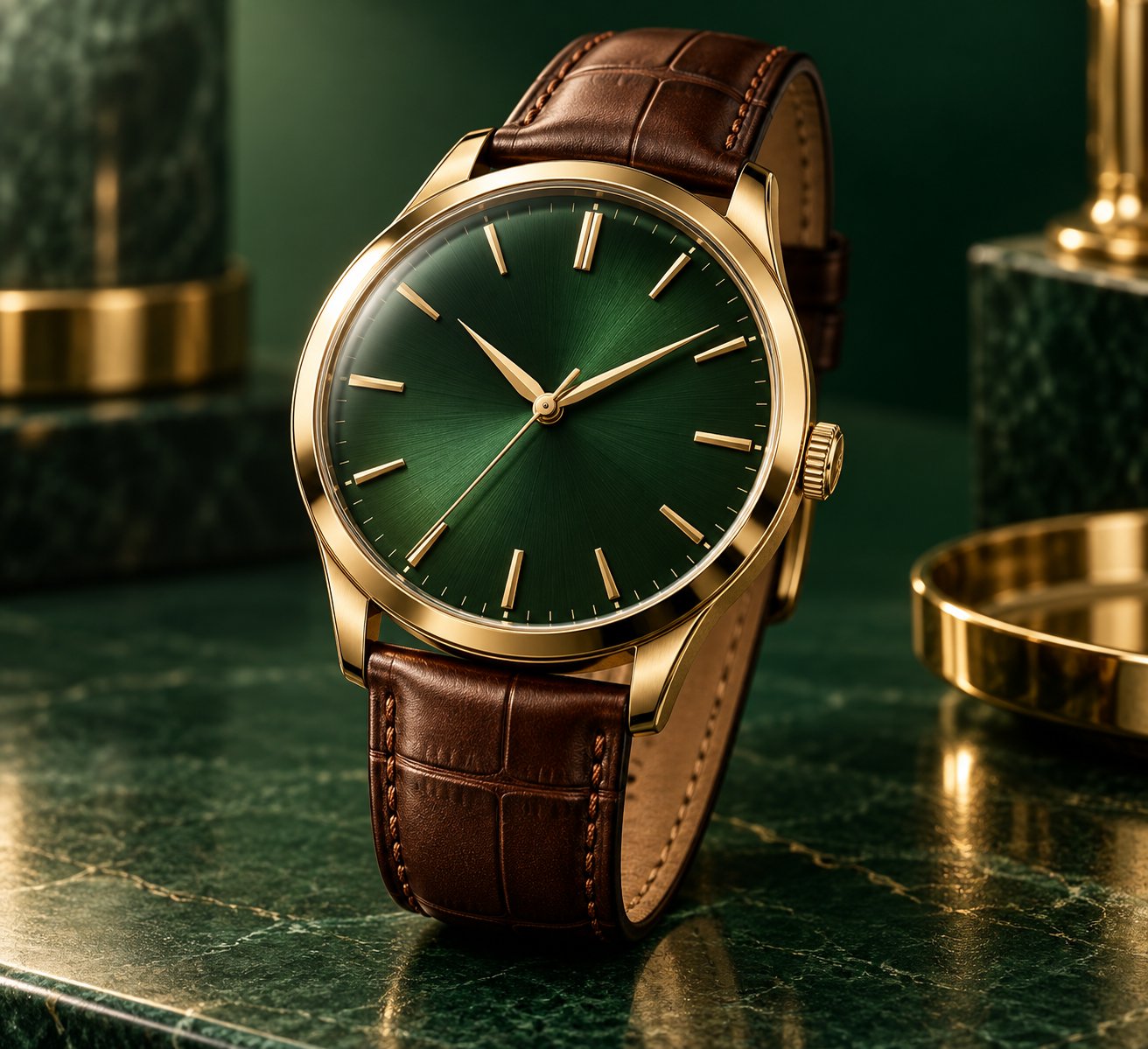
Its specification sheet reads like the cost-driver checklist from earlier in this guide:
- Movement: quartz — reliable timekeeping, minimal maintenance, workable unit economics at wholesale volumes.
- Case: 316L stainless steel with gold-tone plating, 40 mm diameter — the industry-standard material with a premium finish.
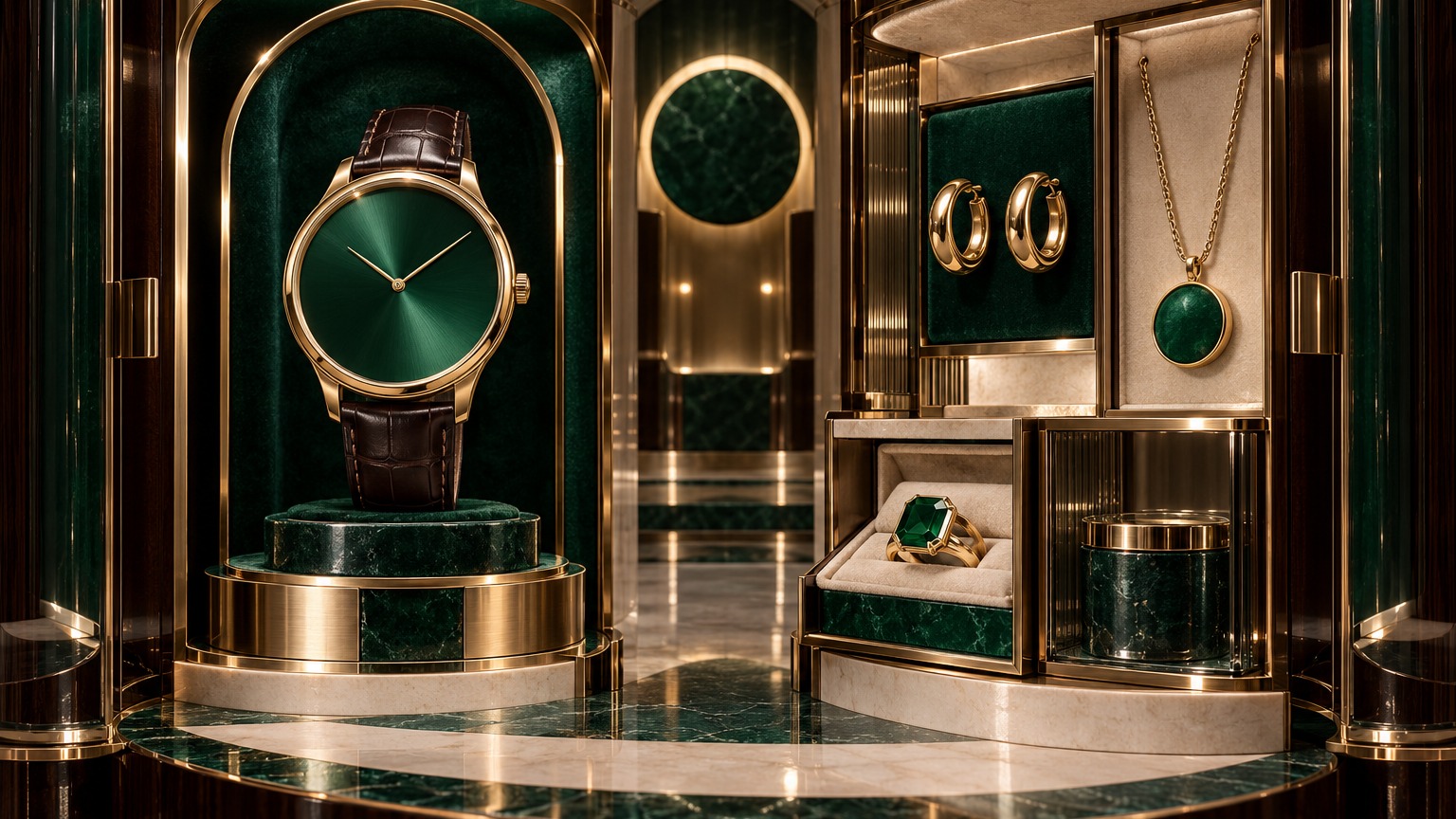
- Dial: deep green with slim gold-tone markers — a proven, already-tooled configuration.
- Glass: hardened mineral glass — scratch protection at a sensible cost point.
- Strap: brown genuine leather — versatile for business and casual styling.
- Water resistance: 3 ATM — splash and hand-washing protection appropriate for a dress watch.
- Customization: logo printing on dial, custom dial colors, and case finishing options.
- MOQ: 100 pieces on this standard platform; 300 pieces for fully custom configurations.
- Warranty: 12 months.
Now map the two buying strategies onto it. Strategy one — customize the existing platform. You take ATW-1007 exactly as engineered and apply your logo to the dial, choosing your preferred logo application method. MOQ is 100 pieces, no tooling is needed, sampling is fast because the platform is proven, and your unit price covers the finished watch plus your customization layer. This is the fastest route to a private label watch on the market, and the one most first-time buyers should consider.
Strategy two — fully custom configuration. You keep the general format but change the dial color to your brand green, add an applied badge instead of pad printing, spec a custom caseback engraving, and opt for branded packaging. Now you are in custom-configuration territory: MOQ moves to 300 pieces, sampling runs 7–15 working days to prove your specific configuration, tooling may apply depending on which components change, and production runs 20–40 working days after sample approval. Your unit price is higher, your upfront commitment is bigger — and your product is genuinely yours in a way no stock platform can be.
Neither strategy is "correct." The right question is: how differentiated does my launch need to be, and how much volume am I confident in? A disciplined approach many buyers follow is strategy one for season one and strategy two once the market has voted. The quotation structure supports that path — and mold-fee refundability means your tooling investment carries forward as your volumes grow.
Timelines That Affect Your Total Sourcing Cost
Time is money in two directions here: inventory financing on one side and market timing on the other. The standard clocks on the Aurevo program are sampling at 7–15 working days and mass production at 20–40 working days. Plan backward from your launch date with those numbers, and add freight and customs on top.
Notice what the production window implies. Twenty to forty working days is roughly four to eight calendar weeks — long enough that a delayed decision on dial color or packaging in week one pushes everything a week. Buyers who front-load their decisions (and their logo files) protect their timeline; buyers who iterate mid-production pay for it twice, in schedule and sometimes in rework.
Reorder planning matters too. Once your first batch proves the market, your second order rides on established tooling and known components — smoother production, stable quality, and a supplier who already understands your spec. This is another quiet argument for starting on an existing platform: your second order inherits every efficiency your first order created.
How to Get an Accurate Custom Watch Quote
Quotation quality is a function of brief quality. The buyers who get tight, reliable numbers are the ones who hand suppliers a complete brief. Before you request pricing, prepare:
- Quantities: your target order quantity and, honestly, your expected annual volume. Suppliers plan component sourcing around it.
- Logo files: vector artwork (AI/EPS/PDF) for your logo, plus how you want it applied — dial printing, caseback engraving, or both.
- Specification baseline: an existing model you like (such as ATW-1007) with the changes you want, or a written spec: case material and diameter, movement, dial color, glass, strap, water resistance.
- Packaging ambition: bulk, standard box, or fully branded packaging.
- Destination market: for documentation and freight planning.
- Timeline: your target launch or in-stock date, so sampling and production windows can be planned honestly.
Hand a brief like that to an experienced OEM partner and you will get a quotation you can line-by-line interrogate — which is exactly what you want, because the next conversation is negotiation, and negotiation works best when both sides can see the same cost structure. When you are ready, the fastest way to start is to request a custom watch quotation with your quantity, logo, and target specification.
Frequently Asked Questions from B2B Buyers
What is the minimum order for a custom logo watch?
On the Aurevo program, standard watch models carry a MOQ of 100 pieces, and fully custom configurations carry a MOQ of 300 pieces. The standard platform — an existing, already-tooled model with your logo applied — is the lowest-barrier entry into private label watches.
How long does sampling and production take?
Sampling runs 7–15 working days, and mass production runs 20–40 working days after sample approval. Add freight and customs clearance on top when planning your launch calendar.
How is my logo applied to the watch?
The most common method is pad printing on the dial, which handles most logos economically at wholesale quantities. Applied metal badges and caseback laser engraving are available options when you want a different look or additional branding surfaces. Each method has its own setup cost, which is part of why complete logo files in your initial brief matter.
Are tooling or mold fees refundable?
On the Aurevo program, mold fees are refundable for qualifying orders. This is the structure worth insisting on with any supplier: it ties the supplier's recovery to your program's success. Get the refund conditions in writing — typically they are defined by cumulative order volume.
What payment terms are available?
Standard terms are T/T 30/70 — a thirty percent deposit with order and the seventy percent balance before shipment. For large orders, L/C (letters of credit) can be arranged. Confirm terms in your quotation, as they can vary with order size and history.
What warranty comes with custom watches?
All Aurevo products, including the custom logo watch program, carry a 12-month warranty. Warranty length and claim handling belong directly in your supplier comparison, because they are a real cost or a real protection depending on who is standing behind them.
Can I customize the dial color and other details?
Yes. On the Aurevo platform you can choose custom dial colors, case finishing, and logo application, with packaging confirmed per order. Fully custom configurations may carry different MOQ and tooling terms than standard models — which is why your brief should separate "must-have customizations" from "nice-to-haves."
What should I prepare before requesting a quote?
Quantities, vector logo files, a specification baseline (or an existing model as reference), packaging expectations, destination market, and timeline. The completeness of that brief is the single biggest factor in how accurate — and how comparable — the quotes you receive will be.
The Bottom Line for B2B Buyers
So, how much does a custom watch cost? The defensible answer is: exactly as much as the decisions you make — platform or full custom, movement, materials, logo application, packaging, and quantity — and not a fixed number anyone can quote blind. What you can control is the quality of the process that produces your number: a complete brief, a proven platform to start from, sample approval before mass production, refundable tooling terms, transparent payment structure, and a supplier whose inspection depth and 12-month warranty stand behind every unit that carries your logo.
Custom logo watches wholesale are one of the most accessible private label categories in the accessories market — low MOQs on proven platforms, fast sampling, and clear customization paths make the first order achievable for a growing brand. The buyers who succeed treat pricing not as a mystery to be decoded but as a structure to be shaped: every dollar in the quotation maps to a decision, and every decision is theirs to make with better information than they had before reading this guide.
If you are evaluating OEM versus ODM versus private label structures before you commit, the comparison guide on OEM, ODM, and private label manufacturing models will help you choose the right engagement model for your brand. And when you are ready for numbers, bring your brief: quantity, logo, and specification, and the quotation conversation starts from facts instead of guesses.
Request Your Custom Watch Quotation
To get an accurate quotation, tell us your target quantity, share your logo in vector format, and reference the model or specification you want to build on — our team will confirm exact specifications, customization options, packaging, and lead time for your program.
The sections below extend the framework above with practical tools buyers use after the first quotation arrives.
How to Compare Custom Watch Quotes Line by Line
Once you have collected two or three quotations, resist the temptation to compare only the unit price. A disciplined line-by-line comparison takes an extra hour and routinely saves buyers thousands of dollars over the first order. Here is the method experienced purchasing teams use.
Step one: normalize the quantities. Make sure every quote is built on the same quantity, or ask each supplier to re-quote at your target number. A quote at 500 pieces is not comparable to one at 1,000, and unit prices drop with volume, so comparing across different quantities produces false conclusions.
Step two: normalize the specification. Confirm that movement brand and type, case material and diameter, glass type, strap material, water resistance, and packaging are identical across all quotes. If one quote is cheaper, look for what it quietly removed — a thinner plating spec, a basic alloy instead of 316L, a generic strap instead of genuine leather, or no warranty. This is the single most common finding in quote comparisons: the low number is low because something is missing.
Step three: separate one-time costs from recurring costs. Tooling, molds, and sampling fees happen once; unit price, freight, and duty happen every order. A supplier with higher tooling but lower unit price wins as your volumes grow; a supplier with low tooling but higher unit price wins only if volumes stay small. Write both scenarios down and compute the crossover point.
Step four: check what sits behind the unit price. Inspection depth, warranty coverage (on the Aurevo program, 12 months across all products), documentation support, and communication responsiveness are not free to provide, and quotes from suppliers who invest in them may sit slightly higher for good reason. Ask each supplier to state explicitly what their unit price includes: which QC steps, what warranty, what documentation, what packaging standard.
Step five: verify timeline assumptions. Sampling in 7–15 working days and production in 20–40 working days are commitments about your calendar, not just their shop floor. A cheaper quote with a longer, vaguer timeline can cost you a selling season, which is often worth more than the per-unit difference.
When you complete these five steps, you will usually find that the quotes have become genuinely comparable — and that at least one of them was not, in fact, the cheapest after all.
Negotiation Levers That Actually Move Custom Watch Pricing
Custom watch quotations respond to specific, structural levers — not to generic haggling. Here is where real movement happens:
Lever one: volume commitment across orders. Suppliers price better when they can plan component sourcing across a year, not a single order. If your realistic annual volume is 1,200 pieces, say so — even if your first order is 300. A written annual-volume statement is one of the strongest negotiating tools a growing buyer has, because it lets the supplier amortize setups and tooling over a pipeline rather than a transaction.
Lever two: simplification of your customization. Every additional dial print color, every bespoke component, and every special packaging element adds setup cost. A one-color logo instead of a three-color logo can measurably reduce unit cost at dial printing. If budget is tight, launch with the simplified mark and upgrade later — your end customers rarely notice, but your margin does.
Lever three: standard platform first, custom second. As covered above, starting from an already-tooled model keeps the first order lean and fast. Many suppliers, including Aurevo, apply better pricing logic to repeat orders on established platforms because the production risks are already known. Use this sequencing deliberately: prove the market on a standard platform, then negotiate your custom program with real sales data behind you.
Lever four: payment structure. T/T 30/70 is already favorable compared to demanding full prepayment — you finance only 30 percent until the goods are ready to ship. For large orders, L/C availability shifts risk further. Negotiating the instrument that best matches your cash position is a real cost lever, even though it never changes the unit price line.
Lever five: tooling refund thresholds. On the Aurevo program, mold fees are refundable for qualifying orders. If a supplier quotes non-refundable tooling, ask what cumulative volume would make it refundable — and get the terms in writing. This single term can convert a fixed cost into a recoverable one.
Notice what is not on this list: demanding a lower price without changing anything. Professional suppliers hold their price structure because each line maps to real inputs. The levers above work because they change those real inputs — volume, complexity, platform, cash structure, risk sharing — which is exactly why they are sustainable.
Seasonality and Inventory Planning for Watch Buyers
Watch demand is not flat across the calendar, and buyers who plan production backward from retail peaks protect both their timeline and their margin. The production window on the Aurevo program — sampling at 7–15 working days, mass production at 20–40 working days — means that a Q4 retail push requires sample approval by roughly mid-summer once freight and customs are added. Buyers who initiate quotations in autumn routinely discover that their launch slips past the season they were targeting.
Corporate gifting adds a second seasonal curve: year-end recognition programs concentrate orders into a short window, which competes for production capacity with retail restocking. If your program includes custom made watches with logo for corporate clients, brief your supplier earlier than you think necessary — capacity reservations reward early planners with better slot options and steadier pricing.
Replenishment planning is the quieter half of the picture. Once your private label line is selling, the second and third orders should be triggered by inventory data, not by stockouts. Because your platform and tooling are already established, repeat production avoids the sampling and tooling stages entirely and rides the 20–40 working day production window. Buyers who treat their first order as the beginning of a production relationship — not a one-off transaction — systematically get better pricing, better slots, and better support from their manufacturing partners.
Common Pricing Mistakes First-Time Watch Buyers Make
Having walked through the cost structure, the negotiation levers, and the comparison method, it is worth naming the mistakes that show up repeatedly in first quotations — because recognizing them is cheaper than experiencing them.
Mistake one: comparing on unit price alone. Already covered above, but it bears repeating as the most frequent error. The cheapest quote is usually cheap for a reason that surfaces after payment: thinner plating, a lesser movement, skipped inspection steps, or no real warranty behind the product.
Mistake two: skipping the sample. The pre-production sample is your only chance to verify logo placement, dial color accuracy, strap feel, and overall finishing before the full production run. Sampling at 7–15 working days is a small investment against the cost of 300 or 1,000 finished units carrying a flaw you approved by omission. Always approve a physical sample against your full specification.
Mistake three: under-specifying packaging until it is too late. Packaging affects freight weight, unit cost, and unboxing perception simultaneously. Buyers who decide on fully branded packaging after the unit price is agreed discover that the change ripples through the quote. Decide packaging ambition before requesting the quotation, and confirm details per order as the program develops.
Mistake four: ignoring the warranty and after-sales structure. A 12-month warranty, as standard across all Aurevo products, is not a marketing flourish — it is a cost commitment that the supplier has budgeted for. When you compare against suppliers without a stated warranty, remember that the absence of a warranty does not mean the absence of warranty cost; it means the cost lands on you when a customer complains.
Mistake five: treating the quotation as final. Quotations are starting points built from your brief. If your brief improves — clearer logo files, firmer quantities, a reference model instead of vague adjectives — the quotation improves. Buyers who iterate their brief rather than their begging get systematically better numbers.
One more thing about "how to customize watch" programs
Buyers searching for how to customize a watch usually arrive at two questions: what can be changed, and what does changing it cost? The first question has a reassuringly broad answer on a mature OEM platform: logo application on dial or caseback, dial colors, case finishing, strap selection, packaging, and documentation can all be specified. The second question is what this entire guide has answered: each change maps to setup cost, tooling, or unit-cost movement, and the quotation is simply the honest sum of your choices. The buyers who internalize this mapping stop asking "why is it this price?" and start asking "which of these decisions do I actually need?" — and that shift is where better products and better margins both begin.