How Should You Clean and Care for a Stainless Steel Watch?
2026. 10. 6.
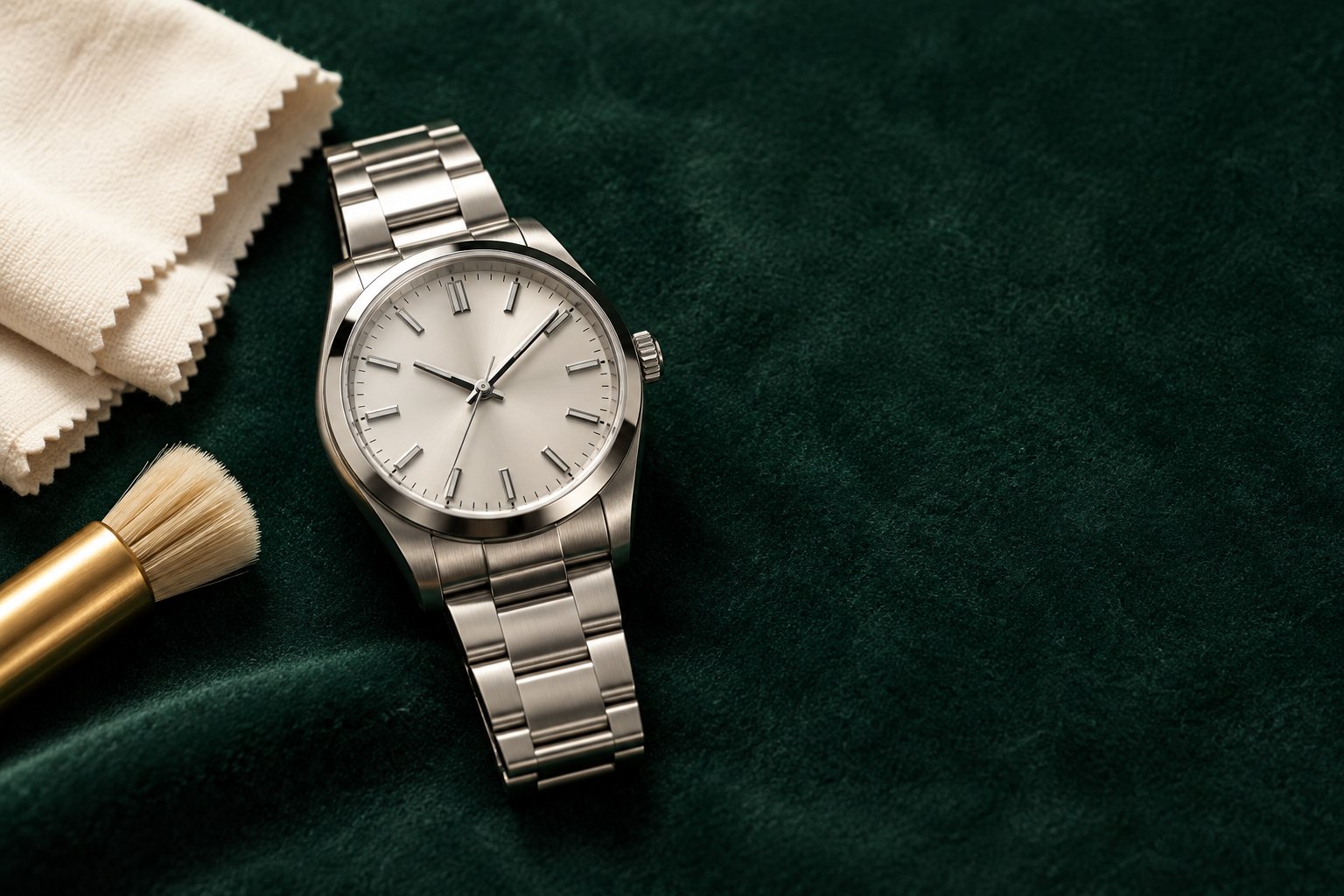
A stainless steel watch is one of the most forgiving products a retailer can stock, but it is not maintenance-free. Customers wear these watches to the office, to the gym, to the beach and into the shower, and every one of those environments leaves its trace on the case, the bracelet and the movement. When a watch looks tired, scratched or discolored, the customer rarely blames their own habits. They blame the brand on the dial — which means they blame you, the retailer or private label owner who sold it.
That is why cleaning and care guidance is not just a consumer service topic. For wholesalers, distributors and private label brands, it is part of the product itself. A clear, practical care routine reduces returns, protects your margin, extends the visible life of your inventory, and gives your after-sales team a documented, defensible position when a customer complains. This guide covers what a buyer or retailer needs to know about cleaning and caring for a stainless steel watch: how 316L steel behaves, what sweat and chemicals actually do, how to clean steel bracelets and leather straps without damaging them, what a 3 ATM water resistance rating really permits, and where the boundary of a 12-month warranty sits.
The guidance here reflects what we see on the production and inspection side at Aurevo, a Shenzhen-based watch and jewelry manufacturer producing more than 200,000 watches per month for retailers, distributors and private label brands in over 65 markets. It draws on the questions our customers ask before and after their orders, and on the condition of watches that come back through after-sales channels. If you sell or are planning to sell stainless steel watches — for example our Aurevo Steel Quartz Watch, a 40mm 316L stainless steel quartz model built for wholesale and private label programs — the routines below are the ones worth passing on to your end customers.
Why Stainless Steel Dominates the Wholesale Watch Market
Walk through any watch trade fair or browse any B2B catalog and you will notice the same thing: the majority of watches on offer wear stainless steel somewhere — usually the case, very often the bracelet as well. There are good commercial reasons for this. Stainless steel takes a polish beautifully, it photographs well, it suits almost every price segment from entry-level quartz to serious mechanical pieces, and it survives the realities of shipping, display handling and daily wear better than most alternatives.
For a wholesale buyer, stainless steel also simplifies the conversation with end customers. It does not tarnish the way lower-grade plated alloys can, it does not trigger the skin reactions associated with nickel release in cheap materials, and it does not need the careful, anxious handling that delicate finishes demand. When a customer asks whether a steel watch is a good purchase, the honest answer is: yes, provided it is made from a proper grade of steel and cared for with a little basic knowledge.
That last clause matters. Not all stainless steel is equal, and not all wear is equal. The difference between a watch that still looks sharp after two years and one that looks ruined after six months usually comes down to two things: the grade of steel in the case and bracelet, and the care routine the owner follows. The first is a sourcing decision — yours. The second is an education task — also yours, if you want fewer complaints and steadier reorders.
Understanding 316L: What the Steel Grade Does and Does Not Promise
Most quality stainless steel watches, including the ones in our wholesale catalog, use 316L stainless steel for the case and bracelet. The grade number is not marketing decoration; it describes a specific austenitic alloy composition with a low carbon content (the "L" stands for low carbon) and added molybdenum, which improves resistance to chloride corrosion — the kind of corrosion that salt water and, to a lesser degree, sweat can cause.
In practical terms, 316L offers three properties that matter to a watch owner. First, it is genuinely corrosion-resistant under normal daily conditions: tap water, rain, hand cream, soap and ordinary sweat will not eat into the metal the way they can degrade lesser alloys. Second, it is hypoallergenic in the sense that matters for consumer confidence — nickel release is low, which is why 316L is the same family of steel used in surgical instruments and quality body jewelry. Third, it holds a finish well: brushed surfaces stay brushed, polished surfaces stay bright, and the metal does not flake or peel the way plating eventually does.
What 316L does not promise: it is not scratch-proof, not immune to chemical damage, and not a license to wear the watch anywhere. Chlorine, bleach, perfumes and abrasive cleaners can still discolor or pit the surface. A hard knock against a doorframe will still leave a dent or a scratch. "Corrosion-resistant" means resistant, not invulnerable — and the distinction is exactly where most avoidable warranty disputes begin.
For a B2B buyer, the steel grade is also a quality checkpoint during sourcing. When you evaluate a supplier's stainless steel watches, ask specifically what grade the case and bracelet are made from, and confirm it in the specification sheet. Our Steel Quartz Watch, for example, is documented as a 316L stainless steel case and bracelet in 40mm, with a quartz movement and mineral glass — and that documentation becomes part of your product story when you explain to retail customers why the watch will keep its look through years of wear. Vague answers like "stainless steel" without a grade deserve follow-up questions, because the difference between 316L and a generic 200-series alloy shows up six months later in your returns data.
What Daily Wear Actually Does to a Stainless Steel Watch
Before getting into cleaning routines, it helps to understand what you are cleaning off, and why. Watch cases and bracelets accumulate several distinct categories of contamination, and each responds to a different treatment.
Sweat and skin oils
The human wrist is a warm, damp environment, and perspiration contains water, salts and fatty acids. On 316L steel these are more of a cosmetic problem than a corrosion threat, but the salts are mildly aggressive when left in place, and the oils attract and hold dust. The visible result is the familiar grayish film that builds up on the inside of a bracelet and around the caseback — the residue that darkens a shirt cuff and dulls the metal's luster. For customers who wear their watch daily, especially in warm climates or during exercise, this film is the single biggest driver of the "my watch looks old" complaint.
Environmental grime
Dust, lint, skin flakes and particles of everyday debris settle into the gaps between bracelet links, under the bezel edge, and around the crown. Individually these particles are invisible; collectively they abrade. Grit trapped between bracelet links works into the pin areas every time the bracelet flexes, which is how links develop play and how polished surfaces pick up fine swirl scratches. This is also why simply rinsing a bracelet — rather than scrubbing it dry — makes such a visible difference.
Cosmetics and household chemicals
Hand sanitizer, sunscreen, perfume, insect repellent, cleaning sprays and chlorine all contact watches far more often than owners realize. Most leave no immediate mark, which is exactly why the damage goes unnoticed: the effect is cumulative dulling of the finish, gradual degradation of rubber or leather components, and in severe cases clouding of the crystal's anti-glare treatment or discoloration of plated elements such as crown and pushers. The gold-tone plated case on a dress model like our Aurevo Custom Logo Men's Watch deserves particular care here, because plating is a surface treatment over the 316L substrate and harsh chemicals attack surfaces first.
Impact and abrasion
Desk edges, door handles, zipper pulls and gym equipment are the everyday enemies of a watch case. Steel is tough, but it is not harder than a concrete pillar or a ceramic mug, and every impact deforms the surface slightly. Light swirl marks from clothing and handling polish out; deep gouges do not. Part of honest customer education is setting this expectation at the point of sale: a steel watch is durable, not indestructible.
The Basic Cleaning Routine: What Actually Works
The good news is that routine care for a stainless steel watch is simple, cheap and safe when done correctly. The routine below is a simple baseline routine suitable for any 316L watch — steel case, steel bracelet, mineral or sapphire crystal. It takes about ten minutes and should be done every two to four weeks for a watch worn daily, or after any exposure to seawater, pool water or heavy sweating.
What you need
- Lukewarm water — never hot, because thermal shock and hot water degrade gaskets over time.
- A mild, pH-neutral soap. Plain hand soap or dish soap without moisturizers, abrasives or strong fragrance works well.
- Two soft cloths: one for washing, one lint-free cloth for drying. A microfiber cloth is ideal.
- A soft-bristled brush — a clean, dry toothbrush dedicated to the task is the classic choice.
- Cotton swabs for the tight gaps around the caseback and between the last links of the bracelet.
Step by step
- Check the crown and confirm water resistance before any wet cleaning. Push the crown in fully. If the watch has a screw-down crown, ensure it is screwed down. A 3 ATM watch (more on what that means shortly) tolerates splashes but should not be submerged; for a 3 ATM model, clean the case and crystal with a damp cloth rather than running it under a tap, and reserve full rinsing for the bracelet only if the watch is removed from the case or the construction clearly permits it. When in doubt, damp-cleaning the whole watch is always the safe option.
- Wipe down the case, crystal and bracelet with a cloth dampened in the mild soap solution. Work the cloth into the surfaces in straight lines rather than circles — circular buffing is what creates visible swirl marks on polished steel.
- For a steel bracelet, clean between the links. Dip the soft brush in the soapy water and brush along the gaps between links, holding the bracelet so water flows away from the case. This dislodges the salt and grime film that dulls the metal and darkens shirt cuffs.
- Rinse or wipe off all soap residue. Soap left to dry leaves its own film, which defeats the purpose. Use a clean damp cloth to remove every trace.
- Dry thoroughly and completely. Pat with a dry cloth first, then leave the watch flat on a dry cloth in a ventilated spot to air-dry for about fifteen minutes.
- Finish with a dry microfiber buff. A light final buff restores the luster on polished surfaces and removes any last water spots.
What to never do: no ultrasonic cleaners at home (they can shake loose gaskets and dislodge hands on quartz movements if used carelessly), no toothpaste or baking soda (both are abrasives that leave real scratches), no bleach or ammonia-based window cleaners (they attack gaskets and can cloud some crystals), no hot water or steam, and no putting a leather strap under the tap — ever. Leather care is a separate routine covered below.
How often is enough?
For a watch worn daily in an office environment: a quick wipe of the caseback and bracelet underside with a dry microfiber cloth at the end of the day, plus the full routine every two to four weeks. For daily wear in hot, humid climates or for customers who exercise in their watch: the full routine every one to two weeks, because salt accumulation is faster. For watches worn occasionally: a wipe-down before storing and after each wear. None of this requires products a customer does not already own, which is precisely what makes this routine so easy to teach and so likely to be followed.
Cleaning a Steel Bracelet: The Deep-Clean Option
Because bracelets have the largest surface area and the most crevices, they collect the most grime — and they respond the best to cleaning. For customers whose bracelet looks dull even after the basic routine, a deeper clean is safe on most solid-link steel bracelets, with one firm precondition: the watch must be water-resistant enough for full immersion, or the bracelet must be removed from the case. For a 3 ATM watch, the honest advice is to keep the watch head out of the water: a soft cloth dampened with the soap solution, worked into the links gap by gap with the brush, achieves most of the same result without risking the case.
The reason bracelet cleanliness matters commercially goes beyond looks. A grime-loaded bracelet transfers that residue to the wearer's skin, which customers often misread as an allergic reaction or "cheap metal" — a complaint that can unfairly follow a well-made watch. Teaching the simple between-links brush routine prevents that misdiagnosis and the returns that follow it.
Cleaning and Caring for a Leather Strap
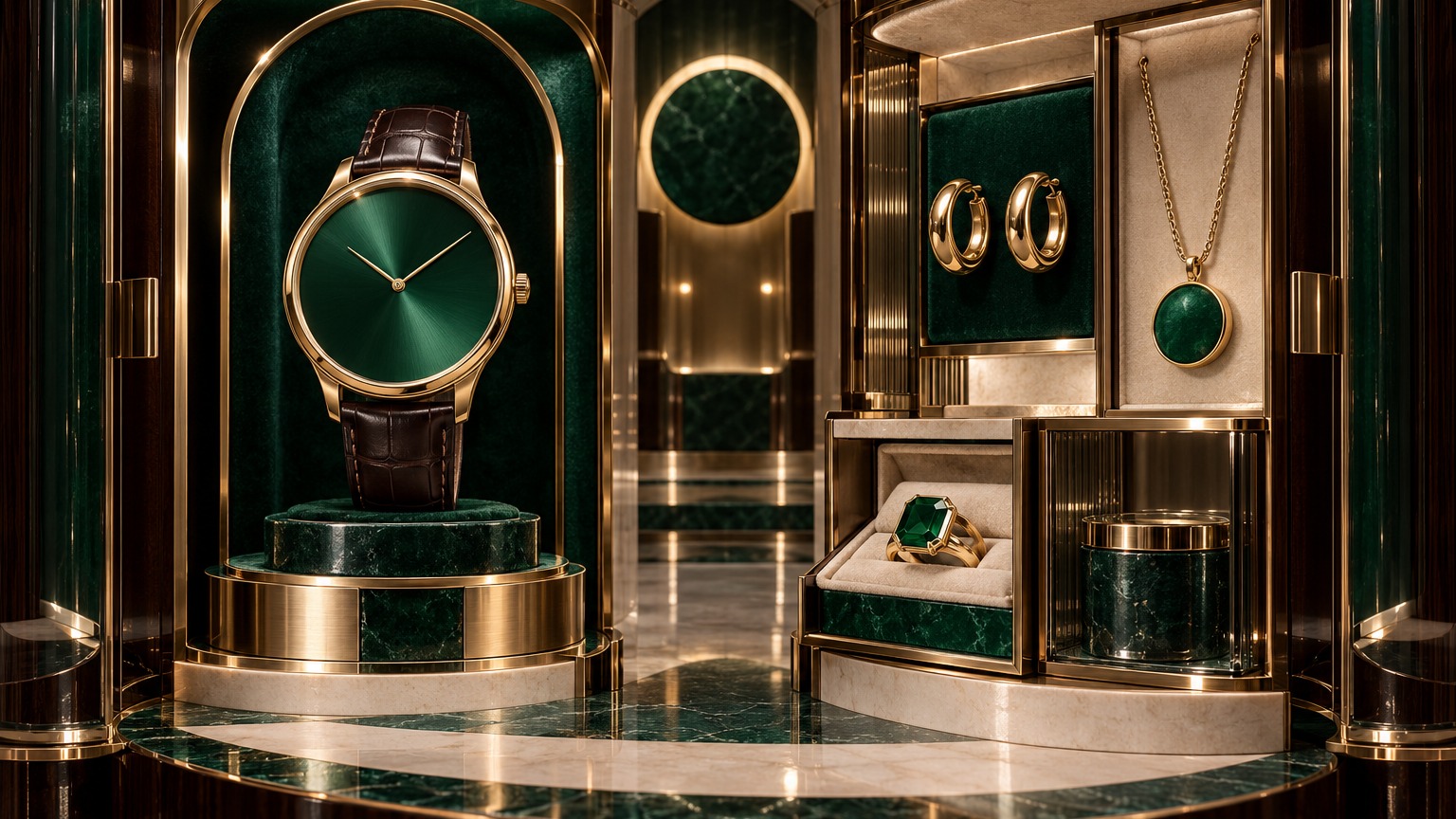
Leather is the opposite of steel: porous, organic and unforgiving of water. This matters to wholesale buyers because many of the most popular dress models in any catalog — including the deep-green dial, brown leather strap model in our own men's range — pair a steel case with a leather strap, and strap damage is a common after-sales issue for watches. The care rules are different and must be communicated separately.
- Keep leather out of water. Rain splashes are tolerable; showers, pools and cleaning tasks are not. Water strips the natural oils from leather, causing stiffness, cracking and delamination of the surface finish.
- Wipe sweat off after wear. Salt and sweat are absorbed into the strap's underside. A quick wipe with a barely damp cloth, followed by a dry one, extends strap life dramatically.
- Keep it away from heat sources. Radiators, car dashboards and direct summer sun dry and crack leather. Store the watch flat, away from windows.
- Condition occasionally. A small amount of leather conditioner appropriate for watch straps, applied every few months with a soft cloth, keeps the leather supple. Customers should test on the underside first.
- Rotate straps if possible. A strap worn every single day absorbs sweat daily and never dries fully. Two interchangeable straps — or alternating watches — doubles strap life.
- Expect replacement. Leather is a consumable. A strap that lasts two to three years of regular wear has done its job, and offering replacement straps as a paid accessory is both an honest expectation-setter and an after-sales revenue opportunity for retailers.
What "3 ATM Water Resistance" Actually Means — and What It Does Not
Water resistance ratings are the single most misunderstood specification in the watch industry, and they generate a disproportionate share of warranty disputes. A watch marked 3 ATM (or 3 bar, or 30 meters) is splash-resistant. That is the entire scope of the rating: rain, hand washing, accidental splashes. It is not rated for showering, swimming, bathing or deliberate submersion — despite the "30 meters" figure printed on the dial, which refers to a static laboratory pressure test, not a diving depth.
For a B2B buyer, two practical conclusions follow. First, when specifying watches for your assortment, match the water resistance rating to the intended customer use case honestly: 3 ATM for dress and everyday office watches, 5 ATM at minimum for customers who want shower-safe peace of mind, and 10 ATM or higher for anything marketed as swim-ready. Second, communicate the rating accurately at the point of sale and in your product copy. The phrase "splash resistant" is more honest and more useful to a customer than "30 meters," and a customer who understood the rating at purchase is a customer who cannot claim the shower killed their watch under warranty.
Our own steel quartz model is documented at 3 ATM (splash resistant), and we state it exactly that way in the specification sheet. Retailers who pass that wording through to their product pages see fewer water-damage claims, because the expectation was set before the sale.
Sweat, Chemicals and the Hidden Enemies of a Watch Finish
Two categories of exposure deserve their own section, because they cause the majority of "my watch changed color" complaints — and because both are preventable with simple customer habits.
Sweat: a slow, steady attack
Sweat is mildly salty and slightly acidic, and on any metal it eventually leaves its mark. On 316L steel the visible effect is usually gradual dulling of the finish and the gray film already described, rather than outright corrosion. But sweat does not stay on the steel: it soaks into leather straps, degrades the coating on plated components, and sits in the gaps of the bracelet for hours after exercise. The practical advice for customers is straightforward — take the watch off during intense workouts if possible, and wipe it down after any heavy sweating session. Customers in tropical climates, manual workers and gym regulars benefit most from this habit, and it is worth including in the care card that ships with your products.
Chemicals: the invisible finish killers
The most damaging everyday chemicals for a watch are the ones nobody thinks about:
- Chlorine from swimming pools attacks gaskets and degrades plated finishes. Even a splash-resistant watch should not make pool water a habit.
- Household cleaners — bleach, ammonia sprays, oven and bathroom cleaners — are aggressive both to steel finishes and to gaskets. Watches should come off before cleaning chores.
- Perfume and cologne contain alcohols and solvents that attack plating and leather alike. The habit worth teaching: perfume first, watch on second.
- Hand sanitizer is a daily contact chemical for many people and it is hard on both finishes and gaskets with repeated exposure. A wipedown at the end of the day resets the exposure.
- Sunscreen combines chemical attack with grit, since it carries the day's dust onto the case. Beach days call for a rinse-or-wipe routine afterward.
None of these chemicals causes instant visible damage, which is precisely why the damage accumulates unnoticed and then surfaces as a warranty complaint six months later. The retailer who communicates this list at the point of sale — in packaging inserts, product pages or post-purchase emails — converts a future dispute into a satisfied, informed customer.
Scratches and Surface Damage: What Can and Cannot Be Fixed
Every stainless steel watch collects fine marks with wear; this is normal and does not indicate a defect. But customers need to know the difference between what is recoverable and what is not, and retailers need to know the same before promising a "fix."
Hairline swirl marks
These are the fine, uniform micro-scratches that develop on polished surfaces from daily contact with clothing, sleeves and handling. They are entirely cosmetic and entirely fixable: a jeweler's polishing cloth or a dedicated watch polish restores most of the original luster. For brushed surfaces, the marks are usually invisible within the texture.
Deep scratches and dents
A gouge from a doorframe, a drop onto concrete or a ding from a hard object removes metal rather than just disturbing its surface. These cannot be polished out by the owner; professional refinishing can minimize them, but on a wholesale-price-point watch the economics rarely justify the service. Honest guidance is to call it wear and tear — which is exactly what it is.
Crystal scratches
Mineral glass, the standard crystal at wholesale price points, scratches more easily than sapphire but can often be improved with a specialized glass polish for very light marks. Deep scratches in mineral glass usually mean replacement, which on a quartz watch is an inexpensive repair. Sapphire crystals resist scratches dramatically better but can chip on hard impact. Retailers should know which crystal their models carry, because it changes the repair conversation entirely — our steel quartz model uses mineral glass, and that is documented in the specification sheet we provide to buyers.
Retailer takeaway: never promise polishing, refinishing or scratch removal as a service unless you actually offer it. The safest framing for customers is preventive: "light marks are normal and can be buffed with a polishing cloth; deep dents are wear and tear." That framing is honest, and it is defensible in a warranty conversation.
Proper Storage Between Wears
How a watch is stored when it is not on the wrist affects its condition as much as how it is worn. Three simple storage rules cover most situations:
- Store it dry and separate. A watch left on a bathroom counter absorbs humidity from every shower and collects cosmetic residue. A soft pouch or the original box, in a drawer away from direct sunlight, is the right default.
- Keep it away from magnets. Speakers, laptop cases, magnetic clasps on bags and induction cooktops can magnetize a quartz or mechanical movement — for quartz watches the usual symptom is erratic seconds-hand stepping. This is a repair-bench fix, not a user fix, so prevention is the whole game.
- Do not store it crown-down against hard objects. Pressure on the crown or caseback edge over weeks can deform gaskets or mark the case. Flat storage on a soft surface avoids the problem entirely.
For retailers holding inventory: the same rules apply to your stockroom. Watches stored in their boxes, in a dry room, away from direct sunlight and chemical vapors, sell as new watches. Watches stored loose in a drawer full of metal objects arrive at the customer pre-scratched — and the claim lands on you, not the stockroom.
What the 12-Month Warranty Covers — and Where Its Boundary Sits
Warranty conversations go wrong when expectations were never aligned, so the boundary needs to be stated plainly. Our warranty policy for watches and jewelry is a uniform 12 months across the product range, and that same figure appears in the specification sheet of every product we ship. Within that period, a genuine manufacturing defect — a movement that stops or runs errantly through no fault of the wearer, a bracelet link that separates under normal use, a caseback that will not stay sealed, a dial element that detaches — is our responsibility, verified through the claim process and compensated by repair or replacement of the affected value.
The 12-month warranty does not cover the things care guidance exists to prevent:
- Water ingress from use beyond the rating. A 3 ATM watch taken swimming is not covered when moisture appears inside the case; the rating exists precisely to draw this line.
- Cosmetic wear and tear. Scratches, dents, finish dulling and the natural aging of leather straps are the result of use, not defects.
- Chemical damage. Discoloration from chlorine, solvents, perfumes or household chemicals is preventable and therefore not a defect claim.
- Impact damage. A dropped watch with a cracked crystal or a dented case is an accident, not a manufacturing fault.
- Battery depletion. A quartz battery is a consumable with a finite life; replacement is routine maintenance.
For B2B buyers, the operational takeaway is to mirror this boundary in the warranty you present to your own customers. When your warranty card says 12 months, specifies what counts as a manufacturing defect and points to the care guidance for everything else, disputes become rare and resolvable. The care guide in this article is the content for that card.
Building a Care Routine Into Your Retail Program
Care guidance only reduces returns if customers actually see it. Across our retail and distribution partners, the programs that consistently generate the fewest care-related complaints share three delivery channels:
- Packaging insert. A one-page care card in the box, printed with the five-point routine (wipe daily, clean monthly, keep leather dry, respect the water rating, store it dry and separate). It costs cents per unit and reaches every customer at the moment of maximum attention.
- Product page copy. A short care section on each product page, including the honest water resistance wording. This also serves pre-sale education, which is where expectations are actually formed.
- Post-purchase email. A single email two to three weeks after delivery, restating the basic routine and the warranty boundary. It reads as service, not marketing, and it is the touchpoint most likely to preempt a first complaint.
Private label and OEM buyers can go further: we print buyer-designed care cards as part of custom packaging programs, so the guidance arrives in your brand voice with your logo. For programs where the watch is the flagship of a collection, a care card is one of the cheapest brand-trust investments available.
Ordering, Sampling and Lead Times for Your Program
Care guidance works best when it is planned into the order itself, so a few practical ordering facts are worth stating here. Our Aurevo Steel Quartz Watch, for example, carries a minimum order quantity of 100 units for catalog configurations, and custom logo or private label programs start from 300 units. Sample lead time is typically 7–15 days, and mass production after sample approval runs 20–40 days depending on the configuration and order volume. Those windows leave room to print buyer-designed care cards as part of the packaging program, so the guidance in this article arrives in the box with the first shipment rather than as an afterthought. If you are planning a first order, confirm the exact MOQ, sampling cost and production schedule for your chosen configuration during quotation — plated cases, leather straps and custom dials each carry their own schedule.
Quick Reference: The Care Rules at a Glance
| Situation | What to do | What to avoid |
|---|---|---|
| Daily wear | Wipe caseback and bracelet underside with a dry microfiber cloth at day's end | Leaving sweat and salt film on overnight |
| Every 2–4 weeks | Full clean: lukewarm water, mild soap, soft brush between links, thorough dry | Hot water, toothpaste, baking soda, ultrasonic at home |
| After swimming or beach | Fresh-water wipe-down of case and bracelet (if rating permits), full dry | Assuming "30 meters" means swim-safe on a 3 ATM watch |
| Leather strap | Wipe sweat after wear; condition quarterly; store flat, away from heat | Water, soap, radiators, car dashboards, wearing the same strap daily |
| Chemical exposure | Perfume before watch; remove for cleaning chores; wipe after sanitizer use | Chlorine, bleach, ammonia sprays, solvents on plated parts |
| Storage | Soft pouch or box, dry room, away from sunlight and magnets | Bathroom counters, loose storage with metal objects, crown under pressure |
| Scratches | Polishing cloth for hairline marks on polished surfaces | DIY abrasives; promising deep-scratch removal |
| Warranty questions | 12-month coverage for manufacturing defects, verified through claims process | Claiming water, impact, chemical or cosmetic wear as defects |
Frequently Asked Questions
How often should a stainless steel watch be cleaned?
A watch worn daily should be wiped down with a dry microfiber cloth at the end of each day and given the full soap-and-brush routine every two to four weeks. Watches worn in hot, humid climates or during exercise need the full routine every one to two weeks. Occasional-wear watches need only a wipe before and after each wear. Consistency matters more than intensity — the routine is designed to be light enough that customers actually follow it.
Can I clean my stainless steel watch with soap and water?
Yes, with one precondition: the water must not reach places it should not. For a 3 ATM (splash-resistant) watch, clean the case and crystal with a damp cloth rather than under a running tap, and reserve brush-cleaning for the bracelet with the watch head protected. Use only lukewarm water and a mild, pH-neutral soap — never hot water, toothpaste, baking soda or household chemical cleaners.
Is 316L stainless steel watch good quality?
316L is the standard quality benchmark for quality stainless steel watch cases and bracelets. It is a low-carbon austenitic alloy with added molybdenum for chloride corrosion resistance, the same family of steel used in surgical instruments, and it offers low nickel release for skin comfort. When sourcing, confirm the grade in writing on the specification sheet — a supplier who documents 316L on paper is a different proposition from one who just says "stainless steel."
How do I clean a stainless steel bracelet that looks dull?
Dullness on a steel bracelet is usually a film of skin oils, salt and grime trapped between the links — not damage to the metal itself. Brush between the links with a soft toothbrush and a solution of mild soap in lukewarm water, working gap by gap, then wipe away all soap residue and dry thoroughly. For a 3 ATM watch, protect the watch head from water and clean the bracelet with a damp cloth and brush instead of rinsing under a tap.
How do I clean a stainless steel watch that smells or transfers residue to the wrist?
Odor or residue transfer from a bracelet is caused by trapped sweat and skin oils, not the steel itself. The fix is the between-links brush routine described above, plus a daily end-of-day wipe of the bracelet underside. For customers with sensitive skin, the daily wipe also prevents the moisture buildup that causes irritation.
5 ATM vs 3 ATM: which rating should a retailer stock?
This is a portfolio question, not a better-or-worse question. 3 ATM watches are the right choice for dress and everyday office watches, where customers expect a slim case and the realistic use is splashes and rain. 5 ATM adds genuine shower tolerance and suits everyday-sport styling, and 10 ATM and above serve customers who actually swim. The mistake to avoid is buying only one rating for the whole assortment and then marketing it dishonestly for uses it does not support. Stock the ratings your customer segments need, and state each one accurately — our steel quartz model is documented at 3 ATM, and we say so plainly.
Can scratches be removed from a stainless steel watch?
Light hairline marks on polished surfaces can be reduced with a jeweler's polishing cloth. Deep scratches and dents remove metal and cannot be polished out by the owner; professional refinishing is rarely economical at wholesale price points. Mineral glass crystals with light scratches can sometimes be improved with a specialized glass polish; deep crystal scratches mean replacement, which is inexpensive on a quartz watch. The honest framing for customers: light marks are normal wear, deep dents are wear and tear, and neither is a warranty matter.
Does sweat ruin a stainless steel watch?
Not quickly, and not the steel itself — 316L resists the salt and acids in sweat far better than lesser alloys. But sweat soaks into leather straps, dulls finishes over months, and sits in bracelet gaps where it transfers to skin and clothing. Wiping the watch down after heavy sweating and cleaning the bracelet every one to two weeks for gym regulars keeps all of those effects in check.
What voids a watch warranty?
On our 12-month warranty, the exclusions are use beyond the water resistance rating, impact damage, chemical damage, cosmetic wear and tear, and battery depletion. A genuine manufacturing defect within 12 months — a movement failure through no fault of the wearer, a bracelet link separating under normal use, a caseback seal failure — is verified through the claims process and compensated by repair or replacement of the affected value.
How should a watch be stored when not worn?
In a soft pouch or its box, in a dry room, away from direct sunlight, radiators and magnets. Do not leave it on a bathroom counter, do not store it loose with other metal objects, and do not let anything press on the crown or caseback edge in storage. For retail inventory, the same rules keep stock selling as new.
Passing the Guide to Your Customers: A Retailer's Checklist
Before you ship your next stainless steel watch order, use this checklist to make sure the care guidance actually reaches end customers:
- Confirm the steel grade (316L) and water resistance rating are documented on the spec sheet of every model you source.
- Write product page copy that states the water resistance honestly — "splash resistant" rather than "30 meters."
- Print a one-page care card for the box: daily wipe, monthly clean, leather rules, water rating, storage rules.
- State the 12-month warranty boundary on the card and on the product page, with what counts as a defect and what does not.
- Send one post-purchase care email two to three weeks after delivery, restating the routine and the warranty boundary.
- Offer replacement straps as a paid accessory, and position them as normal maintenance rather than a defect fix.
The economics are simple. A care card costs cents and a post-purchase email costs nothing. A water-damaged return costs you the product, the shipping, and often the customer. Across a season's worth of orders, a customer base that has been taught to care for its watches tends to generate fewer returns — and the better review scores that follow help other buyers find your store.
Stainless steel watches earn their place in any wholesale assortment by being tough, good-looking and low-drama. A little honest education — the grade of steel, the meaning of the water rating, a ten-minute monthly routine, and a plainly stated 12-month warranty boundary — keeps them that way for the customer and keeps the category profitable for you. If you are building or expanding a stainless steel watch program and want a manufacturer whose specification documentation matches what ships in the box, explore the Aurevo Steel Quartz Watch as a starting point, or see the Custom Logo Men's Watch for a private label foundation with a leather strap option. Either way, the care guidance in this guide ships with the product story — and it is yours to pass on.