Is Gold Plated Jewelry Worth It? A B2B Buyer's Guide to Sourcing Quality Gold-Tone Jewelry at Wholesale
2026. 10. 5.
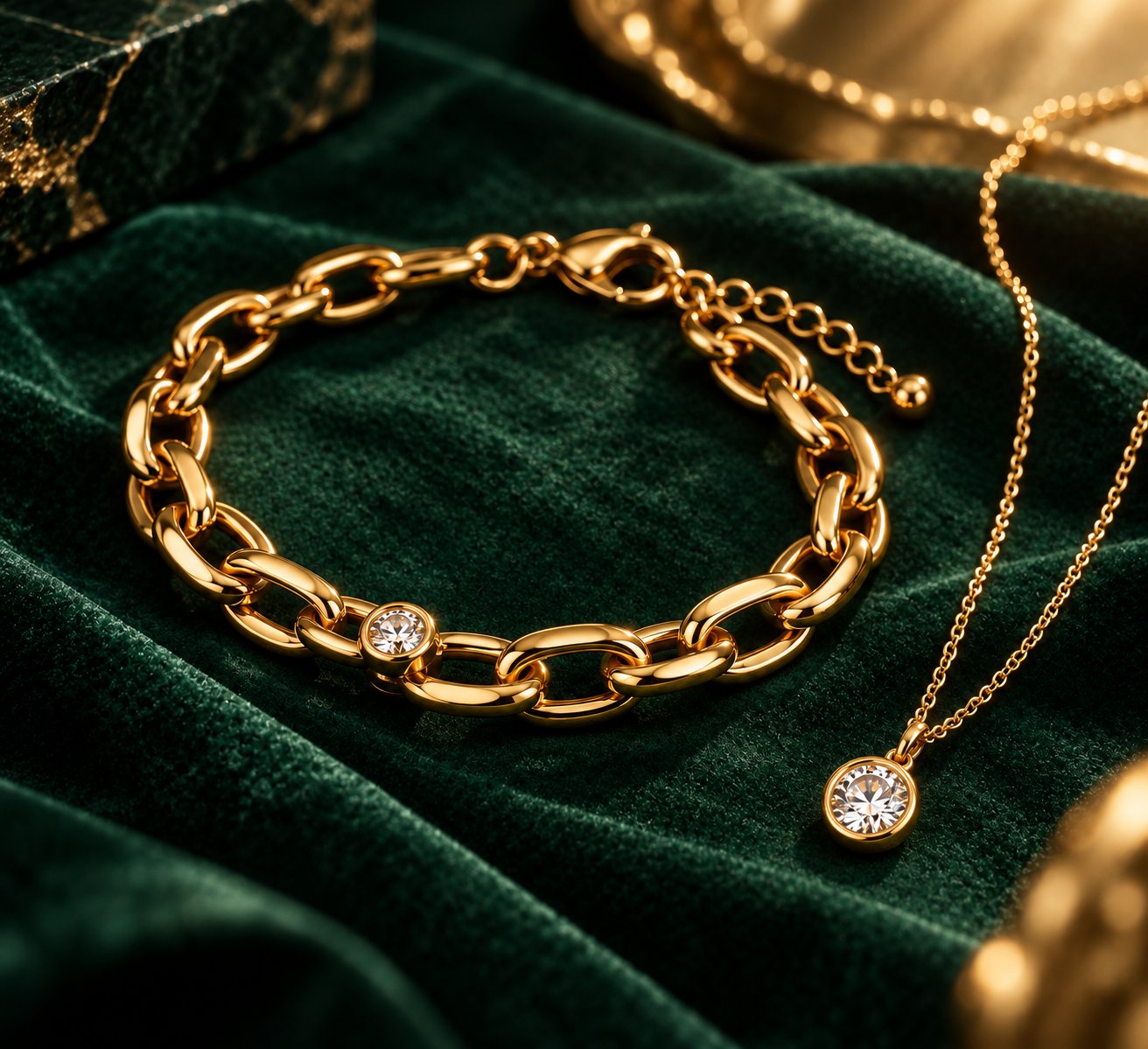
Every week, buyers searching for wholesale fashion jewelry type the same question into Google: is gold plated jewelry worth it? Some are boutique owners deciding whether to add gold-tone pieces to their assortment. Others run e-commerce stores that live and die by review scores and return rates. Still others are building private label lines and need to know whether a plated product can carry their brand without damaging it.
The question deserves a better answer than the two extremes you usually find online. On one side, jewelry purists insist that anything short of solid gold is disposable junk. On the other, dropshipping course sellers claim plated jewelry is a license to print money. Both takes are wrong, and both can cost you money — the first by pushing you away from a genuinely profitable category, the second by pushing you into it without understanding what makes some plated lines sell for years while others generate returns within weeks.
We manufacture watches and jewelry at Aurevo, a Shenzhen-based factory with an 18,000-square-meter facility, more than 220 employees, 16 dedicated production lines, and more than 40 quality-control stations embedded across the production process. Gold-tone plated and gold-tone finished pieces are a core part of what we produce and export to 65+ markets. This guide is written from the manufacturing floor, not from a re-seller's product page. It explains what gold plating actually is, how plating thickness and base metals change the value equation, what quality checks separate a sellable batch from a return magnet, and how to evaluate a supplier before you commit capital.
By the end, you will be able to answer the question for your own business — because "is gold plated jewelry worth it" never has a universal answer. It has a conditional one, and the conditions are exactly what this article teaches you to check.
What Gold Plated Jewelry Actually Is
Gold plated jewelry is jewelry made from a base metal — commonly an alloy, brass, or stainless steel — onto which a thin layer of gold is deposited by an electroplating process. The base metal provides the form, weight, and structural strength at a fraction of the cost of solid gold. The plated layer provides the color, the first impression, and most of what the end customer actually sees and pays for.
The economics are simple. A gold-tone bracelet that would be economically impossible to produce in solid gold at a fashion-retail price point becomes entirely viable when the gold exists only as a surface layer measured in microns. This is not a shortcut or a deception — it is a distinct product category with its own quality standards, its own price structure, and its own customer expectations. Fine jewelers sell solid gold; fashion retailers and most e-commerce brands sell plated jewelry. The mistake buyers make is not choosing plated jewelry; it is treating all plated jewelry as interchangeable.
The electroplating process, briefly
In electroplating, the base-metal component is cleaned and prepared, submerged in a chemical bath containing gold salts, and connected to an electric current. The current deposits gold ions onto the surface, building the layer gradually. The thickness of that layer depends on how long the piece stays in the bath and the current density used. After plating, pieces are rinsed, dried, and inspected for color consistency, adhesion, and surface defects before they move to stone setting and assembly.
Why does this matter to a buyer rather than a jeweler? Because nearly every quality problem that shows up in your returns pile — uneven color between pieces in the same carton, tone that drifts between production batches, finish that dulls or wears through too quickly — traces back to how this process was controlled. When you ask a supplier about their plating process, you are not asking a technicality. You are asking whether the batch you receive in month six will still match the sample you approved in month one.
Common plating grades you will encounter
The industry uses rough thickness tiers, and knowing them helps you read supplier quotations correctly:
- Flash plating — a very thin decorative layer, typically under 0.5 micron. Common on the cheapest costume jewelry. Color looks right out of the box but wears quickly with daily use.
- Standard gold plating — roughly 0.5 to 1 micron. The workhorse grade for mainstream fashion jewelry: durable enough for normal wear when finished and cared for properly, priced for volume retail.
- Heavy gold plating / gold vermeil territory — 2.5 microns and above (vermeil specifically requires a sterling silver base). Positioned at premium fashion price points and more forgiving of daily wear.
- Gold filled — mechanically bonded, not electroplated, with a legally defined gold content by weight (5% in the US). Technically not "plated," but often discussed alongside it by buyers comparing durability tiers.
One caution: thickness alone does not guarantee quality. The preparation of the base surface, the plating bath chemistry, the rinsing and drying discipline, and the inspection that follows all determine whether a plated layer actually adheres and performs. A poorly run line can produce an inconsistent batch at any thickness grade. This is why supplier evaluation — covered later in this guide — matters more than specification sheets.
The Honest Answer: When Gold Plated Jewelry Is Worth It — and When It Is Not
Strip away the ideology and the answer depends on your channel, your price point, and your tolerance for operational friction. Here is the breakdown we give buyers who ask us directly:
| Buyer type | Is gold plated jewelry worth it? | Why |
|---|---|---|
| Boutique / multi-brand retail | Yes, for trend-adjacent and everyday pieces | Plated pieces let you refresh the assortment each season at accessible price points while a smaller fine-jewelry capsule carries your margin. The economics of a $20–$60 retail band rarely work in solid gold at all. |
| E-commerce sellers | Yes, with strict QC conditions | Reviews and return rates are existential online. Plated jewelry works when batch consistency, stone setting, and clasp quality are controlled — and fails loudly when they are not. |
| Private label brands | Yes, as the volume backbone of the line | Your brand story sells the line; the product must deliver on it. Well-made gold-tone pieces at honest prices drive repeat purchase, which is where private label economics actually live. |
| Fine jewelry retailers | Rarely, as core inventory | Your customers come to you for solid metal and lasting value. Plated pieces can work as entry-level or gifting add-ons, but they should not carry the brand. |
| Any buyer chasing ultra-low unit cost | No | If the sourcing decision is made purely on lowest unit price, plated jewelry becomes the most expensive category you stock: thin plating, loose stones, and weak clasps convert directly into returns, refunds, and lost reviews. |
Notice the pattern. Gold plated jewelry is worth it wherever appearance at an accessible price drives the purchase — and it is worthless, or worse, wherever the buyer's only lever is price. That distinction should shape both what you buy and whom you buy it from.
The distinction most listicles miss: worth is created at the factory, not at the store
A plated bracelet that sells well in a boutique and survives six months of wear was not lucky. Somewhere in its production, someone controlled the color of the plating bath, checked that every cubic zirconia sat straight in its prongs, and tested the lobster clasp before the piece went into a carton. A nearly identical-looking bracelet from a factory that skipped those steps produces the returns that give the whole category its bad reputation.
This is why "is gold plated jewelry worth it" is really two questions: is the category viable for my channel (almost always yes for fashion retail) and can I find and verify a manufacturer that produces it properly (this is where due diligence earns its keep). The rest of this guide addresses the second question in detail, because it is the one you can actually act on.
Plating Thickness: The Most Misunderstood Variable in the Category
When buyers compare plated jewelry quotes, they often treat plating as a binary — gold-tone or not — and negotiate on unit price. That reflex costs money. Plating thickness is one of the main levers behind both the factory's cost and the product's real-world lifespan, and it should be a conscious decision, not a default.
The trade-off works like this: thicker plating consumes more gold and more bath time, which raises unit cost. In exchange, the finished piece tolerates more friction, more moisture exposure, and more years of wear before the base metal shows through. For pieces positioned as everyday wear — bracelets worn against skin and clothing, chains handled dozens of times a day — the thicker grade usually earns back its cost in reduced returns. For occasion pieces worn a handful of times a year, the standard grade is often the smarter allocation of budget.
Match the thickness to the wearing pattern, not the price point
A useful exercise before you order: map each SKU to how your customer will actually wear it. A statement necklace for evenings has a completely different duty cycle from a bracelet worn to the office five days a week. The necklace can carry a standard finish; the bracelet is the piece where skimping shows up first as worn edges, and later as a return. Discuss the wearing pattern with your supplier in the sampling stage rather than discovering it in your return data.
Also understand what thickness cannot fix. No plating grade survives being sprayed with perfume daily, worn into a swimming pool every weekend, or stored wet in a sealed pouch. That is not a product failure — it is a care-expectation mismatch, and the supplier's job is to give you care guidance you can pass to your customers (we return to this topic in the durability section below). The buyer's job is to choose a supplier who states those limits honestly instead of promising a product that "never fades," which no plated jewelry on the market honestly does.
How Long Does Gold Plating Last? The Realistic Timeline
Buyers often ask for a single number: how many months will gold plated jewelry last? The honest answer is that lifespan is not a fixed property of the category — it is the product of three variables you can actually inspect: plating quality, wearing conditions, and care.
- Plating quality and thickness. A well-prepared, properly plated piece at a standard grade or above holds its color and finish through normal daily wear for years; thin flash plating on rough base metal can show wear within a season. This is the variable controlled at the factory, and the one your supplier evaluation should target.
- Wearing conditions. Jewelry worn daily against skin, sunscreen, and clothing endures far more friction than occasional-wear pieces. Bracelets and rings — which contact surfaces constantly — show wear before necklaces and earrings do. When you plan your assortment, assume your best-selling pieces will be your hardest-wearing ones.
- Care habits. Contact with perfume, lotion, chlorine, and sweat accelerates finish wear on any plated product. Pieces stored dry between wears last visibly longer than pieces left in humid bathrooms. This is not a defect claim to hide — it is guidance your customers will thank you for, and it measurably reduces "it changed color" complaints.
So rather than promising an exact lifespan (no serious manufacturer does), the practical question for a buyer is: what does the supplier do to maximize the lifespan variable they control? The answer should include surface preparation discipline, defined plating grades, in-process checks, and a final inspection before packing. Suppliers who speak in vague superlatives about durability without being able to describe their process are asking you to absorb the risk of their shortcuts.
What "normal wear" means in practice
When we say a properly finished piece holds up in normal wear, we mean everyday conditions: putting it on and taking it off daily, incidental contact with water while washing hands, reasonable exposure to air and skin oils. We do not mean gym sessions, pool laps, or sleeping in jewelry every night — and you should be skeptical of any marketing copy that promises plated jewelry survives those conditions, because it does not. Setting honest expectations with your own customers is not a weakness in your product page; it is one of the cheapest return-prevention tools you have.
Quality Checks That Separate Sellable Batches from Return Magnets
In the wholesale orders we review from our own production lines, the same handful of quality failures account for the large majority of jewelry returns. None of them are exotic. All of them are preventable with disciplined in-factory checking. Here is what should be checked on every plated jewelry order, and what each check prevents:
| Check | What it catches | Return risk it prevents |
|---|---|---|
| Color consistency against an approved standard | Tone drift between pieces in a batch, or between production runs | "This doesn't match my other bracelet" reviews; photo-listing mismatch claims |
| Plating adhesion and surface defects | Bubbling, flaking, rough spots, scratches from handling | "The finish came off in two weeks" returns |
| Stone setting security and alignment | Crooked stones, unseated prongs, stones missing from the setting | Stones lost in transit or within days of wear |
| Clasp function testing | Stiff, loose, or failing lobster clasps and closures | "Arrived broken" complaints and immediate refunds |
| Chain and link integrity | Weak links, kinks, incomplete solder points | Necklaces and bracelets that separate during wear |
| Final pre-shipment inspection | Anything the line-level checks missed, before goods leave the factory | Cartons of mixed defects arriving at your warehouse |
When you evaluate a supplier, ask two questions about this table. First: which of these checks run on every order, not just on sample requests? Second: where do the checks physically happen — embedded in the production line as it runs, or tacked on at the end when it is too late to fix a systemic problem? A factory with dedicated quality-control stations across the production process gives materially different answers from a trading company that outsources everything and inspects nothing.
The batch-consistency problem, explained from the production floor
The most common way plated jewelry disappoints a buyer is not that the product is bad — it is that the product is inconsistent. The sample glows warm gold; the reorder comes back half a shade cooler. In fashion retail, where your listing photos are the product, that half-shade is a real cost: photos need reshooting, listings need flagging, and customers who bought the first batch compare it against the second.
Consistency is engineered, not wished for. It requires a controlled plating process with defined bath chemistry and timing, a color standard that every batch is checked against, and inspection happening while production runs — not after packing. When you request samples and reorders from the same supplier, deliberately compare them against each other. A supplier whose batch two matches batch one is demonstrating process control you can build a multi-season program on.
Real Products, Real Configurations: Three Examples from Our Line
Abstract quality standards are easier to judge against actual products. Here are three pieces from our current catalog — each a real, in-production configuration — and what each illustrates about buying plated jewelry well.
Gold-Tone Bracelet (SKU AJW-5001): the volume anchor
This bracelet pairs a gold-tone alloy body with cubic zirconia accents set with even spacing and secure prongs, closed by a tested lobster clasp. It is the classic volume anchor SKU: accessible price point, broadly wearable design, and a specification — MOQ 200 pieces — that keeps entry practical for boutiques and online stores. What makes it illustrative for this guide is the process behind it: alloy sourcing, stone setting, clasp assembly, and pre-shipment inspection all run in-house, and the finish is checked against a color standard so the first piece in a run stays within the same tolerance band as the last. For buyers building an everyday-wear assortment, this is what a properly controlled volume piece looks like. You can see the full specification on the Aurevo Gold-Tone Bracelet product page.
Lumiere Gold Necklace (SKU AJW-3001): the pendant done right
A 45cm gold-tone pendant necklace with a single round cubic zirconia in a four-prong setting and a lobster clasp. Necklaces fail differently from bracelets: the chain links and the pendant mount take the stress, and the stone must stay seated through display handling. This piece shows how those risks are addressed with defined checks — stone seating, clasp function, chain link formation, and surface finish are each inspected, with a final appearance check before packing. At a 200-unit standard MOQ with OEM and private label options, it is a practical core SKU for jewelry retailers and private label programs. Full details are on the Lumiere Gold Necklace product page.
Gemstone Bracelet (SKU AJB-5002): the differentiation piece
Polished gold-tone links with faceted green gemstones in prong settings. This is the piece that answers a different buyer question: not "how do I stock the category cheaply" but "how do I stand out within it while keeping volume economics." The MOQ is 100 pieces, making it a low-commitment test SKU for a new color story or a coordinated collection play — it pairs naturally with gold-tone necklaces and earrings from the same supplier to keep plating tone consistent across a full set, which is exactly the batch-consistency discipline described above applied across multiple SKUs. Specification and options are on the Gemstone Bracelet product page.
How to Evaluate a Gold Plated Jewelry Supplier: A Due-Diligence Checklist
Everything in this guide converges on one practical task: choosing a manufacturer. Price quotes are easy to collect; process evidence is what actually predicts whether your program succeeds. Use this checklist before committing an order to any plated jewelry supplier:
- Manufacturing vs. trading. Ask directly: do you produce in your own facility, or do you source from other factories? Own production means the supplier controls plating chemistry, stone setting discipline, and inspection timing. A trading company can still deliver good goods — but you have one more layer between you and the process, and you cannot verify anything on-site.
- In-house process coverage. Which steps happen in-house: base-metal forming, plating, stone setting, assembly, packing? The more of the chain that sits under one roof, the fewer the handoff points where quality and color consistency get lost.
- QC infrastructure in numbers. How many quality-control stations are embedded in the line, and at which steps? A factory that can name its station count and where they sit is describing a system; one that answers "we check everything" is describing a hope.
- Sample-to-batch consistency evidence. Order samples, approve one, then compare the production batch against it. For repeat programs, compare this season's batch against last season's. Consistency over time is the single most revealing signal.
- Written warranty terms. What does the supplier cover after shipment, for how long, and under what conditions? Get it in writing. Uniform coverage — such as a 12-month warranty across a catalog — is a stronger signal than per-order negotiation, because it shows the policy comes from the manufacturer's confidence rather than from a single deal's margin.
- Customization and private label capability. If branding matters to your channel, confirm OEM/ODM scope, packaging options, and how customization terms are confirmed before production starts — not discovered after it.
- Honest limitation statements. Ask what their plated finish should not be exposed to, and whether they provide care guidance you can pass to customers. Suppliers who volunteer limitations are the ones who have actually thought about your return rate.
- Lead time structure. Separate sample lead time from production lead time, and confirm both in writing. Sampling in 7–15 working days and production in 20–40 working days is a workable planning window for seasonal programs; anything vaguer makes your inventory planning guesswork.
No single item on this list is decisive alone. Together, they separate manufacturers with systems from sellers with catalogs — and that distinction is precisely what determines whether gold plated jewelry is worth it for your business.
Red flags that should end the conversation
- Refuses to state a plating grade or thickness for the quoted price.
- Claims the finish "never fades" or the product is "identical to solid gold."
- No written warranty or post-shipment coverage at any price.
- Cannot explain where quality checks happen in the production flow.
- Quotes far below the market band without being able to explain what was removed to get there.
The Cost Structure of Plated Jewelry: Where the Money Actually Goes
Understanding cost structure turns you from a price-taker into a negotiator who knows which concessions are safe to ask for and which will be paid for later in returns. In a typical gold-tone fashion piece, the unit cost divides across four areas:
| Cost component | What it buys | What happens if you squeeze it |
|---|---|---|
| Base metal and forming | Body shape, weight, structural integrity | Thinner, lighter, more fragile pieces; bent chains and warped settings |
| Plating process | Color, finish quality, wear life | Thinner or poorly adhered layers; the tone drift and wear-through that drive returns |
| Stones and setting labor | Sparkle, perceived value, photo appeal | Loose or crooked stones — the most visible defect a customer can find |
| QC and inspection | Batch consistency, defect interception | Defects discovered by your customers instead of by the factory |
Honest caveat: the share each component takes varies by design, stone count, plating grade, and order size, so no fixed percentage table applies across the category — and a supplier who quotes one universal breakdown is simplifying. The workable approach is comparative: collect quotes for the same specification, then ask each supplier which of these four areas their price assumes. When one quote comes in significantly below the others, the reduction almost always comes from the third and fourth rows — because they are the least visible at the sampling stage and the most expensive at the returns stage. Cheaper plating and skipped inspection keep the sample looking acceptable while quietly loading risk into your first bulk order. Ask what a low quote removes before you celebrate it.
Pricing your retail offer honestly
Because plated jewelry sits in an accessible retail band, margin math works differently from fine jewelry. Factory-cost-to-retail multipliers vary widely by channel, market, and brand positioning — a boutique multi-brand store, a marketplace seller, and a private label DTC brand all price the same bracelet differently, so quoting one universal number would mislead more than it helps. The discipline that does transfer: your retail price must fund not just the unit cost and shipping, but the operational reality of the category — occasional returns, occasional replacements, photography refreshes between batches. Buyers who price plated pieces as if returns were impossible end up funding those returns out of margin anyway, just less predictably. A realistic pricing buffer, combined with a supplier whose defect rate is genuinely low, is what makes the category reliably profitable rather than occasionally lucky.
Care Guidance You Can Pass Straight to Your Customers
One of the underused tools in reducing plated jewelry returns costs nothing: clear care guidance, printed on your packaging or added to your product pages. It converts the category's known sensitivities from "hidden defect" into "expected behavior," which is the difference between a complaint and a satisfied, informed customer.
- Put jewelry on after applying perfume, lotion, and cosmetics — not before.
- Remove plated pieces before swimming, showering, or exercising; chlorine and sweat accelerate finish wear on any plated surface.
- Wipe pieces with a soft, dry cloth after wear, and store them dry, ideally in separate pouches so pieces do not scratch each other.
- Avoid contact with cleaning chemicals, and keep pieces out of humid bathrooms between wears.
Suppliers who provide adaptable care instructions are giving you return-prevention material for free — ask for it during sampling, and localize it for your market.
Five Mistakes First-Time Plated Jewelry Buyers Make
We review a lot of failed programs — buyers who tried the category elsewhere, got burned, and came to us asking what went wrong. The same handful of mistakes shows up again and again. Avoiding them is free:
- Mistake 1: Approving a sample, then never checking the production batch against it. The sample is a promise, not a product. Buyers who treat batch comparison as a formality discover tone drift, weaker stone setting, or different clasps only after the goods reach their warehouse. Compare every first production batch against your approved sample, physically, before it ships or immediately on arrival.
- Mistake 2: Sourcing the whole assortment from one quote round. Price-shopping every SKU against three suppliers in a single week produces an assortment assembled from whoever was cheapest that day — and therefore an assortment with inconsistent plating tones, mixed stone qualities, and no coherent finish standard across the collection. Consolidating with fewer, better-verified suppliers protects consistency, which is worth more per unit than the spread you saved at the quote stage.
- Mistake 3: Ignoring the base metal. Two quotes can specify identical plating grades but sit on very different base alloys, and the difference shows up as weight in hand, structural durability, and skin-reaction behavior. Ask what is under the plating as deliberately as you ask what is on it.
- Mistake 4: Underestimating packaging's role in returns. Pieces that arrive tangled, scratched by neighboring items, or in packaging that cannot protect them in transit generate returns that have nothing to do with the jewelry itself. Confirm carton packing, individual pouching, and retail-ready presentation during sampling, when changes cost nothing. Ask prospective suppliers what packaging formats they can offer — individual pouching, retail-ready boxes, export carton configuration — and how they confirm packing details for your market.
- Mistake 5: Skipping the care-guidance step. Buyers who receive our care instructions and never publish them forfeit the cheapest return-prevention tool in the category. Your customers are not jewelry experts; unexplained sensitivities read as defects, while explained ones read as normal product behavior.
Building a Coordinated Gold-Tone Assortment Instead of Buying Loose Pieces
There is a structural difference between stores that stock plated jewelry and stores that merchandise it. The first group buys pieces one deal at a time; the second builds a coordinated assortment where pieces share a finish standard, a color story, and a price architecture. The second group consistently posts better sell-through and lower return rates, for reasons worth understanding.
Coordination starts with a single finish standard. When every gold-tone piece in your assortment is plated within the same tolerance band — easiest to achieve by sourcing from one manufacturer with a controlled plating process — customers can buy multiple pieces across visits without visible mismatch. A bracelet from March matches the necklace she adds in September. That cross-purchase behavior is where average order value compounds, and it is impossible to engineer when pieces come from different factories with different color standards.
The practical build looks like this: one or two volume anchors at accessible price points (a bracelet and a pendant necklace are the classic pair), one differentiation piece that carries visual interest — gemstones, texture, a distinctive silhouette — and one or two seasonal additions each cycle. Keep the finish constant, vary the design. This is exactly how our own catalog is structured, and it is why buyers who start with a single SKU tend to expand within the same supplier rather than fragmenting their sourcing.
The silver-tone complement
If your customer base spans both style preferences, a coordinated two-tone program — gold-tone and silver-tone lines with matched silhouettes — doubles shelf presence without doubling sourcing complexity, provided both lines come from the same factory so finish discipline carries across. Mixed-sourcing two-tone programs reintroduce the color-mismatch risk at the line level, which is precisely what coordination exists to prevent.
How to Structure Sampling So It Actually Protects You
Sampling is not a formality before the "real" order; it is the cheapest quality audit you will ever run. Structure it deliberately:
- Sample the supplier's standard configuration first. It shows you the factory's baseline discipline — finish quality, stone setting, clasp action — before customization variables enter the picture.
- Then sample your customization. Logo placement, packaging, adjusted lengths: sample the actual configuration you intend to order, because the approval you sign is the standard the batch will be held to.
- Document what you approved. Photograph the sample, note the finish tone, keep the piece. When the production batch arrives, your comparison has an objective reference — memory is not a standard.
- Time it realistically. Sampling in 7–15 working days means your approval cycle — your own review, possible revisions, a second sample if needed — belongs in your calendar before the production window (typically 20–40 working days) starts. Buyers who compress the sampling stage to "save time" usually pay the time back in dispute resolution.
One more sampling principle worth stating plainly: a supplier who encourages batch comparison and stands behind a written warranty is pricing confidence into the relationship. A supplier who resists sample retention or refuses written terms is pricing in deniability. Both are visible before you commit a dollar, and both predict the same outcome they advertise.
Frequently Asked Questions
Is gold plated jewelry worth it for an online store specifically?
Yes — provided you treat review scores as the asset they are. E-commerce amplifies both good and bad product experiences. Source from a manufacturer with in-line quality checks, set honest expectations with care guidance, and price with a realistic return buffer. Plated jewelry is one of the best-margin categories in online fashion when those conditions hold.
Does gold plated jewelry tarnish?
All plated finishes change over time with wear and exposure; the meaningful question is how slowly and how gracefully. Well-prepared plating at a standard grade or above, worn and stored normally, keeps its appearance for years. Thin plating on poorly prepared metal can show wear within a season. The variable is process quality, which is why supplier selection matters more than category selection.
Can I put my own brand on gold plated jewelry?
Yes. Most established manufacturers offer OEM and private label programs — your logo on packaging, adjusted designs, custom finishes. Confirm the scope, MOQ, and terms before production begins. Our own OEM and ODM services work this way: the customization scope is agreed at the sampling stage, not renegotiated after the goods are made.
What MOQ should I expect for plated jewelry?
It varies by piece and configuration. In our catalog, standard pieces start at 100–200 pieces — for example, the Gemstone Bracelet at 100 pieces and the Gold-Tone Bracelet at 200 — which keeps entry practical for boutiques and new private label lines. Custom configurations are confirmed per project during sampling.
How should I compare quotes from different suppliers?
Normalize for specification first: plating grade, base metal, stone type, clasp, and packaging. Then weigh the process evidence from the due-diligence checklist above — own production, QC infrastructure, written warranty, sample-to-batch consistency. A quote that is 10% lower but arrives with no verifiable process behind it is usually the most expensive option on the table.
What warranty should a plated jewelry supplier offer?
Look for written, uniform coverage rather than per-order promises. Our own policy is a 12-month warranty across every watch and jewelry product we make, because a single standard is easier for buyers to plan around and easier for a factory to stand behind. Whatever a supplier offers, get the duration, coverage, and claim process in writing before your first order.
The Bottom Line: A Conditional Yes, Earned Through Supplier Choice
So — is gold plated jewelry worth it? For boutiques, e-commerce sellers, and private label brands buying from manufacturers with real process control, the answer is an unambiguous yes: it is one of the few categories where accessible retail pricing, healthy margins, and genuine customer satisfaction coexist. For buyers sourcing purely on the lowest unit price, the category will punish them — not because plated jewelry is inherently bad, but because the difference between a good plated piece and a bad one is invisible in a quotation and obvious in a returns report.
The category is viable. The product decision is sound. What determines your outcome is the manufacturing decision — and that is a checklist you can work through deliberately, with the questions in this guide, before any money changes hands.
If you are evaluating suppliers for a gold-tone jewelry program, we are happy to be on your comparison list. Aurevo manufactures watches and jewelry in-house in Shenzhen — an 18,000 m² facility, 16 production lines, 220+ employees, and 40+ quality-control stations — and every piece we ship carries a 12-month warranty. Tell us your target market and quantities, and we will confirm specifications, lead times, and customization options for your program.