What Is Hypoallergenic Jewelry? A B2B Buyer's Guide to Nickel-Free Watch & Jewelry Sourcing
2026. 10. 3.
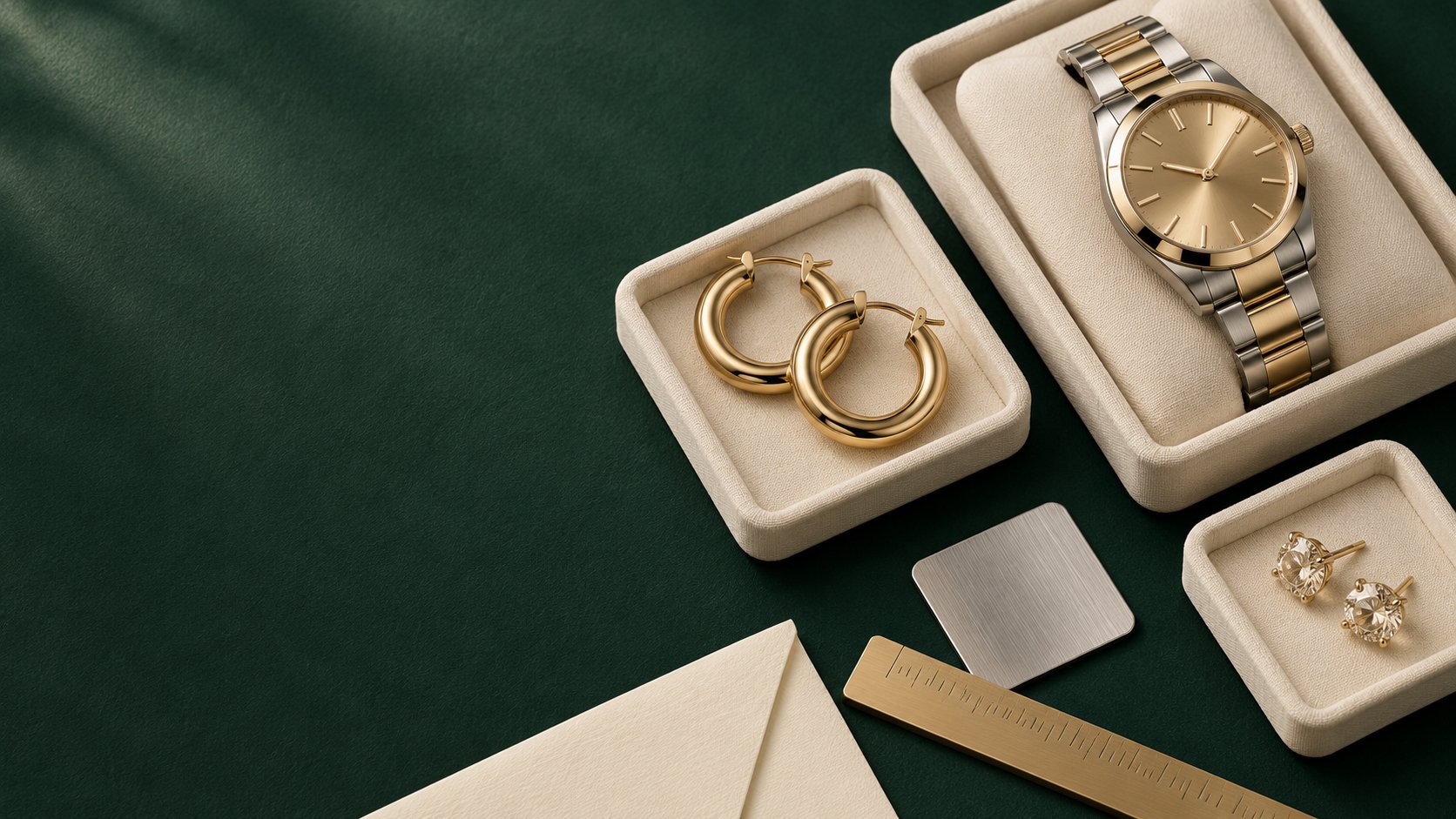
If you source watches or jewelry for a retail chain, an e-commerce brand, or a private label program, you have almost certainly seen the word hypoallergenic printed on a supplier's spec sheet. It sounds reassuring, it sells well in product listings, and it shows up in search queries from end customers every single day. But when you are placing a wholesale or custom order, the word stops being marketing copy and becomes a procurement question: what exactly does this supplier mean by hypoallergenic, which materials back the claim, and how can you verify it before your goods ship?
This guide answers those questions from a B2B buyer's perspective. We will define what hypoallergenic jewelry actually means in practice, walk through the materials most commonly used in nickel-free watch and jewelry production, and then go one level deeper than most retail-facing articles: how to verify a supplier's material claims through material test reports, AQL sampling standards, and third-party inspection partners such as SGS, Bureau Veritas (BV) and TÜV. Finally, we will look at how private label brands can turn a credible hypoallergenic story into a selling point, and what to confirm about MOQ, warranty and documentation before you commit to an order.
Along the way, we will reference real product examples from the Aurevo range — including our Gold-Tone Hoop Earrings with nickel-free posts, our Stud Earrings, and our 316L stainless steel Steel Quartz Watch — so that the concepts stay tied to pieces you can actually source and resell.
What Is Hypoallergenic Jewelry? A Plain-Language Definition
The honest starting point is that hypoallergenic has no single, universally enforced legal definition in most markets. The term literally means "less likely to cause an allergic reaction." In practice, when a reputable manufacturer describes jewelry as hypoallergenic, they mean that the piece has been designed and produced to minimize contact-allergy risk — above all by controlling nickel, which is by far the most common metal allergen in watches and jewelry.
That control can take several forms, and a serious supplier should be able to tell you which combination applies to a given SKU:
- Nickel-free construction. The metal alloy itself contains either no nickel or only trace nickel that is metallurgically bound and does not release at meaningful levels against the skin.
- Nickel release below regulatory limits. The piece passes a standardized nickel release test (most commonly EN 1811, referenced by the EU REACH regulation), meaning the amount of nickel that migrates from the surface per week stays below the legal thresholds.
- Protective plating or coating. A dense, well-adhered plating layer — for example gold-tone plating applied over 316L stainless steel — acts as a barrier between the base metal and the wearer's skin, keeping nickel release within limits for the practical life of the coating.
- Low-allergen contact components. The parts that touch skin most intensively — ear posts, clasps, case backs, bracelet inner surfaces — use recognized skin-friendly materials such as surgical-grade stainless steel, titanium or sterling silver.
Note what hypoallergenic does not mean. It does not mean zero risk for every person on earth, and it does not constitute a medical claim. A small percentage of wearers react to metals beyond nickel, including cobalt or certain fragrance and plastic compounds. What a genuine hypoallergenic construction delivers is a dramatically lower probability of a reaction for the vast majority of wearers — which is precisely what a retailer or brand needs in order to stand behind the claim on its own packaging and listings.
There is also a useful distinction between "hypoallergenic" and "nickel-free." Nickel-free is the narrower, more testable statement: the material or the surface release is verified against a nickel limit. Hypoallergenic is the broader marketing umbrella. As a B2B buyer, you should always push past the umbrella and ask which concrete construction — alloy, plating system, post material and test evidence — sits underneath it. A supplier who can answer that question in one email is a very different risk profile from one who can only repeat the word back to you.
Why Nickel Is the Center of the Conversation
Any serious discussion of hypoallergenic jewelry quickly becomes a discussion about nickel, and for good reason. Nickel contact allergy is one of the most common contact allergies worldwide, and multiple dermatology studies over the years have found it affects a substantial share of women, with lower but still significant rates among men. For a retailer, that reality translates into a very practical cost: earrings, watch bracelets and necklace chains that sit against skin for hours are the categories where nickel-related irritation complaints, returns and negative reviews concentrate.
The mechanism is straightforward. Nickel causes a problem not simply by being present in an alloy, but by releasing ions when the metal surface reacts with sweat and skin oils. A tightly bound nickel content inside a corrosion-resistant matrix may never migrate in meaningful quantities; a poorly formulated plated layer over a high-nickel base can release enough within days to trigger dermatitis on sensitive skin. This is why two pieces that look identical and both contain "some nickel" can behave completely differently on the ear.
Regulators have formalized this insight. In the European Union, the REACH regulation restricts nickel release from articles in direct and prolonged skin contact, with separate thresholds for parts inserted into pierced body parts (such as ear posts) and for other prolonged-contact surfaces: the commonly applied limits are 0.2 micrograms per square centimeter per week for posts and other inserted parts, and 0.5 micrograms per square centimeter per week for other prolonged skin contact. Without turning this article into a legal text, the practical takeaway for buyers is this: there are established, testable thresholds, and a professional manufacturer tests against them. If your market is the EU, the UK, or any jurisdiction that has adopted similar restrictions, nickel release compliance is not a nice-to-have — it is a baseline requirement for the category.
Even if you sell into markets with softer enforcement, the commercial logic still holds. End customers who have ever reacted to cheap earrings search actively for "hypoallergenic earrings" and "nickel-free" products, and they remember which brands did not irritate their ears. Meeting the strictest common benchmark simplifies your assortment: one construction standard that satisfies the EU will comfortably serve markets with lighter regulation.
The Materials That Make Jewelry Hypoallergenic
Now to the materials themselves. In everyday wholesale watch and jewelry production, a small set of materials does almost all of the hypoallergenic work. Understanding the strengths and the honest limitations of each one lets you read a supplier's spec sheet critically instead of passively.
316L Stainless Steel: The Workhorse of Skin-Friendly Watches
316L is a low-carbon, austenitic stainless steel originally developed for surgical instruments and marine applications. Its composition includes a controlled, relatively low nickel percentage — but the key is not just the percentage. In 316L, the chromium forms a stable passive oxide layer on the surface, and the alloy's microstructure binds the nickel into a corrosion-resistant matrix. The practical result is that well-produced 316L releases nickel at levels far below regulatory thresholds, which is why it has become the default case and bracelet material for skin-friendly watches across the industry.
For buyers, 316L brings a rare combination: hypoallergenic performance, excellent scratch and corrosion resistance for daily wear, and a premium feel at a manufacturable price. It also polishes and finishes beautifully, which matters if your line includes both brushed and polished surfaces. Our own Steel Quartz Watch is built on exactly this logic — a 316L stainless steel case and steel bracelet around a reliable quartz movement — because it lets wholesale buyers offer a genuinely skin-friendly watch without stepping into solid gold pricing. One honest caveat: "stainless steel" is a family, not a single material. If a supplier quotes "stainless steel" without a grade, ask specifically whether the contact surfaces are 316L or an equivalent, and ask for the composition certificate.
Sterling Silver (925): Naturally Nickel-Free Precious Metal
Sterling silver is an alloy of 92.5% silver, most commonly balanced with copper. Unlike many base-metal fashion alloys, a properly produced sterling silver piece contains no added nickel at all, which makes 925 one of the most dependable hypoallergenic choices in the precious-metal category. For buyers building a higher-price-point line — or a line that must carry "sterling silver" hallmarks for market positioning — 925 offers both the material story and the perceived value.
The trade-offs are practical rather than allergenic. Sterling silver tarnishes: it reacts with sulfur compounds in air, developing a patina that some customers love and others read as a defect. Rhodium or anti-tarnish finishing can slow this dramatically, and a supplier should be able to tell you which finishing treatment a given silver SKU carries. Silver is also softer than steel, so design details like earring post thickness and clasp geometry need to respect the material's mechanical limits. None of this disqualifies 925 — it simply means your supplier's finishing and quality control discipline matters as much as the alloy itself.
Hypoallergenic Ear Posts: The Component Where It Matters Most
The single most allergy-sensitive contact point in all of jewelry is the ear post. The ear canal skin is thin, pierced tissue stays in prolonged intimate contact with the post, and regulators treat inserted parts with stricter nickel release limits than ordinary surfaces for exactly this reason. When a customer says "these earrings made my ears itch," nine times out of ten the culprit is the post or the plating on it.
This is why professional factories treat the post as a specified component, not an afterthought. Surgical-grade stainless steel posts and titanium posts are the standard answers; high-end lines may specify niobium or solid 925 posts. A gold-tone earring can be entirely skin-friendly even on a gold-plated body if the post itself is a certified low-release material — and the specification should say so explicitly.
Our Gold-Tone Hoop Earrings illustrate the point: the finish is a polished champagne-gold tone aimed at the fashion market, while the posts are specified as nickel-free — the fashionable surface and the skin-safe contact point are two separate engineering decisions, documented separately. The same component-level thinking applies to our Stud Earrings, where the post carries the entire hypoallergenic burden because it sits in the piercing all day. When you evaluate any supplier's earring program, make "what exactly is the post material, and what evidence backs it" one of your standard RFQ questions.
Plating and Nickel Release: Where Good Intentions Go Wrong
Plating deserves its own honest section, because this is where most "hypoallergenic" claims quietly fail. A gold-tone or rose-tone surface on fashion jewelry is almost always a plated layer — and a plated layer is only as hypoallergenic as its density, its adhesion, and the base metal underneath it. A thick, well-adhered electroplated or PVD coating over 316L or a low-release brass can keep nickel release below limits for years of normal wear. A thin flash plating over a high-nickel alloy can begin to release within weeks, especially at high-wear points: the inside of a hoop, the edge of a watch case back, the clasp of a chain.
Buyers should therefore ask three specific questions about any plated SKU:
- What is the base metal? 316L steel and low-nickel brass behave very differently once a coating wears.
- What is the plating system and thickness? Reputable factories control and record layer thickness; "gold color" alone is not a specification.
- Has the finished, plated piece passed nickel release testing? Not the base alloy — the actual plated article, tested in its final state, because that is what touches the customer's skin.
The gold-tone-on-steel construction used across many modern watch and earring programs exists precisely to combine the fashion color with the low-release substrate. Done properly — with controlled plating, tested release and a specified post — it delivers the hypoallergenic performance buyers need at a price point the fashion market expects.
| Material | Nickel profile | Typical B2B use | Buyer notes |
|---|---|---|---|
| 316L stainless steel | Low, tightly bound; release below regulatory limits | Watch cases, bracelets, steel jewelry | Confirm the grade by name; request composition certificate |
| Sterling silver 925 | No added nickel | Precious-tier earrings, rings, chains | Check tarnish finishing; softer metal, mind post thickness |
| Surgical steel / titanium posts | Very low release; titanium effectively nickel-free | Ear posts on fashion and fine earrings | The highest-sensitivity contact point; specify explicitly |
| Gold-tone plating over low-release base | Depends on coating integrity and base alloy | Fashion watches, gold-tone earrings | Require nickel release test of the plated article |
| Unspecified "alloy" | Unknown; often higher nickel | Cheapest fashion items | Treat as non-hypoallergenic until proven otherwise |
How B2B Buyers Verify a Supplier's Material Claims
Understanding materials is half the job. The other half is verification — because in wholesale purchasing, a claim without evidence is just a word on a quotation. The good news is that material verification has become remarkably standardized. A professional manufacturer expects these questions and has the documents ready; hesitation or vagueness at this stage is itself useful information.
Material Test Reports: Ask for the Right Document
The foundational document for nickel safety is a nickel release test report, typically performed to EN 1811, the reference method used to demonstrate compliance with the EU REACH nickel restrictions. A proper report identifies the tested article or representative sample, the test method, the measured release values, and the pass/fail conclusion against the relevant thresholds — 0.2 micrograms per square centimeter per week for inserted parts, 0.5 for other prolonged contact. For pierced positions, the applicable limit is the stricter of the two, so confirm that the post was tested under the stricter category.
Beyond nickel release, ask for the alloy composition certificate for the base materials — the document that shows what is actually in the 316L or the 925. Together, these two documents let you make a complete, defensible statement in your own product listings: what the metal is, and what it releases. When we say that material test reports are available on request for our products, these are exactly the documents involved; any supplier you work with should offer the same without friction.
Two verification habits separate experienced buyers from first-time importers. First, check that the report covers the article in its finished, plated state, not just the raw alloy. Second, when you switch base material, plating supplier or factory, re-confirm documentation — a test from two years ago on a different construction does not describe today's shipment.
AQL Sampling: Turning "Quality" into a Testable Statement
Material safety tells you the design is right; inspection statistics tell you the shipment matches the design. This is where AQL — Acceptable Quality Limit — enters the conversation. AQL sampling, standardized under ISO 2859-1 (the global sampling standard widely referenced as ANSI/ASQ Z1.4 in the United States), defines how many units to draw from a lot and how many defects are acceptable before the lot fails. The commonly used earring and watch inspection plans draw on acceptance levels around AQL 2.5 for major defects and 4.0 for minor defects, with critical defects — including anything that creates a safety or regulatory compliance failure — set at zero tolerance.
For hypoallergenic sourcing, AQL matters in a specific way. The construction details that keep a piece skin-friendly are also physical attributes that can be inspected: post material and attachment, plating coverage and adhesion, absence of exposed base metal at wear points, smoothness of contact edges. A batch-level inspection plan should therefore include these as named checkpoint items, not fold them into a generic "appearance" category. When you agree an inspection standard with a factory, ask to see their defect classification list and confirm where hypoallergenic-relevant defects sit within it.
Third-Party Inspection: SGS, Bureau Veritas and TÜV
Many buyers add a final, independent layer: third-party inspection. Firms such as SGS, Bureau Veritas (BV) and TÜV will sample finished goods against the agreed AQL plan and issue an inspection certificate before shipment. Some buyers commission these inspections per shipment; others require them for new suppliers, new constructions, or first orders of a new plating system, then move to periodic checks once the production record is established. Laboratory testing can also be routed through these firms when a buyer wants test reports issued by a name their own market regulator recognizes.
What matters from a procurement perspective is that third-party inspection is an available, affordable, routine step — not an exotic demand. A factory that regularly ships to European and North American brands already works alongside these programs. We support third-party inspection of Aurevo orders, and we encourage buyers to use it on first orders of any new skin-contact construction; independent verification protects both sides and almost always costs less than a single returned container.
In-House QC: What the Factory Does Between Test Reports
Certificates verify the design; in-house quality control verifies every production day. This is the layer buyers see least and benefit from most. In our own production, quality control runs across more than 40 dedicated QC stations covering the path from incoming material through plating, assembly and pre-shipment — checking, among many other things, that the specified post material actually went into the earring, that plating coverage is complete at wear points, and that contact surfaces leave the line smooth and clean. Day-to-day checkpoints are what turn a passing lab report into a consistently passing shipment.
It is also worth connecting quality control to after-sales accountability. Every watch and jewelry piece in the Aurevo range carries a 12-month warranty, and a warranty is only affordable to the supplier whose defect rates are controlled at the source. When you compare suppliers, treat the combination of documented QC infrastructure, willingness to accept third-party inspection, and a clear warranty term as one integrated signal of how a hypoallergenic claim will hold up in production — not three separate marketing bullets.
Verification checklist before you place a bulk order:
1. Alloy composition certificate for the base metal (confirm the grade by name, e.g. 316L).
2. Nickel release test report (EN 1811) for the finished, plated article — posts tested at the stricter pierced-position limit.
3. Agreed AQL inspection plan with hypoallergenic-relevant defects explicitly classified.
4. Third-party inspection option (SGS / BV / TÜV) confirmed for pre-shipment sampling.
5. Factory QC process description — incoming material, plating line, assembly, pre-shipment stages.
6. Warranty terms in writing before the deposit.
Turning Hypoallergenic Into a Private Label Selling Point
If you operate a private label or OEM program, hypoallergenic construction is one of the few technical attributes that converts directly into brand value. Price and design are copied within a season; a credible, documented skin-safety story is harder to replicate and matters enormously to the growing share of consumers who filter purchases by exactly this attribute.
The conversion from factory spec to brand asset has a few reliable steps:
- Get the claim language right for your market. "Nickel-free," "nickel release tested," and "hypoallergenic" carry different levels of testability. Base your packaging and listing language on the documents you actually hold — a verified EN 1811 report supports a stronger, more specific claim than a generic badge. Keep the wording factual rather than medical: describe the construction and the testing, and avoid promising that no one can ever react.
- Prioritize the contact points in your line architecture. Put certified posts and low-release constructions first into the SKUs with the longest skin contact: earrings, watch bracelets, chains. A brand that solves the problem where it hurts most earns disproportionate trust.
- Tell the materials story in plain language. "316L stainless steel case, nickel-free ear posts, 12-month warranty" is a sentence a customer understands instantly — and a sentence your retail buyers can lift straight into their own listings. Specificity sells; adjectives do not.
- Arm your B2B customers with the evidence. If you are a brand selling to retailers or a retailer training store staff, pass the underlying facts through: which materials, which tests, what warranty. The claim propagates only as far as the documentation behind it.
Private label buyers on our side work with exactly this playbook. Lines like the Gold-Tone Hoop Earrings and Stud Earrings were designed so that the fashion positioning (gold-tone finish, faceted stones, everyday silhouettes) and the skin-safety positioning (nickel-free posts, documented materials) reinforce each other rather than compete. That combination is what allows a private label brand to compete on story and specification at the same time — instead of being forced to choose between "fashion" and "safe" as if they were opposites.
MOQ, Warranty and Ordering Considerations for Hypoallergenic Lines
Verification requirements sound heavy until you see how they fit into a normal wholesale order. At Aurevo, the commercial framework is straightforward: standard watch models start from 100 pieces, custom watch projects from 300 pieces, and custom jewelry orders from 200 pieces. Those minimums are deliberately set low enough that a first-order buyer can include material documentation, AQL inspection — and even third-party inspection if desired — without the compliance overhead distorting the economics of the order.
Warranty belongs in the same conversation. Every Aurevo product carries a 12-month warranty, and for hypoallergenic sourcing this matters more than it first appears: plating failures, post defects and clasp problems are exactly the failure modes that both trigger warranty claims and undermine a skin-safety claim. A supplier willing to stand behind construction for twelve months is signaling that the plating line and the QC process behind it are under control. Make sure the warranty term — and not just the material promise — is captured in your order documents.
A practical ordering sequence for a first hypoallergenic-focused order looks like this: confirm the construction and post materials at quotation stage; request the material test reports and composition certificates for the specific SKUs; agree the AQL plan and defect classification; confirm whether you will add third-party inspection for the first shipment; and place the warranty and documentation commitments on the purchase order itself. None of these steps adds meaningful lead time when the factory is organized; all of them are expensive to retrofit after goods have shipped.
Frequently Asked Questions
What is hypoallergenic jewelry made of?
There is no single formula, but in practice hypoallergenic jewelry is built from a short list of proven materials: 316L stainless steel for watch cases and bracelets, sterling silver (925) for precious-tier pieces, surgical-grade stainless steel or titanium for ear posts, and controlled plating systems over low-release base metals. The defining feature is not one magic material but controlled nickel release at every point where the piece touches skin.
Are nickel-free and hypoallergenic the same thing?
They overlap but are not identical. Nickel-free is the narrower, testable claim: the piece contains no added nickel or its surface releases nickel below the regulatory limits. Hypoallergenic is the broader description of a piece designed to minimize allergy risk. For procurement purposes, always ask what testing stands behind the specific claim — the words matter less than the documents behind them.
Does 316L stainless steel contain nickel?
Yes, 316L contains a controlled amount of nickel as part of its alloy — but it is metallurgically bound within a corrosion-resistant structure, and properly produced 316L releases nickel far below the regulatory thresholds. That combination of low release plus durability is why 316L is the standard case and bracelet material for skin-friendly watches.
What should I ask a supplier before ordering hypoallergenic jewelry?
Ask five things: the exact base material and grade for each contact component; the post material on any earring; a nickel release test report for the finished, plated article; the AQL inspection plan with hypoallergenic-relevant defects classified; and the warranty terms. A professional factory answers these from existing documents; hesitation is itself an answer.
Is hypoallergenic jewelry more expensive to source?
The material premium is modest and shrinking: 316L steel and steel posts are already commodity materials in modern watch and jewelry production. The real cost differences come from discipline — controlled plating, component specification, testing and inspection — and that discipline costs far less than the returns, reviews and reputation damage of an allergy problem in the market.
Can I get third-party inspection and material reports on my order?
Yes. Aurevo provides material test reports on request for its products, supports AQL-based batch inspection, and welcomes third-party inspection by firms such as SGS, Bureau Veritas and TÜV before shipment. If your current supplier resists independent verification of a skin-safety claim, treat that as a material risk factor in your sourcing decision.
Will hypoallergenic jewelry still tarnish or fade?
Skin-friendliness and surface stability are related but separate properties. 316L stainless steel holds its finish exceptionally well in daily wear; sterling silver naturally develops a patina over time and benefits from anti-tarnish finishing; plated pieces gradually lose their tone at high-wear points depending on plating thickness and care. Ask each supplier how the finish of a specific SKU behaves over a season of daily wear, and include care instructions in your packaging so the finish story matches customer expectations.
Is hypoallergenic construction enough for a children's or sensitive-skin line?
A hypoallergenic construction is the right foundation, but a dedicated children's or sensitive-skin line usually carries additional market-specific requirements — sharper mechanical tests, small-parts and safety standards, and often stricter documentation expectations from retailers and marketplaces. Discuss your target market's exact requirements with your supplier early, and treat nickel-release compliance as the entry ticket rather than the whole specification.
How to Read a Nickel Release Test Report
Once you receive a nickel release report, do not file it away unread — five minutes of structured reading will tell you whether it actually supports the claim attached to your order. Start with the test method. EN 1811 is the reference method for items in direct and prolonged skin contact; there is a related screening method, and reports based only on screening (often called XRF, which measures total nickel content rather than what actually migrates) should not be presented as release compliance. If a supplier hands you a material composition sheet and calls it a nickel test, that is a category error worth clarifying before the order rather than after.
Next, check what was tested. The report should identify the article — ideally the finished, plated product or a production-representative sample — not merely the base alloy. Then look at the measured values against the limits: 0.2 micrograms per square centimeter per week for posts and other parts inserted into pierced tissue, and 0.5 micrograms per square centimeter per week for surfaces that merely touch skin for extended periods. A report that lumps everything under the looser surface category has not actually proven the post is compliant. Finally, confirm the date, the laboratory or in-house laboratory's identification, and the scope: a document covering last year's construction from a different plating line is historical context, not evidence for your shipment.
None of this requires a laboratory background. It requires the same habit a good buyer applies to a price breakdown: check that each number is attached to the right item, measured the right way, and current for the goods you are actually ordering.
Reading a Supplier Spec Sheet Critically
Material claims live or die in the spec sheet, and spec sheets have a grammar of their own. Vague nouns ("premium alloy," "eco-friendly metal"), missing grades (steel without 316L or an equivalent designation), and claims attached to the wrong object (a base-metal certificate standing in for a plated-article test) are the three patterns that most often hide a weak construction. A reliable sheet names the material for every skin-contact component separately: case, case back, bracelet or chain, clasps, and — for earrings — the post as its own line item. Where plating is used, it states the plating system and thickness rather than a color adjective.
Use the sheet to generate your follow-up questions rather than your confidence. If the post line says only "steel post," ask whether it is the same 316L family as the case or a separate surgical-grade specification. If the plating line says "gold color," ask for thickness control data and whether the finished item carries a release test. Suppliers differ enormously in how much of this is documented, and the difference is visible in how quickly and specifically they respond — not in how polished their catalog looks.
Five Mistakes B2B Buyers Make with Hypoallergenic Sourcing
Across many sourcing conversations, the same avoidable mistakes recur. Treat this list as a pre-order review, not a lecture.
- Accepting the word without the document. The most common and most expensive mistake. "Hypoallergenic" on a quotation is a hypothesis; the test report is the evidence. Buyers who standardize the document request at quotation stage never have to renegotiate it at shipment stage.
- Testing the alloy but shipping the plating. A composition certificate for raw 316L does not describe a gold-plated article's surface behavior. The finished, plated state is what the customer wears, so it is the state that must be tested.
- Treating the post like any other component. Earring posts sit in pierced tissue and are held to stricter release limits for good reason. When posts are bought out or specified loosely, the entire earring program inherits the risk — which is why post material belongs on the purchase order, not just in a conversation.
- Skipping inspection because "the factory is good." Even disciplined factories have off days: a plating bath out of range, a post substitution under material shortage, a rushed pre-shipment check. An agreed AQL plan with hypoallergenic-relevant checkpoints is what catches those days before your customers do.
- Letting the claim outgrow the evidence. Marketing that promises "100% allergy-proof" or implies a medical guarantee writes a check the construction cannot cash. Keep claim language tied to what the documents show, and the claim stays defensible in every market and on every marketplace that reviews listings.
None of these five requires extra budget. They require sequence: documents before deposit, inspection before shipment, and claim language that quotes the paperwork. Buyers who lock that sequence in early find that hypoallergenic sourcing is simply normal good sourcing with sharper paperwork.
Sourcing Hypoallergenic Watches and Jewelry with Confidence
Hypoallergenic jewelry is not a mystery and not a marketing trick — it is a chain of specific, verifiable decisions: a low-release alloy where the metal meets skin, a certified post where the piercing meets the earring, a controlled plating system where fashion color meets contact, and a QC and inspection regime that confirms all of the above in production, not just in a brochure. Buyers who ask for the documents behind each link end up with a claim they can defend on their own packaging, in their own market, for the life of the product.
The Aurevo range is built around that chain. Explore the Gold-Tone Hoop Earrings with nickel-free posts, the everyday Stud Earrings, and the 316L stainless steel Steel Quartz Watch to see the construction choices described in this guide applied to real, wholesale-ready products. If you are planning a private label line and want the hypoallergenic story built in from the first sample, reach out through the inquiry section on any product page with your target category, quantities and market — we will respond with the matching constructions and the material documentation to support them.