
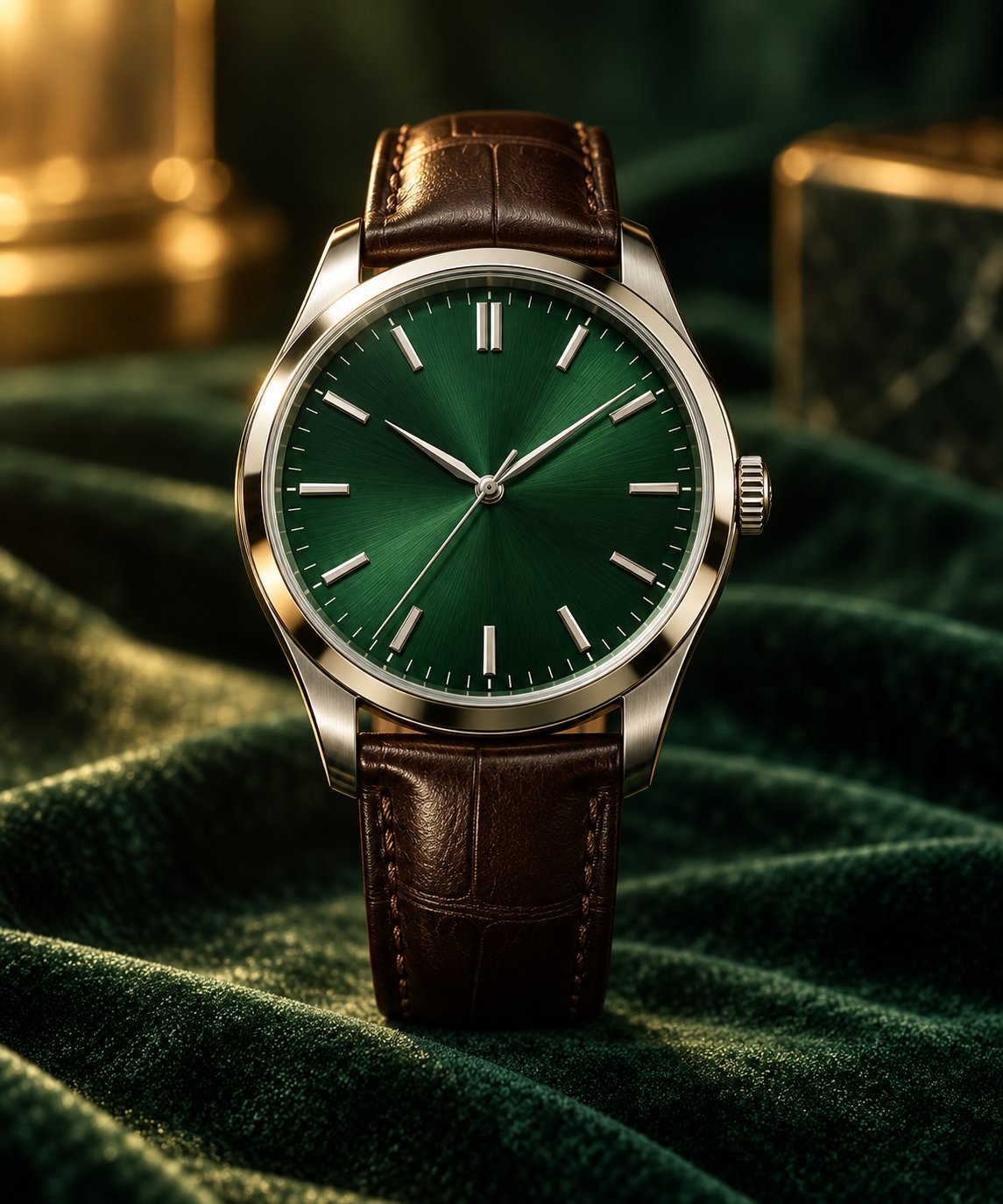
A practical care routine for automatic watches—winding, storage, magnet and impact awareness, water resistance, and strap care—plus an honest look at service intervals and why they depend on the movement and usage. Includes a reprintable checklist and a wholesale buyer's next step.
An automatic watch is a small machine that runs on the energy you give it. Get the daily habits right and it stays reliable for years. Get service frequency wrong—either ignoring it or over-servicing—and you spend money you did not need to spend. This guide covers the care routine a retailer can reprint for customers, and a straight answer on service intervals, including how a wholesale buyer should confirm the schedule with the supplier and the movement documentation.
Key takeaways
- Wind and set the watch at roughly the same time each day; let it run rather than letting it sit stopped for weeks.
- Keep it away from strong magnets, hard impacts, and water beyond its rated use.
- Water resistance is a rating, not a promise: 5 ATM (splash and rain resistant; not for swimming).
- Service intervals are set by the movement manufacturer and your usage pattern—not by a single universal number.
- Wholesale buyers should confirm the movement brand and model, plus after-sales terms, before the order is placed.
Why Automatic Watches Need a Routine
An automatic—self-winding—movement draws power from the motion of your wrist. A rotor spins with movement and winds the mainspring. When the watch is worn regularly, the mainspring stays charged and the movement keeps consistent time. When it sits in a drawer for weeks, the lubricants settle and the watch stops. Restarting it repeatedly is not a disaster, but inconsistent running is harder on a mechanical movement than steady running. The care routine below is built around that simple principle: keep it running, keep it clean, keep it away from the things that damage movements.
A Daily and Weekly Care Routine
Winding and setting habits
If you wear the watch daily, wrist motion is usually enough. If you rotate between watches, give a stopped automatic a few gentle turns of the crown before wearing it, then set the time. Wind slowly and stop when you feel resistance—forcing a fully wound mainspring does nothing useful. Set the date and time in the order the movement manufacturer specifies; many movements should not have the date changed during a certain window near midnight, so check the manual that came with the watch. As a rule, avoid pulling the crown out farther than needed and push it fully back so the seal seats correctly.
Storage between wears
For a watch worn a few times a week, a watch box with a soft lining is enough. For watches that sit for longer, a watch winder keeps the movement running, but a winder is not mandatory—many owners simply let the watch stop and restart it when they next wear it. Store watches individually so clasps and cases do not knock against each other. Keep the box out of direct sunlight and away from radiators, which dry out leather straps and can affect gaskets over time.
Magnetism, impact, and temperature
Strong magnetic fields are one of the most common causes of a watch running fast or erratically. Keep automatic watches away from speakers, magnetic phone mounts, bag clasps, and MRI equipment. If a watch suddenly gains or loses a large amount of time, a demagnetizing check at a watchmaker is a sensible first step. Mechanical watches also dislike hard knocks: take the watch off before sports where the wrist may be struck, and do not use it as a tool. Rapid temperature changes—such as moving from a hot car into cold water—can stress seals and the case, so let the watch adjust.
Water awareness
Water resistance is a rating that describes the conditions the watch was tested for, not a permanent guarantee. The Aurevo Heritage Automatic Watch is rated 5 ATM (splash and rain resistant; not for swimming). That means hand washing and rain are within its intended use; swimming, showering, and diving are not. Seals age, and a watch that was water resistant when new can lose that protection after years of use or after the caseback has been opened for service. Have the seals checked whenever the case is opened, and do not press the crown or push-buttons while the watch is wet.
Strap and case care
A genuine leather strap is comfortable and formal, but it is the part that wears fastest. Keep leather away from water, sweat, and prolonged sun exposure; wipe it with a dry soft cloth after wearing. Rotating between two straps extends the life of both. For the case and crystal, a soft dry cloth is enough for daily cleaning. If the watch has a sapphire crystal and a 316L stainless steel case, avoid abrasive polishes that can dull the finish. A soft toothbrush can reach the lugs and the gap around the caseback, but keep water away from the case unless the watch is rated for it and the seals are known to be in good condition.
Care Checklist You Can Reprint
The table below is written so a retailer can copy it into a care card, a product page, or a counter handout. It covers the habits that matter most for an automatic watch.
| Area | What to do | What to avoid |
|---|---|---|
| Winding | Let wrist motion wind the watch; give a stopped watch a few gentle crown turns before wearing. | Forcing the crown when you feel resistance; over-winding. |
| Setting | Follow the movement manual for date and time setting order. | Changing the date during the movement's restricted window near midnight. |
| Storage | Use a lined watch box; a winder is optional for watches worn regularly. | Storing loose with other jewelry; direct sun and heat. |
| Magnetism | Keep away from speakers, magnetic mounts, and bag clasps. | Placing the watch on electronic devices for long periods. |
| Impact | Remove before contact sports or heavy manual work. | Knocking the watch against hard surfaces. |
| Water | Treat the rating as a limit: 5 ATM (splash and rain resistant; not for swimming). | Swimming, showering, or pressing the crown while wet. |
| Strap | Wipe leather with a dry cloth; rotate straps. | Soaking leather in water or leaving it in the sun. |
When to Service an Automatic Watch
There is no single correct service interval for every automatic watch, and any article that gives one number for all watches is simplifying too much. The interval depends on the movement design, the quality of the lubricants, how often the watch is worn, the environment it is worn in, and how it is treated. A watch worn daily in a dusty workshop and a watch worn twice a month in an office do not need the same schedule. The practical answer is to follow the movement manufacturer's guidance and confirm the schedule with the supplier or the watchmaker who will service the watch.
Why intervals vary
- Movement design and materials: Some movements use lubricants and component materials that are intended to run longer between services than older designs. The only reliable source for a specific movement is the manufacturer's documentation for that movement.
- Usage pattern: A watch that runs continuously accumulates running hours faster than one that sits stopped. Wearing habits matter.
- Environment: Dust, humidity, salt air, and temperature swings all affect how quickly a movement and its seals age.
- Signals from the watch itself: A sudden change in timekeeping, a rough or stiff winding feel, or visible moisture under the crystal are reasons to have the watch inspected, regardless of the calendar.
What a service usually involves
A mechanical service generally means the movement is disassembled, cleaned, re-lubricated, reassembled, and regulated. Seals and gaskets are commonly replaced at the same time, which is why water resistance should be re-checked after any service that opens the case. The details depend on the movement and the watchmaker, so ask what is included before authorizing work. Do not assume a polish or a battery change is the same as a movement service—they are not.
For wholesale buyers: confirm the schedule before you commit
If you stock or resell automatic watches, the service question belongs in your supplier conversation, not in a generic blog post. Before placing an order, ask the supplier to confirm the movement brand and model for the exact SKU, and to provide the movement documentation or the manufacturer's recommended service guidance. Confirm what after-sales terms apply, what the warranty covers, and where service can be performed. For the Aurevo Heritage Automatic Watch (SKU ATW-1001), the movement brand and model are confirmed per order, so the service guidance should be confirmed at the same time. The warranty is 12 months. The product page is at https://www.aurevostudio.net/product-aurelia-heritage-automatic-watch.
About the Aurevo Heritage Automatic Watch (SKU ATW-1001)
- 40mm automatic self-winding movement
- 316L stainless steel case
- Sapphire crystal
- 5 ATM (splash and rain resistant; not for swimming)
- Genuine leather strap
- Exhibition caseback
- Warranty: 12 months
- MOQ: from 100 standard / 300 custom
Frequently Asked Questions
Wear it regularly so wrist motion keeps it wound, wind a stopped watch gently before wearing, store it in a lined box away from heat and magnets, keep it within its water rating, and wipe the strap and case with a soft dry cloth. For the Aurevo Heritage Automatic Watch, the rating is 5 ATM (splash and rain resistant; not for swimming).
There is no universal number. Follow the movement manufacturer's guidance and confirm the schedule with your supplier or watchmaker, because the right interval depends on the movement, how often you wear the watch, and the conditions you wear it in. Treat changes in timekeeping, a stiff winding feel, or moisture under the crystal as reasons to have it inspected sooner.
Check the rating first. A watch rated 5 ATM (splash and rain resistant; not for swimming) is not intended for swimming or showering. Ratings describe tested conditions, and seals can age, so have water resistance re-checked after any service that opens the case.
A winder keeps the movement running between wears, which some owners prefer. It is not required. Many owners let the watch stop and restart it when they next wear it. What matters more is consistent, gentle handling and keeping the watch away from magnets and hard impacts.