
Sterling silver necklaces tarnish because air and moisture reach the copper in 925 silver. This guide gives a prevention routine for wear, storage and handling, a safe cleaning section for pieces that have already dulled, and the retail angle on why tarnish control protects the mirror-polished look customers pay for.
Sterling Silver Care
A sterling silver necklace that leaves the factory bright does not stay bright on its own. The same qualities buyers pay for, a mirror-polished finish on a clean 925 surface, are exactly what air, moisture and everyday chemicals work against. This article covers both sides of the problem: how to keep a sterling silver necklace from tarnishing in normal wear, and how to clean one safely once tarnish has already appeared.
Key takeaways
- Tarnish comes from air and moisture reaching the copper blended into 925 sterling silver, not usually from a defect in the piece.
- Perfume, lotion and chlorinated water are the most common everyday triggers. Contact matters more than time.
- A dry, sealed pouch plus a soft-cloth wipe after wearing handles most prevention.
- Cleaning should stay gentle: a soft cloth and mild soap, no abrasive pads and no harsh chemicals.
- For retailers, tarnish control is what keeps the polished look intact between stocking and the customer's first wear.
On this page
- Why 925 silver tarnishes
- The prevention routine
- Prevention checklist
- How to clean a tarnished silver necklace
- Retail angle: protecting the finish customers pay for
- FAQ
Why 925 Sterling Silver Tarnishes
Sterling silver is an alloy. It is 92.5 percent silver and 7.5 percent other metals, and the balance is normally copper. Copper is what makes the alloy strong enough to hold a pendant and a clasp, but copper also reacts with sulfur compounds in the air. That reaction is what darkens the surface.
Two conditions drive it. The first is exposure to air, because airborne sulfur compounds are always present. The second is moisture, which helps those compounds settle and react on the metal. Remove either condition and tarnish slows sharply. That is why storage advice always points toward a dry, sealed pouch or jewelry box rather than an open tray, and why the supplier care guidance on both Aurevo sterling silver necklaces leads with keeping the piece away from perfume, lotion and water.
It helps to separate two things buyers often confuse. Tarnish is a surface condition on the silver. Wear and scratches are physical changes to the metal. Both dull the look, but only the first responds to cleaning. A piece with a fine cable chain and a polished silver pendant shows tarnish first on the pendant face, because that is the flat, visible surface where the reaction sits in plain sight. Recessed links and the chain hold less light and hide the same reaction longer.
The Prevention Routine
Prevention is simpler than cleaning, and it is the part customers can actually keep up with. Four habits do most of the work.
Keep perfume, lotion and chlorinated water off the metal
These are the contact points that matter most. Perfume and body lotion leave a film that traps moisture against the surface, and chlorinated water adds an aggressive chemical to the mix. The practical rule is order of operations: apply perfume and lotion first, let them dry, then put the necklace on. Take the piece off before swimming or showering where practical. The Aurevo care guidance for SKU AJN-3006 and SKU AJW-3003 states this directly: keep the necklace away from perfume, lotion and water where practical.
Wipe the necklace after wearing
Skin oils, sweat and the day's dust all sit on the surface after wearing. A soft cloth wipe after each wear removes them before they trap moisture overnight. This is the single easiest habit and it is the one that most often gets skipped.
Store dry, and store sealed
Air and moisture are the two things a storage method should exclude. A dry, sealed pouch or a jewelry box does both. An open dish on a dresser does neither. For multiple pieces, keep silver away from anything that keeps a damp environment, and do not store silver directly against items that are already tarnishing.
Wear it regularly
Silver that sits untouched for long stretches has more time to react. Regular wear keeps the surface moving against skin and clothing, which is gentler on the finish than long storage. The two goals, wear often and store dry, are not in conflict: wear the piece, wipe it, then store it sealed.
Prevention Checklist
The table below maps each trigger to a habit and a rough frequency. Frequencies are guidance for a normal routine, not measured performance claims.
| Trigger | Prevention habit | How often |
|---|---|---|
| Perfume and body lotion | Apply first, let dry, then put the necklace on | Every wear |
| Chlorinated water and swimming | Remove the necklace before the pool or shower where practical | Each exposure |
| Skin oils and sweat | Wipe with a soft cloth after taking it off | After every wear |
| Airborne sulfur and moisture | Store in a dry, sealed pouch or jewelry box | Whenever stored |
| Long idle periods | Wear the piece regularly and re-check the surface | Ongoing |
| Handling with bare hands before packing | Wipe the pendant and chain before boxing for retail | Before packing |
How to Clean a Tarnished Silver Necklace
When tarnish has already appeared, the goal changes from prevention to recovery. The principle is to remove the surface layer gently and stop before the metal is affected. Cleaning is not a way to repair scratches or restore a worn finish, and no cleaning step should involve abrasive pads or harsh chemicals.
Start with the mildest step
Begin with a soft, dry cloth and a light wipe. Many dull-looking pieces only have a film of oil and dust on them, not true tarnish. If the wipe restores the shine, stop there.
Move to mild soap and water if needed
If the surface is still dull, use a small amount of mild soap with lukewarm water and a soft cloth. Work gently over the pendant and along the chain, then rinse and dry the piece completely before storing it. Drying fully matters because leftover moisture works against the next step, storage.
Use a silver polishing cloth as a mid-step
A soft silver polishing cloth is the normal next option for a piece that has visible darkening on a flat surface such as the teardrop pendant on the Aurevo sterling silver pendant necklace. Follow the cloth's own instructions and use light pressure. Do not scrub the cubic zirconia at the bail with the same intensity as the silver.
When to stop and hand it to a professional
If the darkening sits deep, or if the piece has stones, an engraved surface or a delicate setting, stop and take it to a jeweler. Home cleaning that goes too far removes metal and can flatten the polished look the piece was made with. A professional evaluation also protects warranty terms, since the Aurevo sterling silver necklaces carry a 12 months warranty and improper cleaning is outside care guidance.
What not to do
- No abrasive pads, scrubbing sponges or metal brushes.
- No harsh household chemicals, bleach-based cleaners or chlorinated solutions.
- No soaking the clasp or any stone setting for long periods.
- No cleaning immediately followed by storage while still damp.
Retail Angle: Protecting the Finish Customers Pay For
For a retailer stocking silver necklaces, tarnish is a shelf-life problem, not just a customer-service problem. A mirror-polished pendant and a clean, fine cable chain are the visible features that justify the price. If the finish dulls before the piece reaches the customer, the perceived value drops before anyone has worn it.
That makes tarnish control a stocking and packing habit. Keep stock in a dry, sealed pouch or box rather than on an open display tray for long periods. Handle pieces with clean hands or a soft cloth, especially before boxing for retail. Where a display piece is handled by multiple customers, a wipe at the end of the day keeps the surface clear.
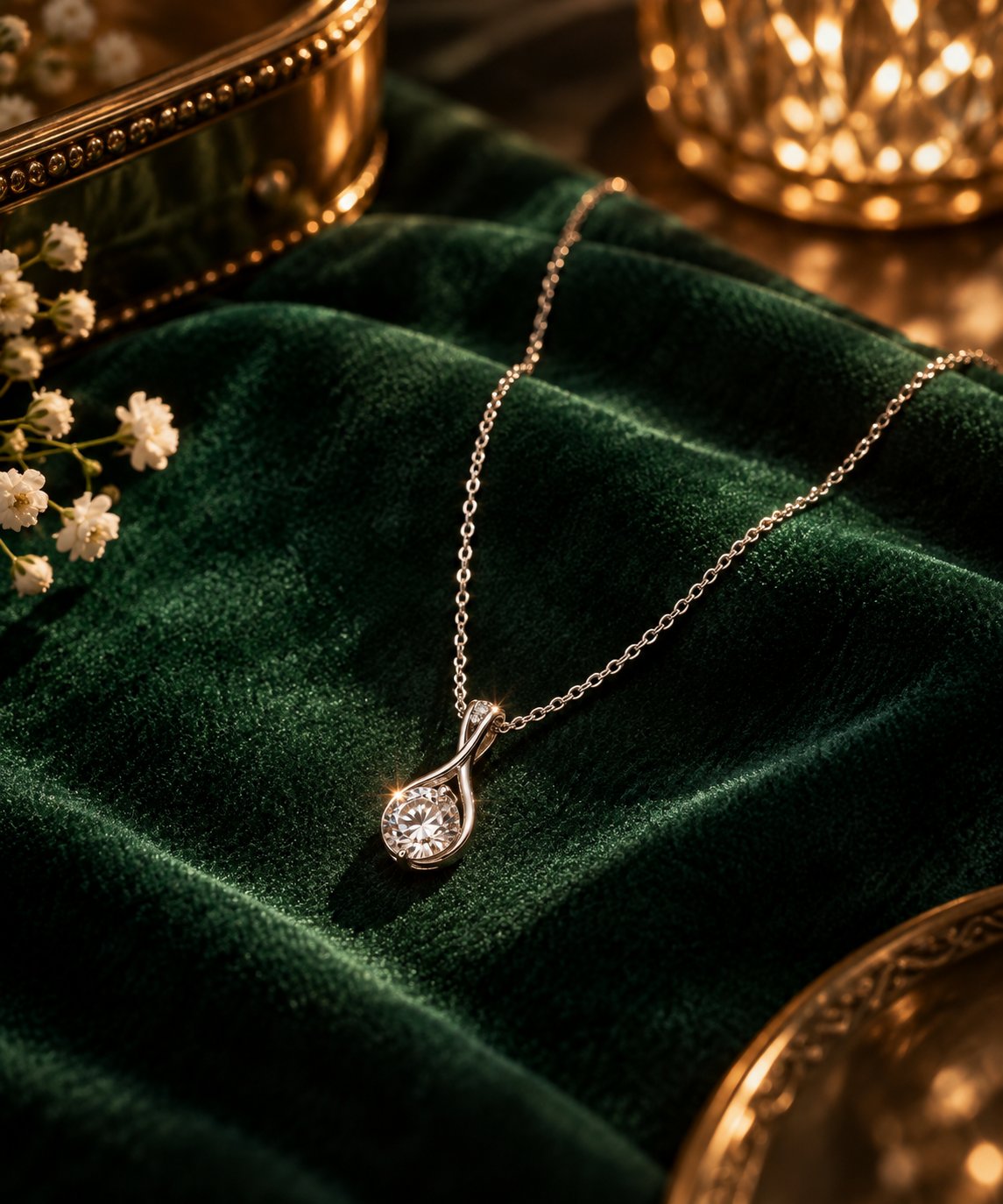
The two Aurevo references in this article show what this protects. SKU AJN-3006 is a sterling silver necklace with a fine silver cable chain, polished silver pendant and spring ring clasp, sold with an MOQ of 100 pieces. SKU AJW-3003 is a 925 sterling silver pendant necklace with a mirror-polished teardrop pendant, cubic zirconia at the bail, a fine link chain, 45 cm length and a spring-ring clasp, with an MOQ of 200 units. Both carry a 12 months warranty and both are packed with the same care guidance: keep away from perfume, lotion and water where practical; store in a dry, sealed pouch or jewelry box; wipe with a soft cloth after wearing.
FAQ
How do I keep a sterling silver necklace from tarnishing?
Keep perfume, lotion and chlorinated water off the metal, wipe the necklace with a soft cloth after every wear, and store it in a dry, sealed pouch or jewelry box. These three habits address the two main causes of tarnish, moisture and airborne sulfur exposure. Wearing the piece regularly, rather than storing it for long periods, also helps.
How do I clean a sterling silver necklace?
Start with a soft, dry cloth. If the surface is still dull, use mild soap with lukewarm water and a soft cloth, then rinse and dry completely. A silver polishing cloth is the next gentle option for visible darkening on a flat surface. Avoid abrasive pads and harsh chemicals, and take a deeply tarnished piece, or one with stones, to a jeweler rather than cleaning it further at home.
Does tarnish mean the necklace is not real sterling silver?
No. Standard 925 sterling silver contains copper, and copper reacts with sulfur compounds in the air. Tarnish on a 925 piece is expected behavior of the alloy, not a sign that the metal is wrong.
Can I prevent tarnish while the necklace is in retail stock?
Yes. The same storage advice applies to stock as to a worn piece: keep items in a dry, sealed pouch or box, handle them with clean hands or a soft cloth, and wipe display pieces that are handled often.
These care instructions can be adapted for the buyer's own product pages. Retailers and distributors are welcome to reuse the prevention checklist and cleaning steps as site copy or as a printed care card, provided the wording matches the actual materials of the piece being sold.