How Should You Source Wholesale Watches and Jewelry at Trade Shows? A B2B Buyer's Guide to Exhibitions, Supplier Verification and Pre-Order Due Diligence
10/24/2026
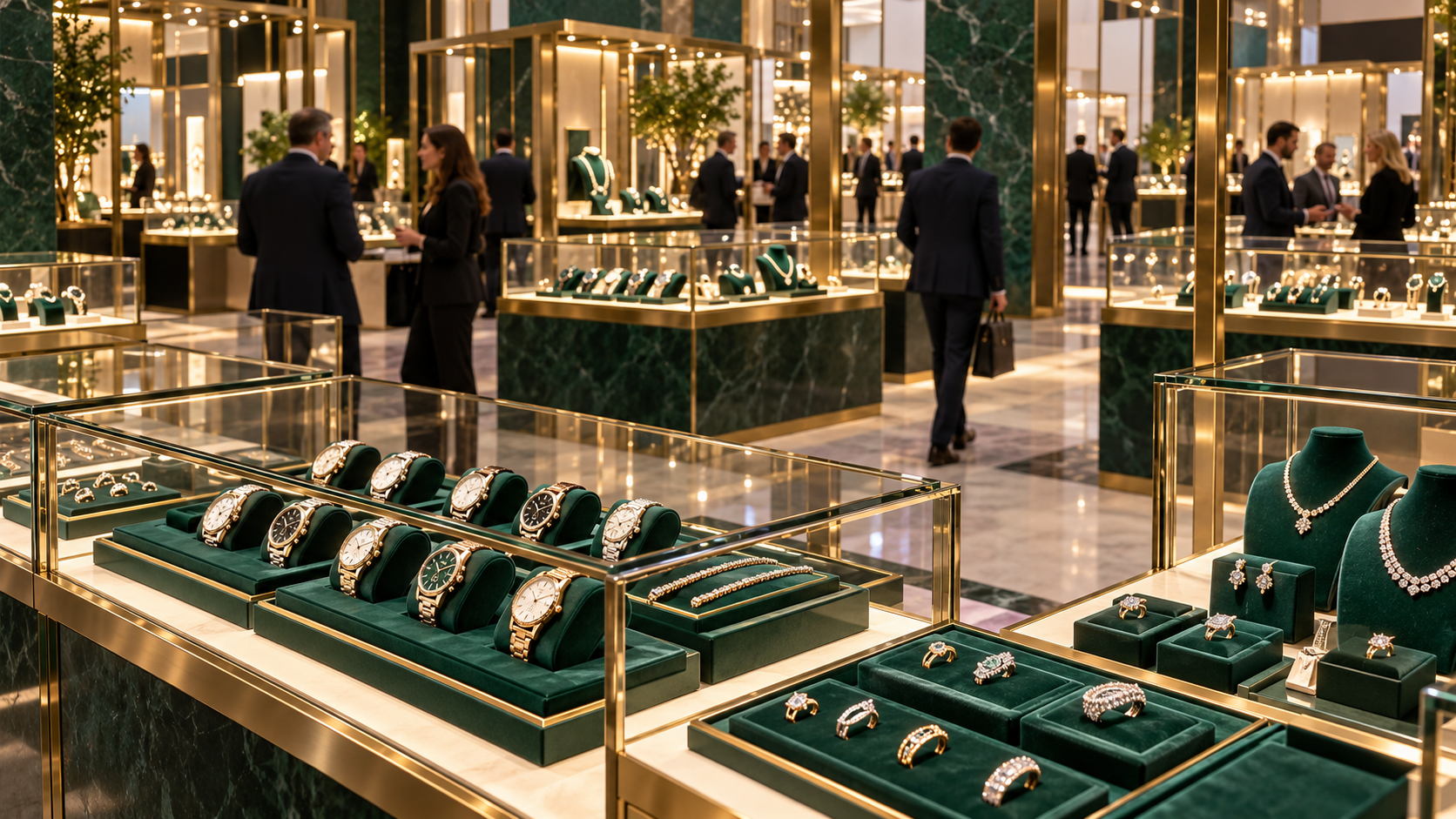
Every year, thousands of jewelry brands, watch retailers, e-commerce sellers and corporate gift buyers walk the aisles of international trade fairs with the same goal: find a wholesale watches and jewelry supplier they can actually build a business on. The show floor compresses an entire sourcing trip into a few days. You can touch a bracelet, compare plating quality side by side, negotiate face to face and leave with a stack of business cards. And yet, most experienced buyers will tell you the same thing: the fair itself decides very little. What separates a profitable sourcing trip from an expensive one is the preparation you do before the doors open and the verification work you complete long after the booths are dismantled.
This guide is written for B2B buyers — retailers building private label collections, brand owners planning OEM or ODM programs, and procurement teams sourcing stainless steel watches, sterling silver jewelry and fashion accessories in bulk. It walks through the full cycle of exhibition sourcing: choosing the right fairs, building a shortlist, evaluating exhibitors in twenty minutes on the floor, and converting show-floor conversations into verified, low-risk purchase orders.
Why Trade Shows Still Matter for Wholesale Watch and Jewelry Sourcing
Digital sourcing platforms have made it possible to receive a quotation from a factory in Shenzhen within hours. So why do serious buyers still fly across the world to walk exhibition halls? The answer comes down to what a screen cannot show you.
First, material quality is physical. The difference between a well-executed PVD plating and a cheap one, between a solid 925 sterling silver chain and a hollow, lightweight imitation, or between a scratch-resistant sapphire crystal and ordinary mineral glass is obvious when you hold the pieces — and almost invisible in product photos. A jewelry fair lets you compare dozens of suppliers' metalwork within an hour, calibrating your own eye for what a given price point should buy.
Second, exhibitions reveal operational signals. How a company staffs its booth, how quickly its people answer technical questions about movements, plating thickness or stone setting, and whether they can explain their quality control process without hesitation — these are live demonstrations of the competence behind the catalog. A factory that cannot explain the difference between its IP electroplating and vacuum PVD options on the show floor will probably not manage your plating specification confidently in production either.
Third, the fair concentrates the market. In two or three days you can meet specialist manufacturers, trading companies, component suppliers and packaging vendors, and see how their offers fit together. Many buyers use the fair not to place orders but to map the landscape: who makes what, at what quality tier, and at what typical commercial terms.
None of this means trade shows replace structured online vetting. In practice, the strongest sourcing programs treat the fair as one stage in a longer pipeline. If you want a deeper treatment of what to verify once a supplier is shortlisted, our guide to certifications and compliance documents for wholesale watches and jewelry covers the document trail in detail.
What the fair is good for — and what it is not
- Good for: discovering new suppliers and product directions, comparing quality across many vendors quickly, negotiating in person, feeling material and finishing quality firsthand, and building the relationships that make later problem-solving easier.
- Not good for: verifying factory capacity, confirming that a compliance certificate is genuine, testing how a supplier handles a production problem, or validating that quoted lead times survive contact with a real order. Those come after the show, and this guide covers how to structure them.
A practical rule of thumb: treat every show-floor promise as a hypothesis to be tested, not a fact to be relied on. The fair narrows your shortlist; verification before the first purchase order does the rest.
The Major Watch and Jewelry Trade Shows B2B Buyers Should Know
The global exhibition calendar for watches and jewelry is dense, and the right choice depends on what you buy and where you sell. The table below summarizes the fairs that most wholesale watch and jewelry buyers put on their annual schedule. Fair dates, halls and even ownership change from year to year, so always confirm current details on the official websites before booking travel.
| Fair | Location | Typical focus | Best suited for |
|---|---|---|---|
| Hong Kong Jewellery & Gem WORLD | Hong Kong | Fine jewelry, loose stones, silver jewelry, packaging and equipment across very large halls | Retail chains, silver jewelry brands, private label programs sourcing across Asia |
| Hong Kong Watch & Clock Fair | Hong Kong | Watches, clocks, movements, parts and OEM/ODM services | Watch brands and private label buyers, especially for quartz and mid-range automatic programs |
| Canton Fair | Guangzhou, China | Broad consumer goods, with dedicated jewelry and accessories sections | General merchandise importers and multi-category gift buyers |
| JCK Las Vegas | United States | Fine and fashion jewelry focused on the North American retail market | US retailers and brands seeking suppliers familiar with US compliance expectations |
| Inhorgenta Munich | Germany | Jewelry, watches and gemstones for the European market | European retail groups and premium fashion retailers |
| Vicenzaoro January | Italy | Gold jewelry, chains and Italian manufacturing | Buyers focused on gold jewelry and European design positioning |
| Regional gift and fashion fairs | Various | Fashion jewelry, accessories and gift items in smaller formats | E-commerce sellers and boutique chains testing new collections |
Matching the fair to your business model
A common and costly mistake is choosing fairs by size or reputation alone. Instead, start from your commercial model:
- Private label or branded watch programs: prioritize fairs with strong OEM/ODM manufacturer representation, such as the Hong Kong watch fair ecosystem, and plan time for movement, case and strap conversations, not just finished-goods browsing. Our overview of watch strap material selection gives a sense of the component-level decisions those meetings will involve.
- Silver and gemstone jewelry retail: the large Hong Kong jewelry fairs and Italian gold fairs give you the widest material range, from 925 sterling silver chains to set stones. If your program depends on silver, also read our buyer's guide to verifying real 925 sterling silver before you go.
- North American retail distribution: JCK and US regional shows concentrate suppliers already attuned to US market compliance and retail cadence.
- Multi-category importers: Canton Fair's breadth suits one-stop purchasing, but expect to filter harder for jewelry-specific manufacturing depth.
Once you have picked one or two fairs that match your model, the next discipline is preparation — because the buyers who get the most from exhibition halls are the ones who arrive with a written brief, a shortlist and a comparison method.
Before the Show: Turning a Sourcing Brief into a Meeting Shortlist
The single biggest differentiator between productive and frustrating trade fair trips is preparation. Most buyers arrive with a rough idea — "I'm looking for stainless steel watches and silver jewelry" — and spend their days being walked from booth to booth by whatever pitch captures their attention. Better buyers arrive with a one-page sourcing brief that converts directly into supplier conversations.
Define the product program precisely
Write down the product families you intend to source, in sourcing language rather than marketing language. For watches: case material and size range, movement type (quartz, automatic, or both), water resistance target, strap options, and whether you need customization of the dial, case back or packaging. For jewelry: base materials (stainless steel, brass, 925 sterling silver), plating systems and thickness expectations, stone types (natural, cubic zirconia, or synthetic), and the construction methods your price point allows. If you have not yet fixed these parameters, our guide to choosing between quartz and automatic movements and our comparison of cubic zirconia versus natural gemstones cover the main technical trade-offs.
Being specific does more than save time. It changes which exhibitors take you seriously. A manufacturer with sixteen production lines and a genuine OEM program will allocate a senior sales engineer to a buyer who arrives with case drawings and a target price; the same visitor with a vague "show me your watches" request may be handed a catalog and a smile.
Fix your commercial parameters before you negotiate
Before the show, agree internally on the numbers you will not bend in the excitement of the hall:
- Order quantities and MOQ tolerance. Know your realistic first-order size per SKU and per program, and how it maps to typical industry minimums. If your quantities are small, read our guide to how minimum order quantities work in wholesale watches and jewelry so you can judge on the spot whether a supplier's MOQ is negotiable or structural.
- Payment terms. Decide what deposit-and-balance structure and what instrument (telegraphic transfer, letter of credit) your finance team accepts. Our article on T/T, L/C and milestone payments explains how these structures allocate risk between buyer and factory.
- Landed-cost math. A show-floor FOB quote is only the start. Know your duty rates, freight assumptions and margin floor so you can convert a booth price into a decision within days. Our guide to import duties, HS codes and customs clearance provides the framework.
- Lead time and launch calendar. Work backwards from your launch or replenishment date, including sampling time and shipping. Our article on production lead times shows what a realistic timeline looks like from sample approval to shipment.
Pre-book meetings with the strongest candidates
Most established manufacturers book their fair schedule weeks in advance. As soon as the exhibitor list is published, shortlist twenty to forty companies whose self-description matches your program, and email the ten best with a short, specific meeting request: who you are, what you buy, roughly what volumes, and what you want to discuss. A supplier who replies with concrete answers and a proposed agenda has already passed a first communication test; a supplier who replies with a generic brochure has given you information too.
Prepare a comparison sheet
Create a simple table — one row per supplier — with the columns you will fill in on the floor: product families seen, materials and construction observed, MOQ quoted, sample price and policy, indicative price range, lead time quoted, payment terms, customization capability, and your gut-level notes on the people. Filling this in within thirty minutes of leaving each booth is the difference between remembering eight suppliers clearly and blending all of them into a haze of gold-tone displays.
On the Show Floor: How to Evaluate an Exhibitor in Twenty Minutes
You cannot audit a factory in an exhibition hall. You can, however, collect enough evidence to decide who deserves an audit. Approach each shortlisted booth as a structured, twenty-minute interview rather than a browsing session.
First-pass signals in the first five minutes
- Breadth versus depth of the collection. A booth showing eight thousand styles is either a large manufacturer or a trading company aggregating many factories. Ask which families are made in their own workshop and which are sourced from partners. Neither answer is disqualifying, but it must be consistent with what they claim elsewhere.
- Sample quality at the counter. Pick up three items in your price band and inspect finishing: edges, plating uniformity, stone setting, strap stitching, case back alignment. Ask to see the same model's packaging if they claim custom box capability.
- Who is at the booth. If the people answering questions are sales intermediaries reading from cards, note that technical depth may live at the factory. If engineers or product managers are present, use them; twenty minutes with someone who actually runs production is worth more than an hour of catalogue talk.
The questions that separate manufacturers from aggregators
Ask questions whose answers you can later verify against documents and samples:
- "Which of these product families do you produce in-house, and what is your monthly capacity for each?" A transparent supplier answers in numbers. As a reference point for scale: an established Shenzhen manufacturer of our size — founded in 2012, 18,000 square meters of production space, 220-plus employees across 16 production lines with more than 40 dedicated quality control stations — produces over 4.5 million watches and jewelry pieces per year across more than 8,000 active styles. Use figures like these as prompts to ask exhibitors for their own equivalents, then verify them later.
- "What is your in-line and final quality control process?" Listen for inspection steps you can check later: incoming material inspection, in-line checks during assembly, and a final inspection before packing. Our guide to the quality checks a wholesale supplier should run lists the stages in detail — take it with you and ask each exhibitor how their process maps onto it.
- "What warranty terms do you offer on production defects?" A credible wholesale supplier commits to a clear warranty window for manufacturing defects — we standardize on 12 months across watches and jewelry — and explains how claims are handled. Vagueness here predicts vague after-sales behavior.
- "What are your standard payment terms and sample policy?" Note deposit percentages, balance timing, whether they accept letters of credit and above what value, and whether they charge for samples and deduct the cost from the first order.
- "Can you customize the dial, case back, packaging and strap?" If customization matters to your program, ask what the tooling and setup involve and whether tooling fees are waived at order quantities. Our custom logo watch product line, for example, exists precisely because this question determines which suppliers can serve branded programs — see our custom logo men's watch for the kind of program that results.
Red flags on the floor
- Refusal to state MOQ or payment terms in principle "until we know your volumes" — legitimate suppliers give ranges freely.
- Claims of exclusive certifications they cannot document or that are irrelevant to watches and jewelry.
- Reluctance to let you photograph samples or take a catalog, without a sensible confidentiality explanation.
- Prices dramatically below the hall's median for visibly similar construction. Occasionally a genuinely leaner operation exists; more often the difference will surface later as lighter plating, thinner silver or lower-grade movements.
- Pressure to place a deposit at the show to "secure the fair price." Serious B2B suppliers expect verification between handshake and order.
After the Fair: From Business Card to Verified Supplier
The fair gives you a shortlist; the following four to eight weeks determine whether any name on it becomes a supplier. Treat this phase as a project with a deadline, not an email backlog.
Run a disciplined follow-up sequence
Within one week of the fair, send each shortlisted supplier the same structured email: thank them for the meeting, restate your program in three lines, and ask for the specific documents and answers discussed at the booth — company profile with production figures, the quotation for your reference model, sample availability and cost, warranty terms, and payment terms. Standardizing the request means the replies are comparable. Suppliers who answer completely and within a week have demonstrated the communication behavior you will depend on when a shipment problem arises; suppliers who vanish until you chase them have demonstrated that too.
Order samples — and test them like a buyer, not a tourist
Samples are where show-floor impressions meet measurable reality. For watches, check movement accuracy over several days, water resistance claims against the stated rating, strap and clasp durability, and plating adhesion at edges. For jewelry, weigh pieces against the quoted metal content, inspect stone setting under magnification, and wear-test clasps. Our step-by-step guide to evaluating a watch or jewelry sample before a bulk order provides a complete checklist, and our material guides on stainless steel grades and PVD coating durability explain what to look for in the metalwork itself.
Two disciplines matter here. First, always sample the product you will actually order — a fair counterpiece is often a showroom grade that the production line will not reproduce at your price. Second, record every sample result in writing and send it back to the supplier. A manufacturer's response to a documented defect — corrective explanation, replacement, or silence — is one of the most predictive data points you will ever collect.
Verify the factory behind the booth
For any supplier now under serious consideration, verify what the show floor cannot show:
- Company and factory documentation. Registration records, factory address and photographs or video walks of the production floor, and — most tellingly — an invitation to visit. Manufacturers with 18,000 square meters of workshop and 220-plus staff do not fear an audit; intermediaries sometimes do.
- Third-party inspection. Independent inspection firms can visit the factory before your first order and inspect finished goods before each shipment. The cost is trivial relative to a bad bulk order, and the presence of an inspection clause in your contract changes how some suppliers manage your line.
- Reference calls. Ask for two or three customers in a market tier similar to yours and speak to them. You are not asking whether the supplier is good in general; you are asking whether they solved problems for a customer like you.
- Compliance documentation for your market. Depending on where you sell, jewelry may face restrictions on nickel release, lead and cadmium content, and watches may be subject to labeling and battery regulations. Ask each supplier precisely which test reports and declarations they can provide for your destination market, and verify the documents with the issuing bodies where possible. Never accept a folder of certificates at face value — the honest answer "we will confirm test coverage for your market with our material suppliers" is worth more than a stack of impressive-looking but unverifiable pages. Our article on compliance documents to verify before buying walks through this in detail.
Buyers sometimes ask whether a video call factory tour is enough. For a mid-size reordering relationship, a structured video tour plus third-party inspection often is. For a flagship private label program, plan to stand on the production floor in person before the first purchase order — ideally around fair season, when you are already in the region.
Convert quotes into comparable offers
By now you have quotations from several suppliers for similar reference models. Make them comparable before comparing prices:
- Fix the specification. Confirm every quote is for the same case material, movement grade, plating system, stone type and packaging level. A quote that is ten percent cheaper because the silver is lighter or the movement brand is different is not cheaper.
- Normalize the terms. Convert each quote to landed cost using your own duty and freight assumptions from the customs guide, and note the payment terms behind each offer. A supplier demanding a 50 percent deposit ties up more of your capital than one accepting 30/70 telegraphic transfer terms — and the difference should be priced into the comparison.
- Confirm MOQ structure. Ask whether minimums are per SKU, per colorway or per order, and whether mixed-model containers are possible. Structural MOQ differences matter more than small price differences for a first order.
- Anchor the warranty and after-sales terms in writing. Agree the warranty window — for manufacturing defects, 12 months is a defensible wholesale standard that we apply across our watch and jewelry lines — plus the process for claims, replacement parts and credits. Verbal generosity means nothing on a shipment of defective clasps; a written term does.
When you reach the negotiation stage, keep your first order deliberately modest even with the winning supplier: enough SKUs to prove the relationship, not so much that a mistake becomes a warehouse problem. Our guide to minimum order quantities includes tactics for structuring first orders sensibly.
Plan production and logistics with dates, not adjectives
Before signing, agree a written timeline: sample approval date, production start, in-line inspection checkpoint, final inspection, shipment readiness and document dispatch. Ask how the plan changes if a component is late — a manufacturer with 16 production lines under one roof can usually re-sequence your order; a workshop dependent on outsourced plating cannot. Then align the production schedule with your freight booking and clearance paperwork so the goods do not wait for documents at the border. The customs and shipping documents guide covers the typical paper trail: commercial invoice, packing list, and the correct HS classification for watches and jewelry in your tariff schedule.
Combining Trade Shows with Digital Sourcing
The most effective sourcing programs no longer choose between exhibitions and online platforms — they sequence them. The fair compresses discovery and relationship-building into a few days; digital channels carry the relationship forward efficiently for the rest of the year.
Use the fair to solve the problems digital tools solve poorly: judging material quality with your own hands, meeting the people who will manage your account, and negotiating commercial terms across a table. Then use video calls, shared specification sheets and online order tracking to handle everything that does not require physical presence: sampling iterations, production updates, document exchange and repeat orders.
In practice, experienced buyers maintain a simple rhythm. Before the fair, they research exhibitors online and request meetings. At the fair, they fill their comparison sheet and collect samples or sample commitments. After the fair, they consolidate everything into a vendor scorecard and continue verification digitally. Throughout the year, the suppliers who earned trust are handled through routine digital communication, with the next fair visit reserved for new categories, annual relationship reviews or major program launches.
One more reason to keep exhibitions in the mix even as a digitally fluent buyer: supply concentration. When one fair brings hundreds of watch and jewelry manufacturers into a few halls, you can detect patterns invisible to any single supplier conversation — where the market is moving on plating technology, which case sizes are over-supplied, which price bands have hardened. That context makes you a sharper negotiator with every supplier on your list, online and offline alike.
A Practical Trade Show Buying Checklist
The table below condenses this guide into a working checklist you can adapt to your next fair. Print it, fill it in, and let it discipline the three phases of exhibition sourcing.
| Phase | Action | Key output |
|---|---|---|
| Before the fair | Write a one-page sourcing brief: product families, materials, target price architecture, launch calendar | Sourcing brief |
| Fix commercial parameters: first-order size, MOQ tolerance, payment terms, landed-cost floor | Approved parameters sheet | |
| Shortlist 20–40 exhibitors; email the 10 best with specific meeting requests | Confirmed meeting schedule | |
| Prepare a supplier comparison sheet with all evaluation columns | Blank comparison sheet | |
| At the fair | Run a structured 20-minute interview at each shortlisted booth | Filled comparison rows |
| Inspect sample quality at the counter: finishing, plating, settings, straps, packaging | Quality notes per supplier | |
| Ask the verification questions: in-house capacity, QC process, warranty, payment and sample policy | Documented answers | |
| Note red flags and eliminate unreliable candidates on the spot | Reduced shortlist | |
| After the fair | Send a standardized document request to every shortlisted supplier within one week | Comparable replies |
| Order production-representative samples and test against a written checklist | Sample test records | |
| Verify the factory: documents, video or in-person audit, third-party inspection, reference calls | Verification file | |
| Normalize quotations to landed cost and written terms; confirm warranty in the contract | Normalized offer table | |
| Place a modest first order with a written production and inspection timeline | Signed purchase order |
Notice how little of the checklist happens inside the fair itself. Two of the three phases — and most of the hours — belong to preparation and verification. Buyers who internalize this structure stop experiencing trade shows as overwhelming marquees of glittering displays and start using them as what they really are: efficient market surveys followed by structured qualification projects.
Turning Fair Contacts into a Supplier Portfolio
After your first verified order ships, resist the temptation to let the relationship run on autopilot. The strongest B2B buyers treat their supplier base as a portfolio with deliberate structure: a primary manufacturer for the core program, one or two qualified secondary suppliers for capacity peaks and risk cover, and a short list of candidates discovered at fairs, held in reserve and re-evaluated annually.
Revisit your shortlist at each fair season. Suppliers who impressed you but failed on price or MOQ two years ago may fit perfectly now that your volumes have grown; suppliers who won your first order may have drifted as their order book filled. A standing rule — meet at least three new manufacturers per fair, re-qualify one, and retire one name from the reserve list — keeps the portfolio alive without multiplying management overhead.
Finally, feed what you learn back into your sourcing brief. The questions that produced the most revealing answers at the booth, the sample defects that predicted production problems, the warranty language that proved its worth during a claim — each fair cycle should make your next brief sharper. Exhibition sourcing is a skill that compounds; the buyers who treat each fair as a repeatable process, documented and refined, consistently end up with better factories, better terms and fewer surprises than those who rely on instinct alone.
Budgeting the Trip: What Exhibition Sourcing Actually Costs
Few sourcing guides discuss what a fair trip costs and how to judge whether it paid for itself. The omission is odd, because budgeting discipline on the trip mirrors budgeting discipline on the order — and buyers who measure the return of their sourcing trips tend to run tighter production programs too.
A realistic budget for a major Asian fair has four layers. Travel and accommodation are the visible layer and usually the smallest. Time is the second layer: a serious visit consumes a week including preparation, and a senior buyer's week is rarely free. The third layer is sampling: budget not only the sample costs themselves but the freight and the internal hours to test and document them properly. The fourth layer is the follow-up project — factory audits, third-party inspections and reference calls — which may add modest cash costs but significant coordination time. A team that budgets all four layers before booking flights will make calmer decisions in the hall, because the cost of verification is already accepted as part of the program rather than treated as a hurdle to skip.
Measure the trip against concrete outputs, not the volume of business cards collected. Useful metrics include: how many suppliers from the pre-booked list were actually met; how many passed into structured verification; how many samples are now in test; and — the only number that ultimately matters — how many qualified, verified suppliers the fair added to your active portfolio within six months. A fair that adds one solidly verified manufacturer for a core category has outperformed a fair that produced forty pleasant conversations and no qualified candidates.
One underused tactic: share the trip across teams. Product managers join for the first day to scan market direction; the procurement lead runs supplier interviews on days two and three; packaging and logistics colleagues join targeted meetings on the final day. Splitting the agenda reduces cost per meaningful conversation and prevents the common failure mode where one exhausted buyer abandons the comparison sheet by the second afternoon.
Finally, treat the exhibition budget as a program, not an event. Buyers who commit to one or two fairs a year with a fixed preparation ritual — brief, shortlist, comparison sheet, verification plan — extract steadily rising value from the same travel spend, because every year the shortlist is sharper, the questions are better and the verification infrastructure from previous cycles is already in place.
Frequently Asked Questions About Sourcing Watches and Jewelry at Trade Shows
How many suppliers should I shortlist per product category?
Plan to interview eight to twelve exhibitors per category and take three to five into structured post-show verification. Fewer than that and you lose negotiating perspective; many more and verification quality collapses under the workload. Depth of verification beats breadth of contact lists.
Is it realistic to place a first order directly at the fair?
Almost never for a new supplier. Some buyers sign letters of intent at shows to lock pricing or production slots, but the purchase order itself should follow sample approval, factory verification and written terms. Treat any booth deposit demand as a red flag rather than a bargain.
What should I do when a booth quotes a price far below everyone else?
Ask precisely what specification the price includes — base metal, plating system, movement grade, stone type, packaging — and request a sample of that exact specification. The gap usually dissolves when the specification is equalized. If it does not, the supplier may genuinely be leaner; verify with an inspection before trusting the price with a bulk order.
How do I handle exclusivity and market protection requests at the fair?
Suppliers often promise market exclusivity to win fair conversations. Accept it only in writing, with defined scope (models, territory, volume commitments) and duration, and only from suppliers you have verified. An unverifiable promise of exclusivity is worth exactly nothing the moment another buyer from your market visits the same factory.
Are smaller regional fairs worth attending?
For discovery in your own market and for meeting distributors and niche makers, yes. For manufacturing depth, the large Asian and European fairs remain unmatched. Many buyers alternate: one major fair per year for sourcing, plus regional shows for market intelligence and relationship maintenance.
How far ahead should I plan around a fair?
Begin eight to ten weeks before the doors open: research exhibitors, request meetings, and finalize your sourcing brief. Reserve the four to eight weeks after the fair for sampling and verification, then align any resulting production order with the lead times in our production lead time guide. A launch tied to a fair should assume roughly six months from first meeting to retail-ready stock.
What warranty terms are reasonable for wholesale watches and jewelry?
A clear written warranty covering manufacturing defects for a defined period, plus an agreed claims process. We standardize on 12 months across our watches and jewelry because it is long enough to surface production defects and short enough to be administrable. Whatever window you agree, confirm how claims are documented, how replacements or credits are issued, and who pays freight on returned items — those details, not the headline number, determine what the warranty is worth.
Can I combine fair sourcing with online platforms effectively?
Yes, and you should. Verify fair contacts online and online contacts at fairs; the two channels test each other. A supplier credible in both arenas — with physical quality you can touch and digital responsiveness you can document — is a far stronger candidate than one impressive in only one.
Should I work with trading companies I meet at fairs?
Judging by label alone wastes good suppliers and admits bad ones. Some trading companies add genuine value for small or multi-category buyers; some manufacturers are poor communicators despite excellent workshops. Evaluate behavior: transparency about who makes what, consistency between claims and documents, and how they handle problems. Then structure the relationship accordingly.
What is the most common mistake first-time fair buyers make?
Falling in love with a booth. A beautiful stand, warm hospitality and a memorable product create emotional momentum that no spreadsheet can fully offset. The buyers who succeed systematically are the ones who let the structured process — brief, comparison sheet, samples, verification — make the final call, and who walk away from a charismatic supplier when the documents do not add up.
Conclusion: The Fair Is Where Sourcing Starts, Not Where It Ends
Trade shows remain the most efficient starting point in wholesale watches and jewelry sourcing: nothing else lets you compare so many manufacturers' craft, terms and people in so little time. But the fair only narrows the field. The buyers who consistently build reliable supplier relationships are the ones who arrive with a written brief, evaluate exhibitors against a standard set of questions, and then invest the post-show weeks in samples, factory verification and written commercial terms before any deposit changes hands.
Run that process once and you will have a qualified supplier. Run it every fair season and you will have something more valuable: a compounding sourcing capability that turns each exhibition into better factories, sharper terms and calmer production for the seasons ahead.
Plan Your Next Sourcing Conversation
Aurevo is a Shenzhen-based manufacturer of watches and jewelry serving wholesale, OEM, ODM and private label buyers across more than 65 export markets. From our 18,000 m² facility — 220-plus employees, 16 production lines and more than 40 quality control stations — we produce over 4.5 million pieces per year across 8,000-plus styles, with a 12-month warranty on manufacturing defects and transparent terms including T/T 30/70 and L/C at sight for orders of USD 50,000 or more. Whether we meet you at a fair or through this page, we welcome the same standard: verify us like any supplier worth choosing.
Start Your Wholesale Inquiry
How Should You Price Wholesale Watches and Jewelry for Retail Profit? A B2B Buyer's Guide to Markups, Margins and Channel Pricing
How Do You Protect Your Watch and Jewelry Designs When Outsourcing Custom Manufacturing? A B2B Buyer's Guide to NDAs, IP Ownership and Tooling Agreements